

If you want to live frugally and save money, start with one rule: every cut needs a destination. A canceled subscription can become emergency savings; a cheaper routine can create room for debt payoff, travel, or simply a less stressful month.
This pillar guide helps you decide what to change first, then connects budgeting, recurring costs, daily habits, useful tools, and income ideas so you can build a system you can actually keep.
This post contains affiliate links. If you buy through our links, we may earn a commission at no extra cost to you. As an Amazon Associate, I earn from qualifying purchases. Learn more.
Table of Contents
- Where to Start: A 5-Step Frugal Plan
- Find Your Best Frugal Starting Point
- What Frugality Really Means: It’s Not Just Being Cheap
- How to Live Frugally and Save Money: Practical Steps
- Tools That Make Frugal Living Easier
- Daily Routines to Spend Less and Save More
- Long-Term Frugal Habits That Save Money
- Beyond Saving: Earning & Investing
- Frequently Asked Questions
- Pick One Frugal Change and Put the Savings to Work
Where to Start: A 5-Step Frugal Plan
- Track a normal week or month: Get a baseline before you cut anything so you know which categories are actually moving the budget.
- Rank repeat costs by size and flexibility: Start with expenses you can realistically change—subscriptions, food routines, fees, transportation habits, and other recurring costs—before obsessing over tiny one-off purchases.
- Change one low-regret cost first: Cancel, downgrade, switch, repair, borrow, or change a routine where the sacrifice feels small compared with the savings.
- Give the savings a job: When the money actually shows up, redirect it toward an emergency fund, debt payoff, a planned purchase, or another named priority.
- Review what worked: Keep changes that save real money without creating a bigger cost in time, stress, safety, or quality of life.
Find Your Best Frugal Starting Point
Answer five quick questions about your current routines. You’ll get one useful place to start and a concrete first action to try.
Use the result as a shortcut, not a grade: try the suggested first action, then use the linked section for more options.
What Frugality Really Means: It’s Not Just Being Cheap
Frugality isn’t about pinching every penny. It’s about choosing where your money matters most—such as a home, debt payoff, travel, or more breathing room—while still keeping room for things you enjoy. Brewing coffee at home, for example, only matters if redirecting that spending supports a goal you care about. If you’re learning how to be frugal, our beginner-focused guide to frugal living breaks the basics into smaller steps.
Where Frugality Usually Pays Off First
Protect essentials, then look for repeat costs with room to change. Unused subscriptions, food waste and convenience spending, avoidable fees, and transportation habits are often easier to test than major fixed costs. Housing can matter more in dollar terms, but changing it usually requires a slower, higher-stakes decision.
How to Live Frugally and Save Money: Practical Steps
If you’re just getting started and want a simple, checklist-style starting point, walk through our beginner’s 10-step guide to living frugally first, then use this section to layer on more advanced habits.
Spend Around What You Value
Frugality is easier to sustain when the goal is not “spend as little as possible,” but “spend on purpose.” Start with one category, track what changes, and keep the savings connected to something you actually value. If you want a simpler starting point, our frugal lifestyle tips for beginners give you a short list of habits to test.
- Embrace Resourcefulness: Fix items instead of replacing them or repurpose what you own. (A small repair can be cheaper than replacing an otherwise useful item.)
- Find Joy in Simplicity: Choose low-cost experiences you genuinely enjoy instead of treating spending as the default entertainment.
- Define Your “Why”: Tie the money you save to a concrete goal, such as a house, travel, debt payoff, or a larger emergency fund.
To go deeper on mindset and money, browse our roundup of frugal living books. If you prefer quick audio or text summaries instead of full books, our Blinkist review explains what the app offers and who it may fit.
Turn the Savings Into a Specific Goal
“Spend less” is hard to maintain because there is no finish line. Name the outcome you want, the amount or milestone that would count as progress, and the next action you can repeat. If debt payoff is one of those goals, compare the trade-offs in our debt snowball vs. avalanche guide.
- Short-Term (1–12 months): Build an emergency fund or pay down a credit card. A small automatic transfer can make the first goal easier to maintain.
- Mid-Term (1–5 years): Save for a down payment or reduce student-loan balances. A clearly labeled savings bucket can make the goal easier to track.
- Long-Term (5+ years): Fund retirement or financial independence. (Calendar reminders nudge quarterly check-ins.)
Tools That Make Frugal Living Easier
Choose a Budgeting System You’ll Actually Use
A budgeting system works best when the format matches how you naturally manage money. Apps can reduce manual tracking, spreadsheets make the rules easy to customize, and paper can help when writing bills and goals down keeps the plan visible. If you like a simple framework first, our guide to the 50/30/20 budget rule explains one way to divide income. To make whichever system you choose easier to maintain, see our budgeting habits that stick and our roundup of free financial tools.
- YNAB: Uses a give-every-dollar-a-job method for proactive spending decisions.
- Rocket Money: Tracks subscriptions and spending; optional services can include subscription cancellation and bill negotiation.
- Empower Personal Dashboard: Tracks spending and cash flow alongside broader planning and investment-account views.
Pick the lightest system that solves your problem: YNAB if you want hands-on planning, Rocket Money if subscription visibility is the main job, or Empower if you want budgeting alongside a broader financial dashboard. Forbes maintains a budgeting-app comparison. For a neutral budgeting baseline, see Consumer.gov’s guide to making a budget.
Prefer a spreadsheet? Start with our free zero-based budgeting Excel template if you want to adjust the categories and rules yourself.
If the app stopped getting opened somewhere around week two, the format was the problem, not your discipline.
Clever Fox Budget Planner — a 12-month undated planner for bills, expenses, savings, and debt.
It fits if you are more likely to review a physical page each week than open an app. Skip it if a spreadsheet or app already works for you.
Automating Your Savings
Automating transfers can reduce how often you have to remember to save. If you’re considering a mobile-first bank with transfer and savings-vault features, our Go2Bank review walks through fees, features, and who it may fit.
- Automatic Transfers: Schedule a recurring transfer to savings after payday.
- Round-Up Apps: Acorns can round up eligible purchases and invest the difference; remember that investing involves risk and account fees may apply.
- Direct Deposit Split: If your employer supports it, send part of each paycheck directly to savings.
Automate your savings with a modern bank
A mobile account with direct-deposit setup and separate savings vaults, so money moves aside without a monthly decision.
Daily Routines to Spend Less and Save More
Lower daily spending adds up without requiring a major lifestyle change. Small, repeatable habits across groceries, transportation, and everyday spending compound faster than one big cut. For more everyday ideas, see our actionable frugal living tips, or if you’re specifically trying to trim a set number of bills, our guide to cutting monthly expenses walks through 25 practical ideas to test.
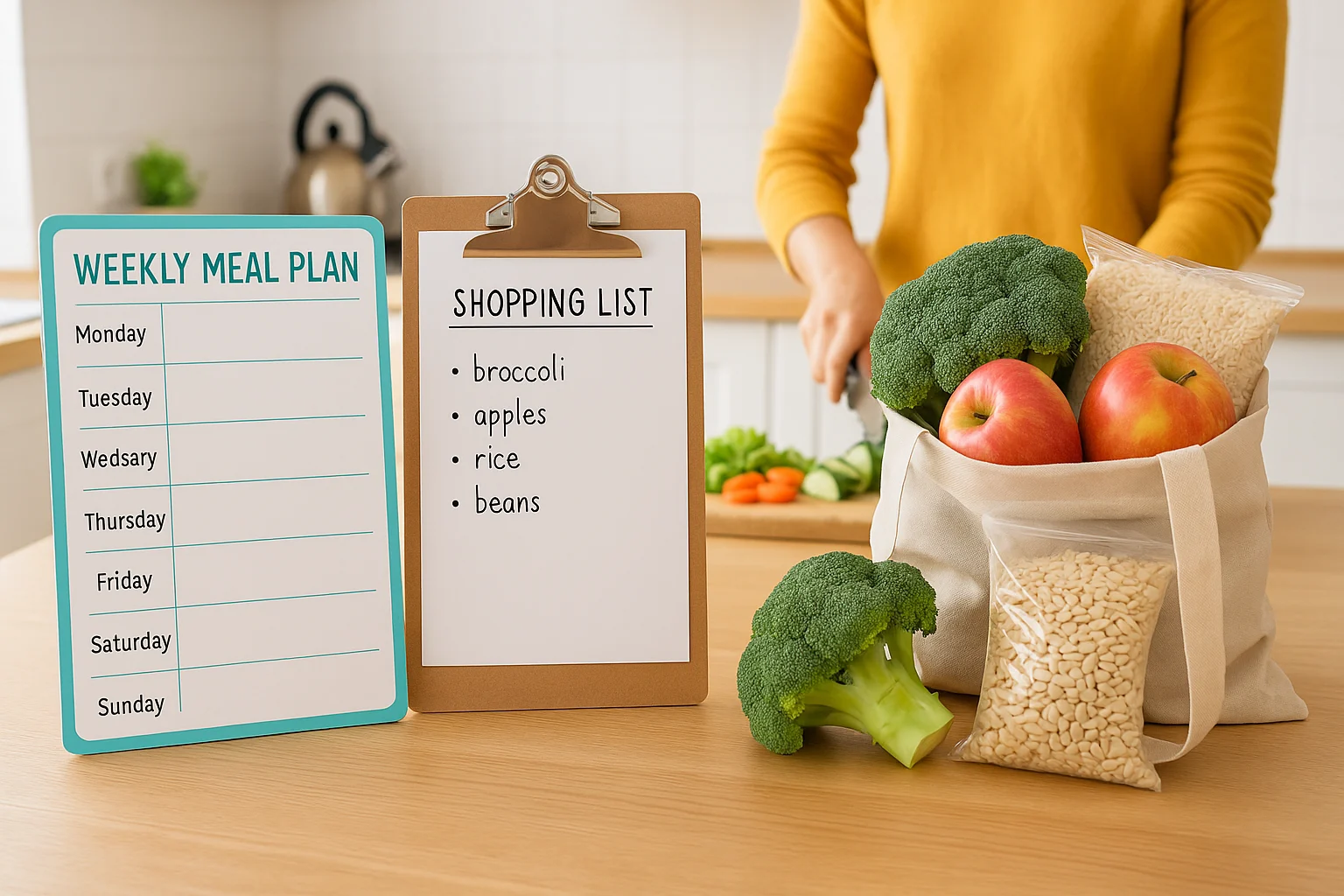
Save Money on Groceries with Meal Planning
Food is usually one of the most flexible categories in a budget, and meal planning is the habit that moves it the most. If you’re cooking for a small household, our breakdown of grocery shopping on a budget for two shows what a tight weekly plan can look like in practice.
- Plan before you shop: Choose a few meals from what you already have, list only what’s missing, and buy shelf-stable staples in bulk when the price is genuinely lower per unit.
- Batch cook: Cooking grains and proteins in larger batches once cuts down on both time and food waste during the week.
- Reduce waste: Store food properly and turn leftovers into the next meal instead of letting them quietly expire.
- Pack meals ahead: Bringing lunch instead of buying it can be one of the largest weekly savings for very little added effort.
- Make coffee at home: A daily coffee-shop habit is one of the easiest costs to redirect toward a goal without feeling like a sacrifice.
For more crowd-tested ideas, our roundup of cheap grocery shopping tips from Reddit collects what has actually worked in other people’s kitchens.
Smart Transportation Choices
Transportation is easy to overlook because it’s often paid in small, recurring amounts rather than one visible bill.
- Optimize your commute: Public transit, carpooling, biking, or walking even a couple of days a week can meaningfully reduce fuel and parking costs.
- Maintain what you drive: Regular maintenance, correct tire pressure, and comparing insurance rates periodically can quietly save more than switching vehicles.
When you take those savings on the road, our frugal travel hacks guide can help keep trip costs down without cutting the experience short, and our eSIM review can help you avoid roaming fees on international trips.
Low-Cost Entertainment
Living frugally does not mean skipping fun—it means being deliberate about where entertainment spending goes.
- Free activities: Parks, libraries, and free museum days can cover a surprising amount of regular entertainment.
- Host instead of going out: Potlucks and game nights at home can replace a night out at a fraction of the cost.
- Borrow instead of buying: Libraries (including their digital apps) can cover books, movies, and audiobooks you’d otherwise pay for.
- Use loyalty programs and coupon apps selectively: Only when they apply to something you already planned to spend on.
Clothing and Personal Care
Clothing and personal care are easy to underestimate because each purchase feels small individually. A capsule wardrobe or occasional thrifting can cut clothing costs without limiting what you wear day to day, and simple DIY approaches to skincare or haircare can reduce recurring personal-care spending. If you also want your fitness routine to stay budget-friendly, our frugal fitness tips guide covers ways to stay active without a costly gym membership.
Long-Term Frugal Habits That Save Money
These frugal habits that save money are designed to make lower spending easier to repeat over time. Our guide to 10 frugal habits that save money gives you a more aggressive checklist to compare with your own budget.
- Delay non-essential purchases: Park them overnight—or longer for bigger purchases—so urgency has time to fade.
- Review repeat spending monthly: Check subscriptions, fees, insurance, and other recurring charges for costs that no longer earn their place.
- Use secondhand and repair selectively: Buy used or fix what you own when condition, time, tools, and safety make the trade-off worthwhile.
- Plan for irregular expenses: Set aside money for predictable costs such as annual bills, car repairs, or gifts so they do not surprise the monthly budget.
- Build an emergency buffer: Even a modest reserve can reduce how often an unexpected bill has to become new debt.
- Pay down costly debt deliberately: Use the debt snowball for momentum or the avalanche to prioritize higher interest rates.
- Buy for total value: Consider how often you will use something, how long it should last, and what maintenance or replacement will cost.
- Negotiate selectively: Prepare before asking for a better rate, fee waiver, or salary when there is a realistic case to make.
For another angle, see our guide to frugal habits of millionaires. Treat those ideas as prompts to evaluate in your own budget, not as a formula for wealth.
If you’re sharing a budget with a partner, start with our guide to couples budget planning, then grab one of the best couples budgeting spreadsheets or our free Excel budget templates, and compare the top apps for marriage and finance management so your system actually fits your life. If a large event is coming up, our guide to frugal wedding planning shows how to set priorities before costs expand.

Beyond Saving: Earning & Investing
Frugality can create room in your budget, but saving is only one lever. Depending on your goals, the next step may be earning more, paying down expensive debt, or investing for longer-term goals.
- Pick a simple side hustle: Local services such as dog walking, lawn care, or house sitting can be relatively simple to test without a large upfront investment.
- Monetize what you know: Freelance, tutor, or sell a service or digital product when you already have a skill people will pay for.
- Research diversified, low-cost investing: Broad-market index funds are one option to research because diversification can spread exposure, but funds still carry market risk and fees. Review the actual holdings and costs before investing; Investor.gov’s index-fund guide explains the trade-offs. New to investing? Start with our beginner’s guide to investing.
- Capture easy wins at work: Check whether your employer offers a retirement match, education benefits, or skill stipends you are eligible to use.
Turn your skills into paid projects
A marketplace for one-off and ongoing client work — worth a look when the gap in your budget is income rather than spending.
Frequently Asked Questions
Pick One Frugal Change and Put the Savings to Work
Use the starting-point tool—or your own budget—to choose one recurring cost or habit to test for the next 30 days. Write down what you normally spend, make one realistic change, and when the savings actually show up, move that money to one named goal such as an emergency fund, debt payoff, or—when it fits your goals and risk tolerance—earning and investing.
At the end of the month, keep the change only if the savings are real and the trade-off still feels worth it. If you want more ideas before choosing, our review of Reddit’s frugal tips separates repeatable tactics from one-off anecdotes. A cut becomes useful when the money has somewhere better to go.
These frugal-living strategies are general educational information, not individualized financial advice. Your costs, debt, taxes, benefits, and investment choices depend on your circumstances; consider qualified guidance before making a major financial decision.

