
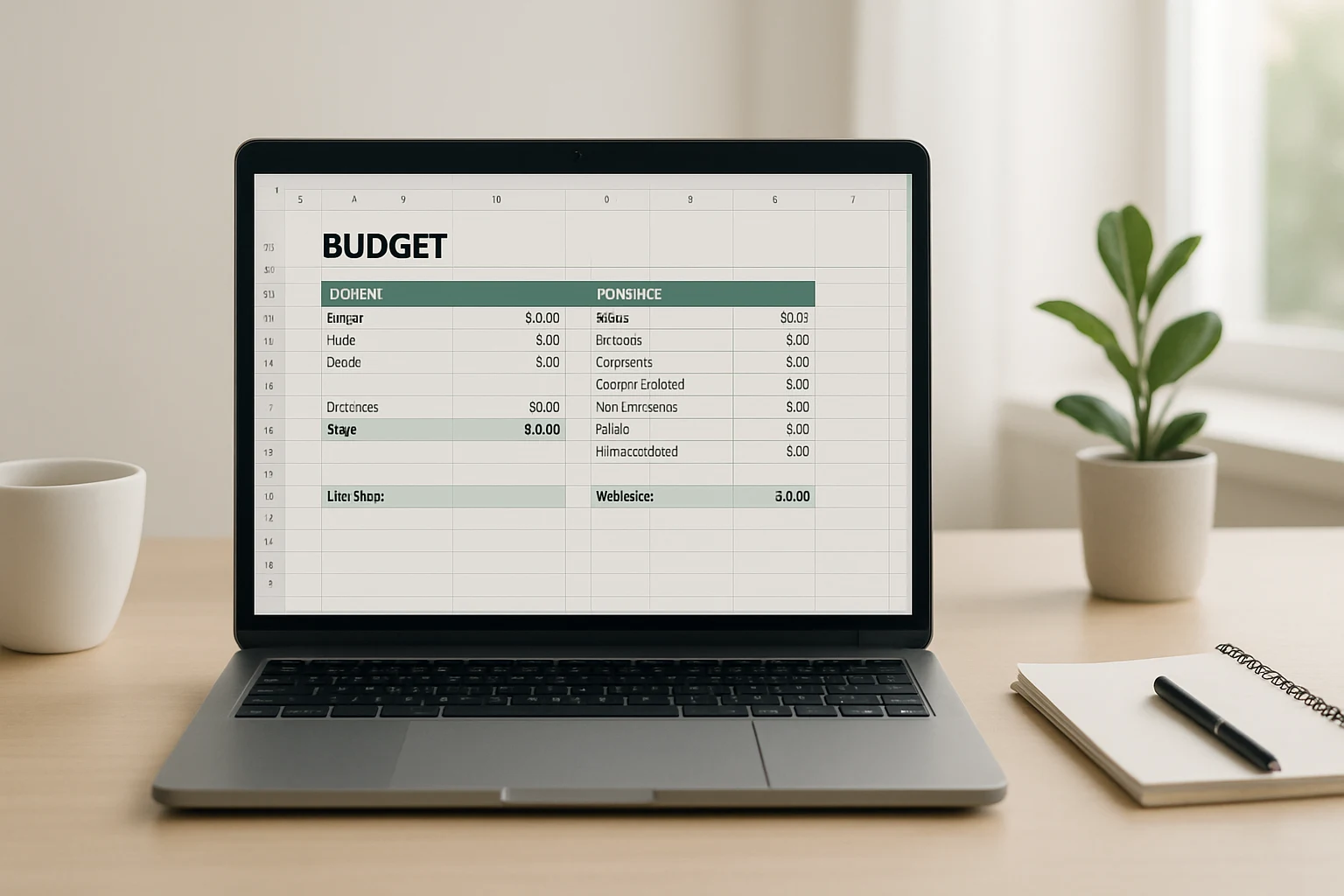
If you’re trying to live more frugally without making everyday life miserable, start here: cut repeat costs before you cut the things you love. Build a budget you can revisit, trim expenses that recur every month, and use tools only when they make the habit easier. For the bigger picture, see our complete frugal living and saving guide.
This post contains affiliate links. If you buy through our links, we may earn a commission at no extra cost to you. Learn more.
Table of Contents
- Frugal Living: The Short Version
- Frugal Habit Check
- Step 1: Get a Handle on Your Money
- Step 2: Cut Everyday and Recurring Costs
- Step 3: Build Frugal Habits That Stick
- Step 4: Use Tech to Spend Less
- Step 5: Make Frugality Sustainable
- Frugal Living Checklist
- Free 30-Minute Money Reset
- Frugal Living FAQs
- Choose One Change This Week
Frugal Living: The Short Version
If you are wondering how to start frugal living, think selective rather than cheap. Look at what a purchase does for you, what it costs over time, and whether a lower-cost option would serve the same job. The goal is to spend less on low-value defaults so you have more room for priorities that matter.
- Start with repeat expenses: housing, food, transportation, utilities, and subscriptions usually matter more than tiny one-off cuts.
- Use a budgeting method you will actually revisit; the best system is the one that makes trade-offs visible.
- Compare unit prices, total costs, fees, and terms before assuming the cheapest-looking option is the best deal.
- Use apps and shopping tools for a specific job, then skip the ones that create more subscriptions or noise.
- Change one habit at a time so the savings are easier to sustain and connect to a goal you care about.
Frugal rule of thumb: Spend deliberately on what you truly value; be more demanding about the rest.
If you know the basics but are not sure where to begin, use the habit check below. It points to one section that can give you the clearest next step.
Frugal Habit Check
Answer four quick questions about routines that can create repeat spending—not about your income. You’ll get one practical next step based on the area that could help most.
Choose one answer in each row to see your current habit snapshot and the most useful place to start.
Your result points to one section below. If you would rather work in order, start with Step 1 and move through the five steps.
Step 1: Get a Handle on Your Money
Start with a clear picture of money coming in, fixed commitments, flexible spending, and the goal you want the budget to support. You do not need perfect categories; you need enough visibility to make one useful decision at a time.
Budgeting Basics: Start With a Simple Plan
Think of a budget as a plan for trade-offs, not a punishment. If you want help making the routine stick, start with these budgeting habits that are easier to maintain. Prefer a worksheet? Our free Excel budget spreadsheet guide compares several approaches you can adapt.
- Category Budget: List income and recurring categories in a spreadsheet, then set a realistic amount for each.
- 50/30/20 Starting Point: Use 50% needs, 30% wants, and 20% savings or debt as a rough starting framework—not a rule every household can or should hit.
- Zero-Based Budgeting: Give each dollar a planned job across spending, saving, and debt payments so nothing is left unassigned.
- Sinking Funds: Set aside a little each month for predictable irregular costs—annual subscriptions, car registration, gifts, school costs, or other bills that do not arrive every month.
- Envelope Budgeting: Use cash or a tool such as Goodbudget to set category limits before you spend.
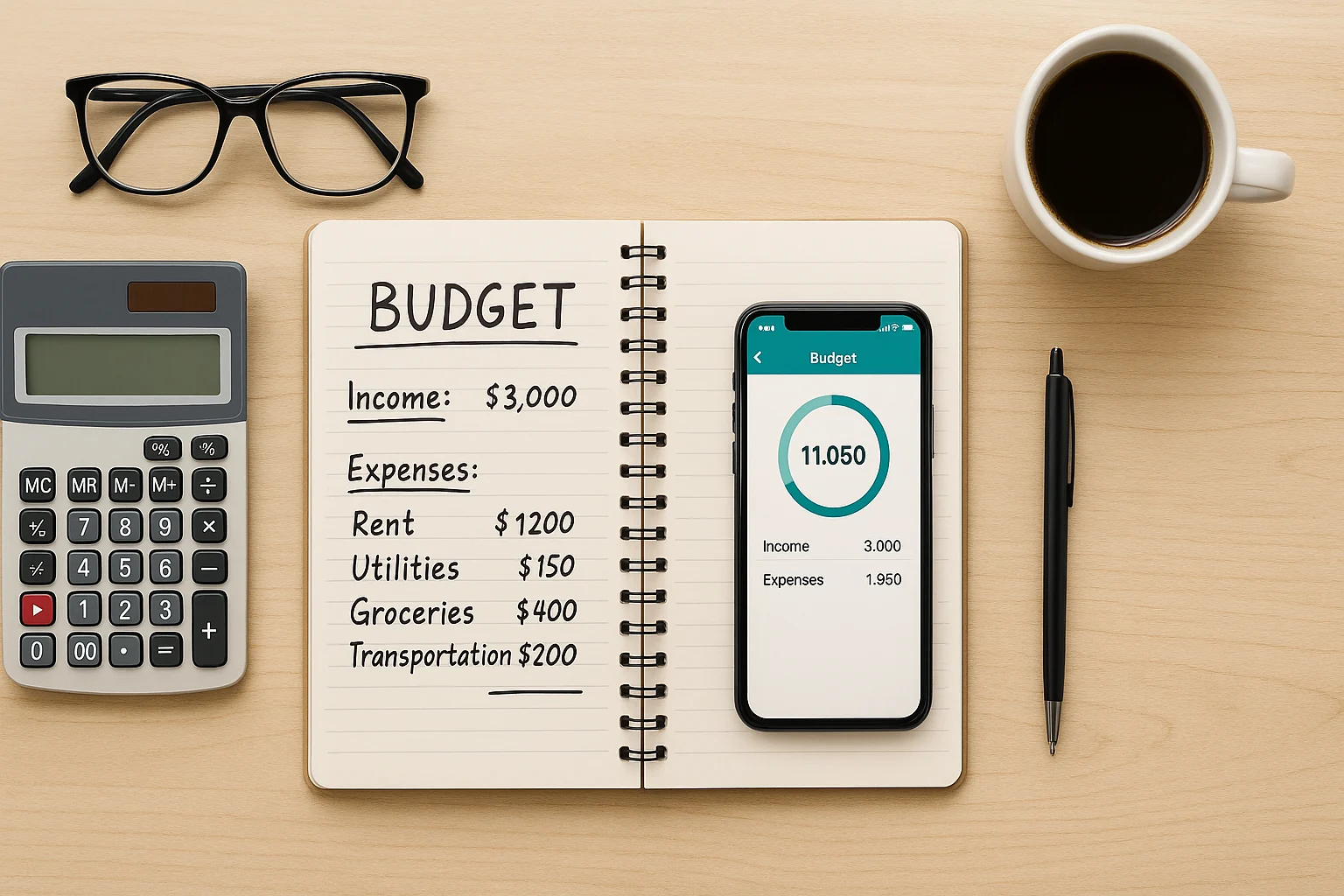
Example: Got $3,000 a month? With the 50/30/20 rule, that’s $1,500 for needs, $900 for wants, and $600 for savings or debt. It’s a simple way to start living frugally without tracking dozens of categories.
Tracking Expenses to Save Money
Track only enough detail to answer a useful question: where is the money going, which costs repeat, and what can change without creating a bigger problem elsewhere? Pick the format you are most likely to keep using:
- Budgeting Apps: Use a budgeting app if transaction imports or category tracking reduce the work for you.
- Spreadsheets: Build a quick Excel sheet for hands-on tracking.
- Notebook: Jot down purchases by hand if seeing them on paper makes the pattern easier to notice.
Weekly check-in: Review recent spending, update the next week’s plan, and make one correction while the numbers are still fresh. For app and spreadsheet picks, see our free financial tools.
You do not need a second bank account to budget. But if bill money keeps getting mixed with everyday spending, a separate checking account can create a cleaner boundary—provided the account’s fees, requirements, and transfer timing fit your cash flow.
Compare the current fee schedule and account requirements before opening any second account; separation only helps when the extra account does not create a new cost or cash-flow problem.
Step 2: Cut Everyday and Recurring Costs
Once you can see the budget, look for costs that repeat—both large bills and frequent everyday spending. Start where the potential savings are meaningful and the trade-off is manageable, then work through the other categories one at a time.
Smart Grocery Shopping
Groceries can quietly eat up a big chunk of your budget, but a little planning goes a long way. In July 2026, the U.S. Bureau of Labor Statistics reported that food-at-home prices were 2.7% higher than a year earlier. That makes flexible habits more useful than relying on one “cheap” store forever:
- Meal Planning: Plan your meals for the week so you’re not stuck ordering last-minute takeout.
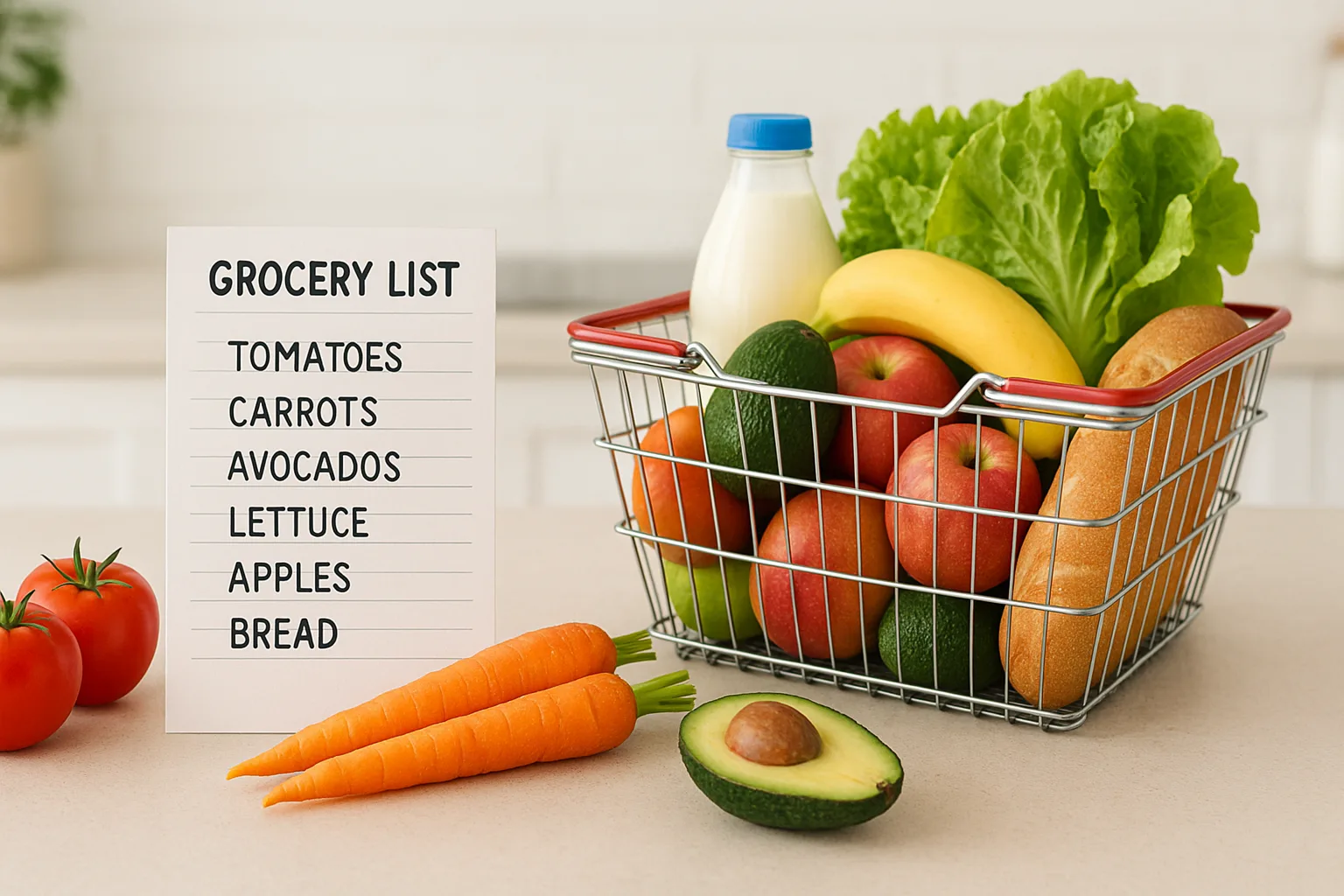
- Shop with a List: Bring a short list and try to buy mostly what’s on it.
- Compare Prices: Check prices at places like Aldi or Walmart and see which store usually wins for your basics.
- Buy in Bulk: Stock up on shelf-stable staples like rice or canned beans when the price is good.
- Use Leftovers: Turn last night’s veggies into a tasty soup or lunch bowl instead of tossing them.
- Compare Store Brands: Store brands are often cheaper, but compare unit prices and ingredients instead of assuming every generic option wins.
Current grocery check: Prices can move differently by category, so keep a simple price book for the staples you buy most and compare unit prices rather than relying on memory. Cooking for two? Try our budget grocery plan.
Affordable Housing Options
Housing is often your biggest bill. Here are a few ways to reduce the cost without assuming that moving is automatically the cheapest option:
- Downsize Carefully: Compare the ongoing savings with moving costs, deposits, commuting changes, and other trade-offs before relocating.
- Share Housing: If your lease and local rules allow it, a roommate may reduce your share of rent and utilities.
- Consider Refinancing: Compare the new rate, fees, remaining term, and break-even point rather than looking at the monthly payment alone.
- Negotiate at Renewal: Ask whether renewal timing, lease length, or comparable local rents give you room to negotiate; a discount is never guaranteed.
Reducing Transportation Costs
Between gas, parking, and repairs, cars and commutes can quietly eat your budget. Try these ideas to bring those costs down:
- Walk or Bike: For safe, practical short trips, replacing a car journey can reduce fuel and parking costs.
- Public Transit: Compare fares and commute time with the real cost of driving, including parking.
- Carpool: Share eligible trips when the schedule and route make it worthwhile.
- Maintain Your Car: Routine maintenance can reduce the risk of avoidable breakdowns and help you plan repair costs.
- Shop for Insurance: Compare equivalent coverage and deductibles, not just the headline premium.
Low-Cost Entertainment
You don’t have to spend much to have a good time. Here are some low-cost ways to enjoy yourself while staying frugal:
- Free Events: Check out local festivals or free museum days.
- Library Resources: Borrow books, movies, or even board games.
- Game Nights: Invite friends over for a fun, cheap evening.
- Outdoor Fun: Go hiking or have a picnic in the park.
Managing Subscriptions
Streaming services and apps feel cheap on their own, but together they add up quickly. Canceling even one $15/month subscription frees up $180 a year—that’s money back in your pocket. A quick review every month keeps them in check and helps you keep recurring costs visible:
- Review Subscriptions: Ditch ones you barely use.
- Negotiate Rates: Call providers and ask for discounts.
- Use Household Plans: Share a plan only when the service terms allow it and the combined plan is actually cheaper for your household.
- Go Free: Check out free platforms like YouTube.
Conserving Utilities
Lower your bills with these simple tricks to reduce monthly costs:
- Save Energy: Unplug devices and switch to LED bulbs.
- Measure Before Replacing: If one plug-in appliance seems unusually expensive to run, use your utility data or a plug-in electricity monitor to check its actual usage before replacing it.
- Conserve Water: Fix leaks and take quick showers.
- Tweak the Thermostat: Lower it in winter, raise it in summer.
- Seal Drafts: Stop heat from escaping around windows.
- Check Incentives: Look for current state, territory, local-utility, or other efficiency rebates before you buy; eligibility and covered upgrades vary.
Home-energy incentives changed after 2025. DOE says Home Energy Rebates are available in select states, with programs managed by states, territories, or Tribes. The federal Energy Efficient Home Improvement Credit covered qualifying improvements only through December 31, 2025, so do not assume a 2026 project still qualifies for that credit. Check DOE Home Energy Rebates and the IRS credit page before budgeting around an incentive.
Step 3: Build Frugal Habits That Stick
Frugality works better as a repeatable default than a one-time challenge. The goal is to make the lower-cost choice easier without turning every purchase or social plan into a test of willpower.
Use a Pause Before Nonessential Purchases
Before buying something nonessential, ask what job it will do, whether you already own something that does that job, and whether you would still choose it after a little distance. A no-spend day or weekend can also work as a short reset when spending has become automatic; use it to notice patterns, not as punishment.
DIY Only When the Math Works
DIY can save money when the task is low-risk and the materials are genuinely cheaper than the alternative. Count supplies, tools, cleanup, and your time before assuming “homemade” automatically wins:
- Low-Risk Repairs: Handle simple tasks you understand; use qualified help when a mistake could create water, electrical, gas, structural, or code problems.
- Gardening: Grow herbs or vegetables you actually use rather than buying supplies for a garden that becomes another expense.
- Homemade Gifts: Make something when the materials and time fit your budget and the recipient will genuinely value it.
- Cleaning Supplies: Use a basic cleaner that is appropriate for the surface instead of buying a specialized product for every small job.
True-cost check: A secondhand table may still cost less than buying new after refinishing supplies, but count the materials and your time before assuming the project is cheaper.

Own Less and Buy More Deliberately
Minimalism can support frugality when it reduces duplicate purchases, clutter, and impulse buys. Before buying new, try a simple ladder: use what you already own, repair it when that is sensible, borrow or rent for occasional use, check secondhand options, then buy new when the new item genuinely solves the job better. The point is not an empty home; it is making fewer purchases that you later have to store, maintain, replace, or discard. Our guide to frugal minimalism goes deeper on that trade-off.
Step 4: Use Tech to Spend Less
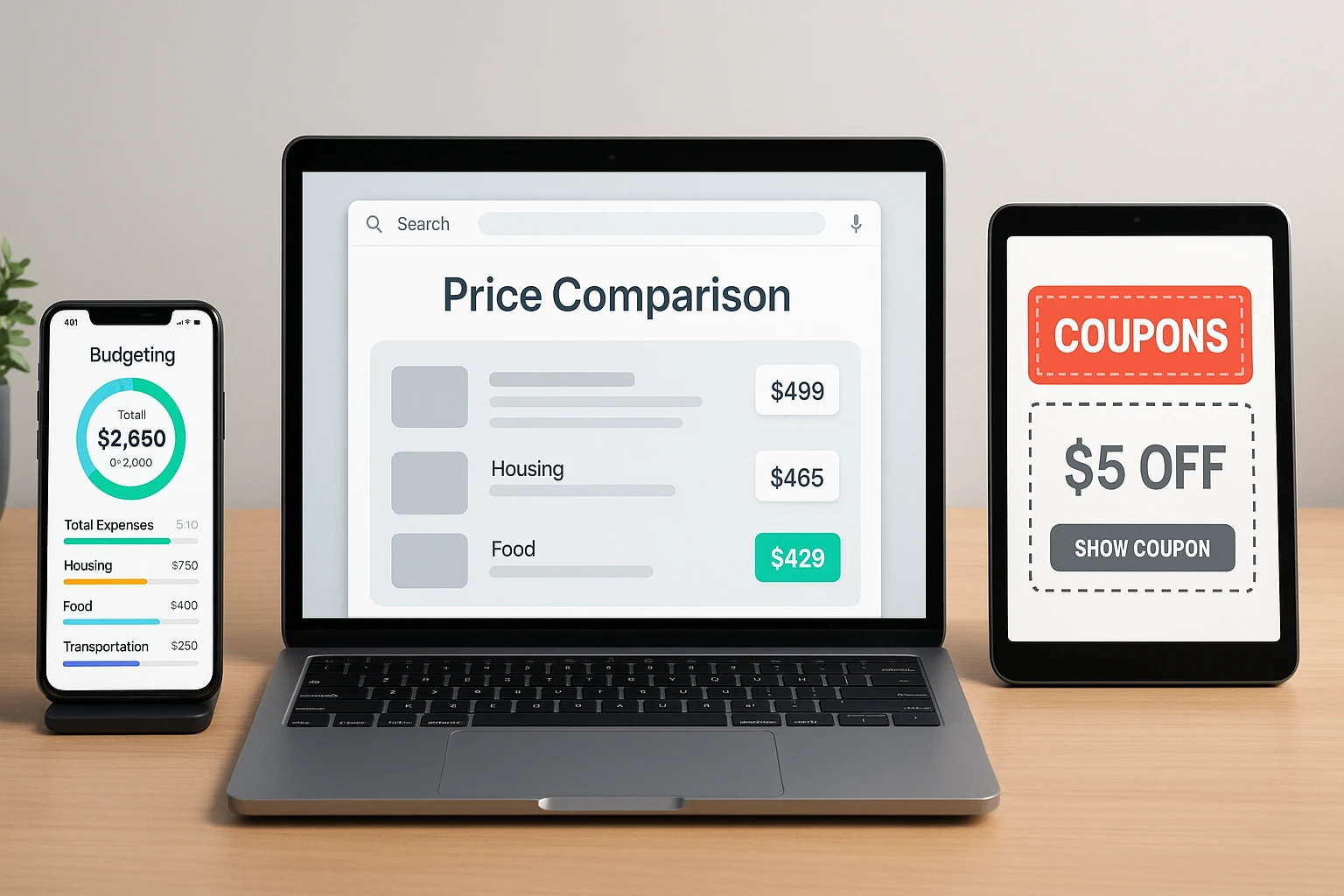
Tech can handle some of the repetitive parts of frugal living, but the useful question is whether a tool saves more time or money than it costs. Pick one or two tools that solve a specific problem instead of collecting apps you rarely use.
Budgeting Apps
Goodbudget is built around envelope-style budgeting, while PocketGuard organizes budgets, spending, bills, and subscriptions. Features and pricing differ by plan, so check current terms and privacy settings before linking accounts or paying for premium features.
Price History and Comparison Tools
CamelCamelCamel tracks Amazon price history and price drops, which can give you context on whether an Amazon price is unusually high or low before you buy. For other planned purchases, compare the exact model across retailers and include shipping, membership costs, warranties, and return terms—not just the sticker price.
Coupon Apps
Honey can test available coupon codes at checkout. Treat coupons as a final check on something you already planned to buy, not as a reason to add something to the cart.
Cashback Programs
Rakuten offers Cash Back on eligible purchases when you start the shopping trip through its site, app, or browser extension; participating stores and rates vary. For more picks, see our roundup of the best budgeting tools.
Step 5: Make Frugality Sustainable
The plan only works if you can keep using it. Give the savings a job, leave room for enjoyment, and build a system that can survive an imperfect week.
Give the Savings a Job
Pick one reason the trade-offs matter—such as building an emergency cushion, paying down debt, or creating more room in the monthly budget. A visible goal makes it easier to tell the difference between a useful cut and deprivation for its own sake.
Debt example: With the avalanche method, extra payments target the highest APR first; with the snowball method, they target the smallest balance first. Choose an extra-payment amount your budget can sustain, keep required minimums current, and compare the debt snowball vs. avalanche methods before deciding which structure fits you.
Plan for Imperfect Weeks
A plan that survives an imperfect week is more useful than one that only works when everything goes right. Notice repeatable wins—a subscription you no longer miss, a meal plan that reduced takeout, or a bill you renegotiated—then adjust the next decision instead of abandoning the whole system.
Know When Cutting More Isn’t the Answer
Frugality has a floor: if essential bills still do not fit after reasonable cuts, more trimming may not solve the gap. Protect necessities first, then consider larger fixed-cost changes, income options, or qualified help rather than cutting essentials further.
If freelance work fits your skills, capacity, and schedule, it can be one optional income route after you have done the spending-side work:
Freelance income can be irregular, so treat new work as extra until it becomes consistent rather than building essential bills around an amount you cannot predict yet.
Frugal Living Checklist
Use this as a practical reset when you are figuring out how to start frugal living. You do not need to finish every item today; pick the one that would make the next month easier.
- Budget: Write down take-home income, fixed bills, flexible spending, and one savings or debt priority.
- Weekly review: Check recent transactions and make one adjustment before the next week starts.
- Food: Plan a few dinners, shop from a list, and compare unit prices on the staples you buy most.
- Subscriptions: Cancel or downgrade one recurring charge that no longer earns its place.
- Big bills: Compare housing, transportation, insurance, or refinancing changes using total cost—not just the monthly number.
- Utilities: Reduce obvious waste first, then check current local or state incentives before paying for a major upgrade.
- Shopping tools: Keep only the budgeting, price-history, coupon, or cashback tools that solve a problem you already have.
- Mindset: Choose one low-cost default—such as a no-spend day, potluck, or 24-hour pause for nonessential purchases—and repeat it.
- Boundary: If essential bills still do not fit, stop cutting necessities and reassess larger fixed costs, income, or qualified-help options.
If this checklist surfaced more than one area to work on, a single snapshot can help you choose what deserves attention first.
See Income, Spending, Debts, and Goals Together
The 30-Minute Money Reset is an editable workbook with room for income, spending, up to 8 debts, and up to 8 goals.
Confirm to get the workbook and frugal money tips. Unsubscribe anytime.
Something went wrong. Please check your email address and try again.
Frugal Living FAQs
Choose One Change This Week
You do not need to optimize every category at once. Pick one change for the next seven days—a subscription audit, three planned dinners, a spending review, or one lower-cost social plan—and see whether it is easy enough to repeat. A frugal plan works when it keeps making the next decision simpler.
This guide provides general budgeting and spending ideas, not individualized financial, tax, or legal advice. Before refinancing, changing bank accounts, renting or sharing housing, or budgeting around a rebate or credit, check the current terms, costs, eligibility rules, and requirements for your situation.

