

Frugal living minimalism is not a contest to own the fewest things or spend the least. It is a simple filter: keep and buy less of what adds little value, then direct more of your money, space, and attention toward what matters. The goal is less friction and fewer low-value costs—not deprivation or a perfectly empty home.
This guide shows how to apply that filter to decluttering, a minimalist budget, mindful spending, meals, and transportation. For the broader psychology behind those choices, see our money mindset guide.
This post contains affiliate links. If you buy through our links, we may earn a commission at no extra cost to you. As an Amazon Associate, I earn from qualifying purchases. Learn more.
Table of Contents
- Find Your Biggest Money Leaks and Build a 7-Day Plan
- What Is Frugal Living Minimalism?
- Use the Frugal Minimalist Filter
- Start Decluttering for a Frugal Minimalist Life
- How to Create a Minimalist Budget
- Spend Mindfully for a Simpler Life
- Simplify Your Meals for Savings
- Streamline Your Transportation
- Resources to Support Your Frugal Minimalist Lifestyle
- Maintaining Your Frugal Minimalist Lifestyle
- Put Your Money on One Screen Before You Change the System
- Frequently Asked Questions
- Start With One Leak This Week
Not sure where to begin? Use this quick audit to choose one area to work on this week.
Find Your Biggest Money Leaks and Build a 7-Day Plan
Quick audit: which patterns are costing you the most money, time, or attention?
Pick what feels true, then choose the time you can realistically spare this week.
What Is Frugal Living Minimalism?
Frugal living minimalism combines two related ideas:
- Frugal living: Use money deliberately, look for good value, and avoid paying for things that do not improve your life.
- Minimalism: Keep fewer possessions and commitments so the things you do keep have a clear purpose.
Together, this combination—often called frugal minimalism—is simple: own and buy fewer things by default, then spend deliberately on what matters more. Before a non-essential purchase, ask: “Do I need this, will I use it, and do I already own something that does the job?” If the answer is unclear, wait. For more practical ways to lower everyday costs, explore these actionable frugal living tips.
Use the Frugal Minimalist Filter
When a purchase, subscription, or clutter problem comes up, run it through the same three questions instead of inventing a new rule every time:
- Use what you have: Do you already own something that solves the problem well enough?
- Reduce the need: Can you cancel, repair, borrow, rent, combine, or simplify before adding another cost or possession?
- Spend deliberately: If you do buy, will the item or service earn its price, storage, upkeep, and attention?
This is where frugality and minimalism reinforce each other: one protects your money, the other reduces what your money has to support. The result can be fewer low-value purchases, less to manage, and clearer trade-offs when something genuinely matters to you.
Quality over quantity is not permission to upgrade everything. Paying more can make sense when you use something often and better durability would reduce repeated replacements; a premium version of something you rarely use is still a low-value purchase.
Start Decluttering for a Frugal Minimalist Life
Decluttering your home can make spending decisions easier because you can see what you already own. Start with items you do not use, need, or value; the goal is not an empty room, but a smaller inventory that is easier to maintain.
Declutter before you organize: do not buy bins, labels, or storage systems until you know what is staying. Organizing tools are useful only when they solve a real problem for the smaller inventory that remains.
Start With Physical Clutter
Start small to keep it manageable and build momentum:
- One Area at a Time: Tackle a single drawer, shelf, or closet to make progress feel doable.
- KonMari Method: Sort by category (clothes, books) and keep items that “spark joy.” Learn more about the KonMari Method.
- 20/20 Rule: The Minimalists suggest letting go of replaceable “just-in-case” items when replacing them would cost less than $20 and take less than 20 minutes. Skip the rule for sentimental, safety-critical, specialized, or genuinely hard-to-replace items. Read the original rule.
- One In, One Out: For every new item you bring in, remove one to keep things balanced.
- Reverse Hanger Method: Turn hangers backward and review what stays unworn after a season or another period you choose.
- Box Method: Put uncertain items in a box and set a review date. If you still have not needed them, decide whether to donate, sell, or keep them.
Examples: Donate unworn clothes, recycle old electronics responsibly, sell useful duplicates, or give away decor that no longer fits your space. If you sell something, treat the proceeds as a bonus; the main win is knowing what you own and reducing the urge to rebuy it.
Decluttering Your Digital Life
Digital clutter can also make it harder to find what you need. Clear one digital surface at a time so the system stays easy to maintain:
- Unsubscribe from newsletters you never read to calm your inbox.
- Delete unused apps to free up phone storage and mental space.
- Organize computer files into folders and delete duplicates for a smoother workflow.
- Cut social media time and unfollow accounts that push you to buy stuff.
- Back up photos to a cloud service like Google Drive and delete blurry or duplicate images.
- Clear browser bookmarks, keeping only the essentials to avoid digital overwhelm.
Start with one digital surface instead of trying to clean everything at once: your home screen, downloads folder, inbox, or photo roll. A short cleanup is easier to repeat than a one-time purge.
Decluttering Your Commitments
Simplify your schedule by saying “no” to things that don’t align with your values. For example, if volunteering too much drains you, scale back and focus on what matters most, like family time. Delegate tasks like housecleaning to family, or occasionally pay for a service when the time trade-off genuinely matters to you. Even one small boundary this week can make your schedule feel lighter.
How to Create a Minimalist Budget
Keep the first version simple: essentials, goals, and flexible spending. A budget that needs constant maintenance is easy to abandon.
With your space decluttered, apply the same idea to your finances. A minimalist budget focuses on what you need and value, trims the categories that do not earn their place, and leaves enough flexibility to be usable month after month.
Track Your Expenses for a Frugal Minimalist Budget
Start with seven days if you want a low-friction snapshot. Use a full month or recent statements when you need to catch less-frequent charges and see a more representative pattern:
- Apps and dashboards: Tools like YNAB or Empower Personal Dashboard can help you plan spending, review transactions, and see more of your finances in one place.
- Spreadsheets: Create a simple tracker for income and expenses to make it your own.
- Notebook: Jot down your spending by hand for a hands-on, mindful approach.
- Bank Statements: Look over your monthly statements to catch those sneaky recurring charges, like a gym membership you forgot about.
Mark recurring charges and categories that surprised you. Those are often the easiest places to test a change without cutting something you genuinely value.
Identify Areas to Cut Back
Look for expenses you can trim without cutting the things you value most:
- Housing: Review whether your current space and fixed housing costs still match what you need; major housing changes deserve a full cost comparison.
- Transportation: Walk, bike, or take public transit to save on fuel.
- Food: Cook at home, plan meals, and cut food waste.
- Entertainment: Choose free activities like hiking or library events.
- Subscriptions: Cancel unused services, like magazines or apps you don’t need.
- Utilities: Use energy-efficient bulbs and unplug devices to lower bills.
Use your values as the filter: protect categories that matter to you and look for lower-value spending to trim first. The point is not to make every category as small as possible; it is to make the trade-offs intentional.
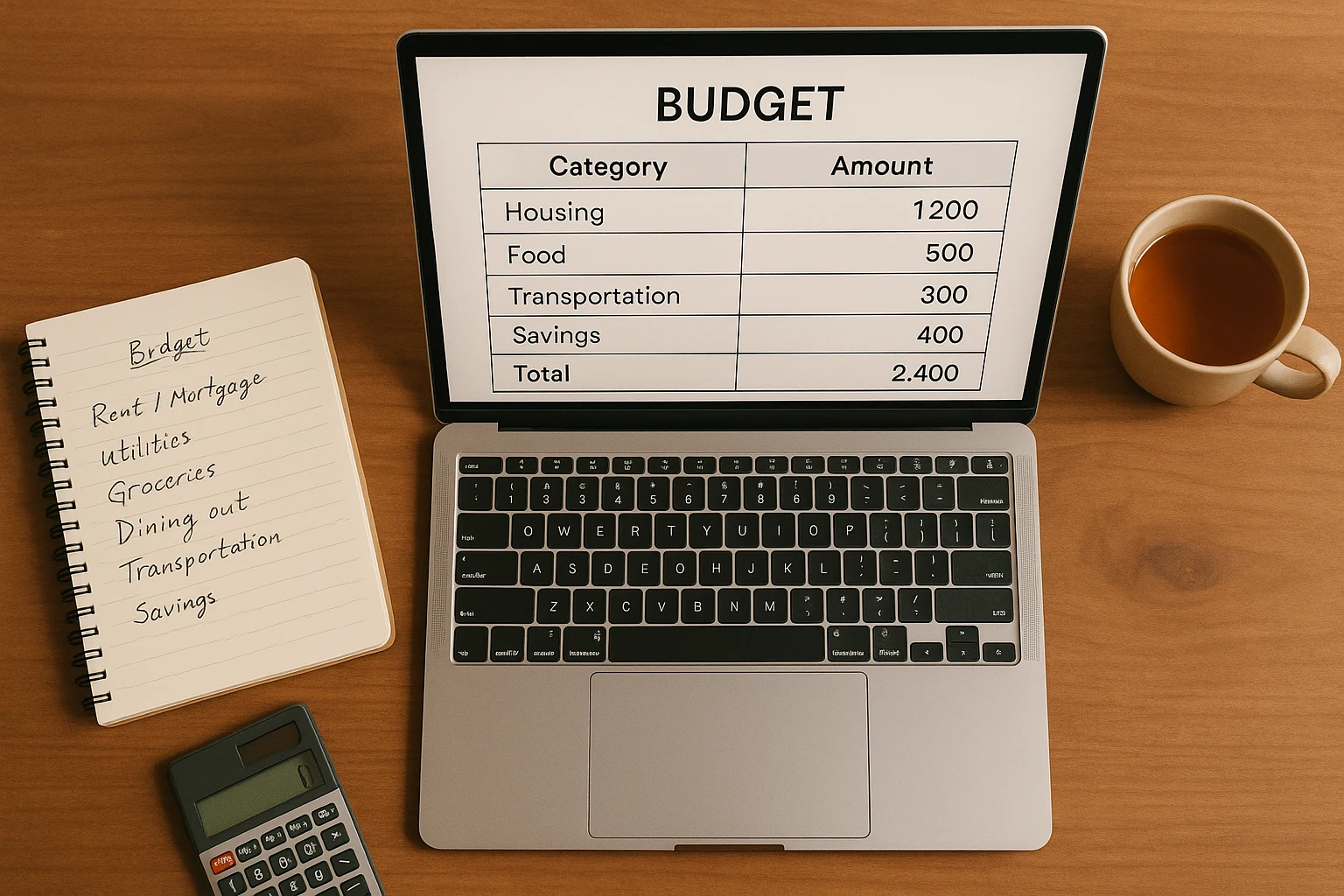
Minimalist Budgeting Tools
These minimalist budgeting tools can help you keep the system simple:
- YNAB: Helps you plan what your money needs to do before you spend it.
- Empower Personal Dashboard: Combines budgeting, cash-flow, transaction, and net-worth tools for a broader financial view.
- Spreadsheets: Fully customizable for hands-on budgeters.
- MyMoney.gov: A U.S. government resource with free tools and guides on budgeting and money management.
If you’re deciding between an app, spreadsheet, or paper system, compare the trade-offs in our guide to minimalist budgeting tools for beginners.
If you prefer writing things down—or budgeting apps become another dashboard you stop opening—a paper planner can be the lower-friction choice.
The Clever Fox Budget Planner is a 12-month undated planner with dedicated bill, savings/debt, and expense-planning sections. It gives you more guidance than a blank notebook; skip it if a spreadsheet or plain notebook already keeps you consistent.
Mindful Spending for a Simpler Life
Mindful spending means making intentional choices with your money instead of letting habit, convenience, or advertising decide for you. To slow down impulse buys, try these tips:
- Wait 24 hours before buying non-essentials to rethink your choice.
- Unsubscribe from marketing emails to dodge temptation.
- Shop with a list and stick to it, ignoring flashy displays.
- Ask yourself: “Do I need this? Does it add value? Can I borrow or rent it?”
- If small purchases are easy to overlook, set a fixed discretionary amount and track it as you spend.
Prioritize experiences over stuff when that matches your values. Before buying something new, consider whether borrowing, renting, repairing, or buying used would solve the same problem. The goal is not to ban spending; it is to spend on purpose.
Simplify Your Meals for Savings
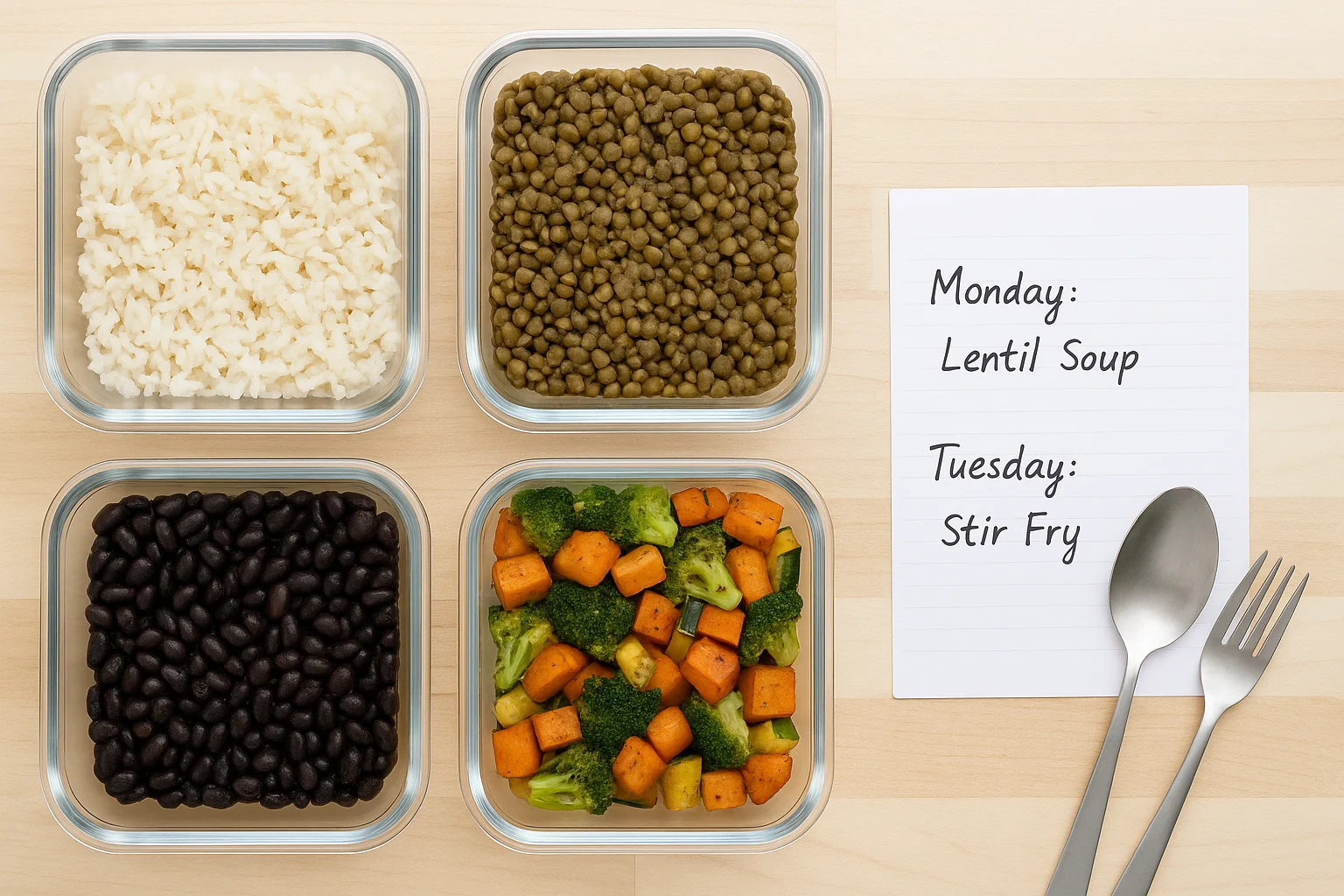
A short rotation of realistic meals can make grocery shopping and leftovers easier to manage. For extra tips, see our guide to grocery shopping on a budget:
- Meal Planning: Plan weekly meals to avoid impulse buys. Example: Monday – lentil soup, Tuesday – veggie stir-fry, Wednesday – pasta with homemade sauce.
- Cook at Home: Save by making meals with budget-friendly staples like rice and beans.
- Batch Cooking: Cook big batches on weekends, like a pot of chili, for quick weekday meals.
- Compare seasonal options: In-season produce can be a good starting point, but compare the prices and specials available where you shop.
- Reduce Waste: Turn leftovers into new meals, like roasted veggies into soup, and compost scraps.
- Compare unit prices: Bulk packages, coupons, and loyalty offers only help when the final price fits what you will actually use.
For your own plan, compare the cost of a batch meal with your usual takeout order using the prices you actually pay. Keep the meals that are cheaper and realistic enough that you will make them again.
Streamline Your Transportation
Transportation can be a large fixed or semi-fixed cost, so focus on changes that fit the trips you actually make rather than chasing a universal “cheapest” option.
- Walk or bike when practical: Short trips may be easy places to avoid a separate drive.
- Compare transit costs: Price single fares or passes against the trips you would otherwise pay for.
- Share rides selectively: Carpooling can split some trip costs when schedules line up.
- Compare total vehicle costs: If you are replacing a car anyway, look beyond fuel economy to insurance, maintenance, financing, and depreciation.
- Maintain what you own: Follow the maintenance schedule for your vehicle instead of deferring routine care.
- Question ownership when driving is rare: Compare ownership with rental, car-share, transit, or rideshare costs in your area.
Pick one route you use often and compare the weekly cost, time, and convenience of two realistic alternatives. A small change you can repeat is more useful than an aggressive plan you abandon after a week.
Resources to Support Your Frugal Minimalist Lifestyle
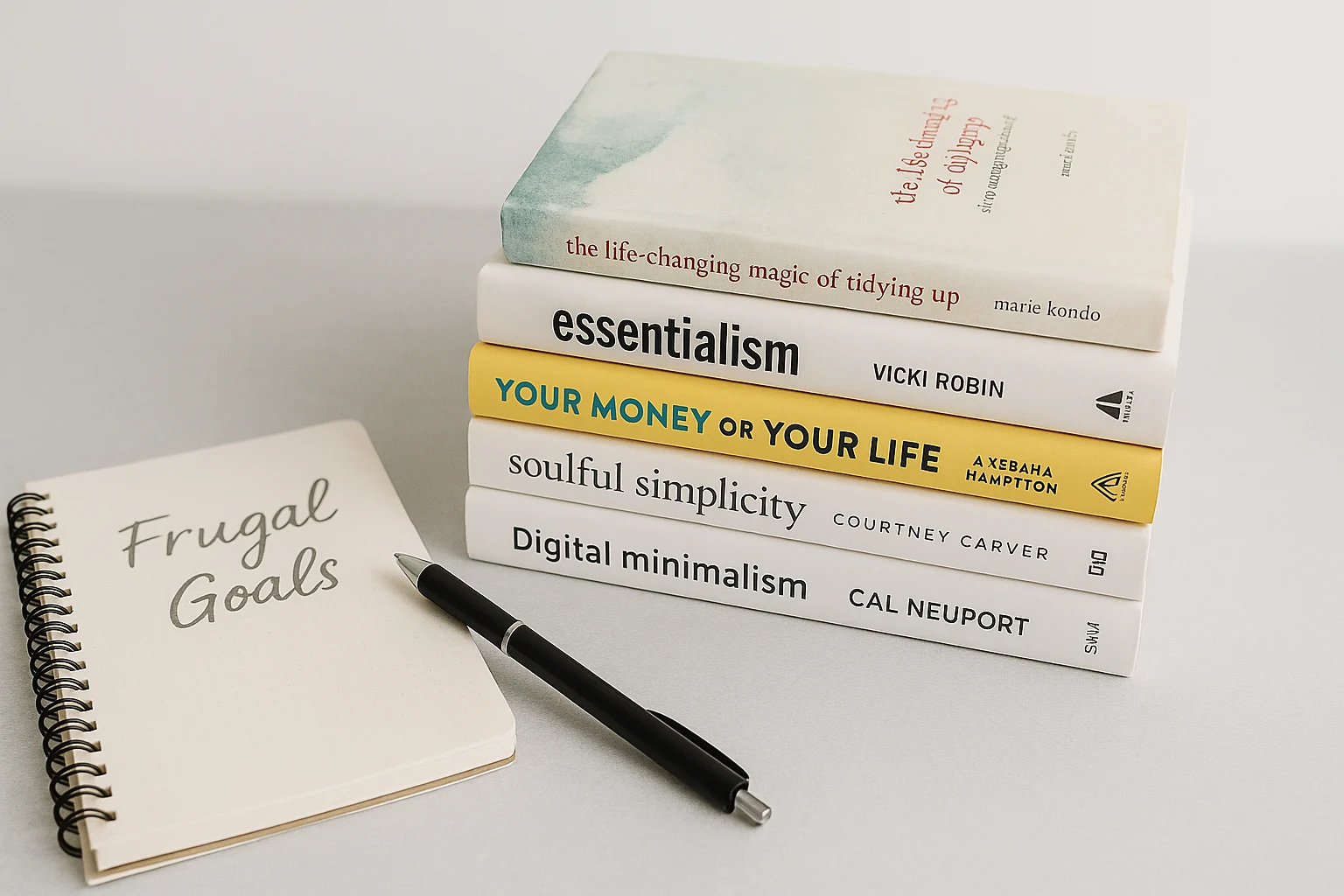
Use resources to deepen the area you are actively working on, not to collect more advice. A few useful starting points:
- Decluttering: The Life-Changing Magic of Tidying Up by Marie Kondo focuses on deciding what to keep and organizing by category.
- Priorities: Essentialism by Greg McKeown is useful for thinking about what deserves your time and attention.
- Money and values: Your Money or Your Life by Vicki Robin connects spending decisions with the life energy behind them.
- More reading: Browse our frugal living books guide when you want a wider list.
Maintaining Your Frugal Minimalist Lifestyle
The easiest system to maintain is mostly trigger-based: review a decision when it naturally comes up, then use a light periodic check for costs or clutter that can drift unnoticed.
- Before a renewal: Ask whether the subscription or service still earns its place before the next charge.
- Before replacing something: Check whether you can repair it, use what you already own, borrow, or buy used before defaulting to new.
- When a space becomes hard to use: Declutter the category causing the friction instead of reorganizing everything.
- When spending starts to drift: Review the categories that changed and adjust one rule or limit rather than rebuilding the whole budget.
- After a life change: Revisit old rules when your household, work, health, commute, or priorities change.
If a habit stops working, adjust the rule instead of treating that as failure. The system should become easier to maintain over time, not more demanding.
When one of those triggers tells you it is time to review your money, start with the whole picture instead of rebuilding your budget from scratch.
Put Your Money on One Screen Before You Change the System
The editable workbook covers income and spending, holds up to 8 debts and 8 goals, and the SNAPSHOT sheet totals everything automatically.
Confirm to get the workbook and frugal money tips. Unsubscribe anytime.
Something went wrong. Please check your email address and try again.
Frequently Asked Questions
Start With One Leak This Week
Frugal living minimalism works best as a filter, not a finish line: keep what adds value, cut what does not, and give the difference a job. Choose one leak—clutter, recurring charges, impulse spending, meals, or transportation—and test one change for a week. If it makes life simpler without creating a new problem, keep it; if not, adjust and try the next.
This guide is general educational information, not individualized financial advice. Before making major changes involving debt, investing, insurance, housing, or other financial commitments, consider your own circumstances and, when needed, guidance from a qualified professional.

