
Fitness on a budget works best when you reverse the usual order: start with the habit, not the gear. Walking, bodyweight training, free community spaces, and short home sessions can cover a lot before you spend anything. These frugal fitness tips are built around that free-first approach, with optional purchases only where they solve a real problem.
Use the quick selector if you need a starting point, or jump straight to the 7-day plan if you are ready to move. The rest of the guide shows how to build cheap home workouts, use outdoor and community options, keep food costs flexible, and decide when equipment is actually worth buying. For the wider money-saving framework, see our guide to living frugally and saving money.
Start at a level that feels manageable. Moderate activity is safe for most people, but if you have a chronic health condition, ask a healthcare professional what types and amounts of activity fit your situation; if you have been inactive and plan to begin vigorous exercise, check first as well.
This post contains Amazon affiliate links. As an Amazon Associate, I earn from qualifying purchases.
Table of Contents
- Choose Your Frugal Fitness Starting Point
- Key Takeaways
- Frugal Fitness Quick-Start Plan (7 Days)
- 1. Build a Useful Home Workout
- 2. Use Outdoor Movement
- 3. Keep Nutrition Budget-Friendly
- 4. Find Free or Low-Cost Instruction
- 5. Create Free Accountability
- 6. Spend on Gear Only When It Earns Its Place
- 7. Use Public and Community Resources
- 8. Use the Tech You Already Own
- 9. Rotate With the Seasons
- 10. Make the Routine Easy to Repeat
- Frequently Asked Questions
- Start With One Repeatable Week
Not sure which route fits your week? Use the selector first. It won’t prescribe a training program; it simply turns your preferred setting, available time, and biggest barrier into a practical place to start.
Choose Your Frugal Fitness Starting Point
Answer three quick questions to choose a starting route that fits where you want to move, how much time you have, and what usually gets in the way.
Question 1 of 3
Key Takeaways
- Free movement comes first. Walking and bodyweight exercises can form the base of a useful routine before you buy equipment.
- Short sessions still count. A small repeatable routine is a better starting point than an ambitious plan you avoid.
- Local availability varies. Check parks, libraries, recreation departments, pools, and community calendars instead of assuming a free program exists nearby.
- Food costs are local. Build meals around flexible staples and compare prices rather than relying on a fixed “healthy eating costs X dollars” promise.
- Buy gear to remove a specific limitation. If an item does not expand a routine you already use, leave it on the shelf for now.
Frugal Fitness Tips: Quick-Start Plan (7 Days)
For a low-pressure first week, make the goal “show up” rather than “crush a workout.”
- Days 1–2: take a 10-minute walk and add a few minutes of easy mobility.
- Days 3–4: do a short home circuit with movements such as wall push-ups, sit-to-stands or squats, and a gentle core exercise.
- Day 5: take an easy recovery walk.
- Day 6: repeat the circuit.
- Day 7: choose a longer walk or another activity you enjoy.
This is a starter plan, not a complete weekly prescription. Current CDC guidance for adults recommends at least 150 minutes of moderate-intensity activity each week plus muscle-strengthening activity on 2 days, while also noting that some activity is better than none. Build toward that level gradually if it fits your health and abilities.
1. Build a Useful Home Workout With What You Have
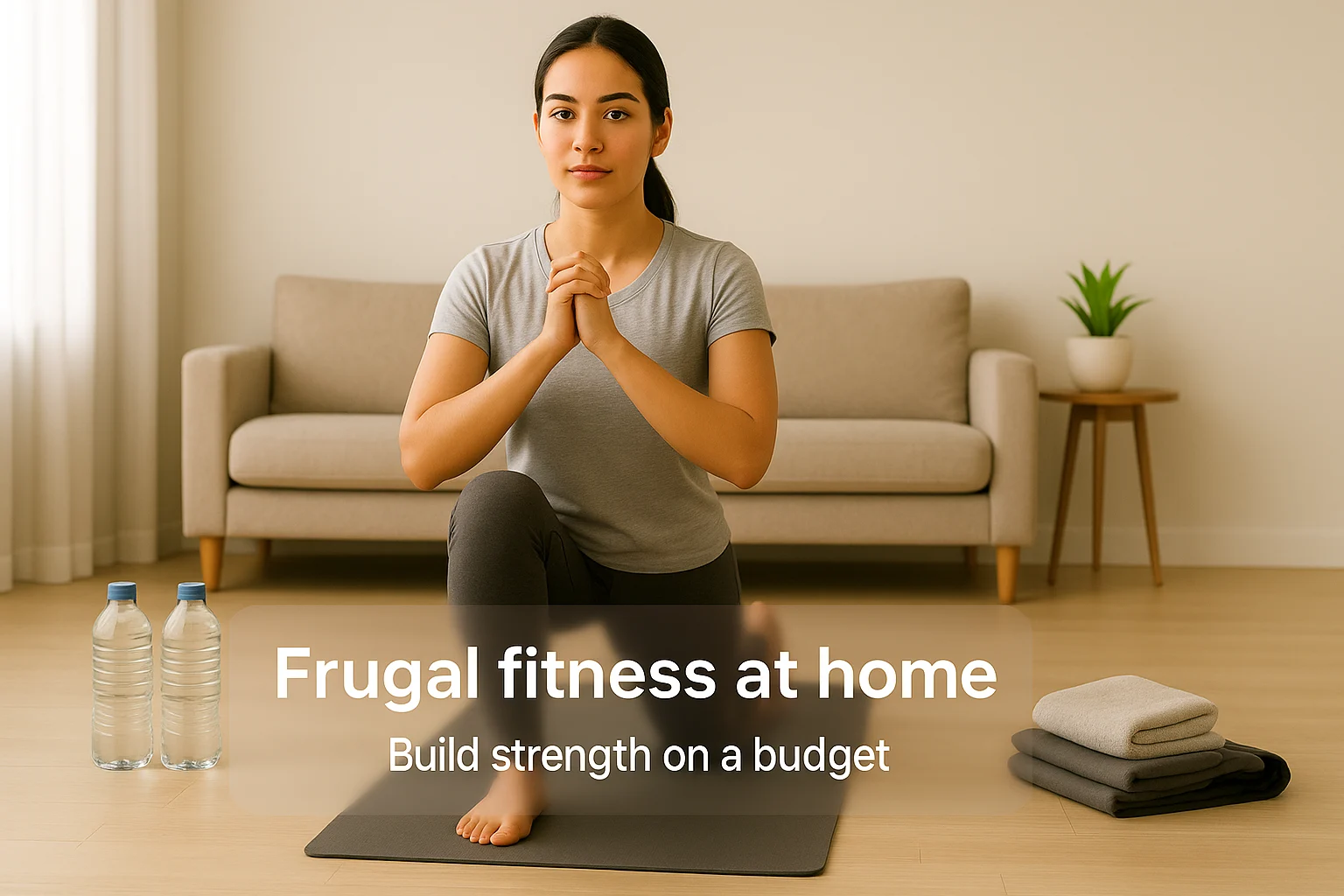
You do not need to turn a spare room into a home gym. A clear patch of floor and a few controlled bodyweight movements are enough to start a cheap home workout. Add household weight only when the object is secure and easy to hold.
A simple session can look like this:
- Warm up: easy marching, shoulder rolls, and gentle movement.
- Lower body: sit-to-stands from a stable chair or bodyweight squats if those feel comfortable.
- Upper body: wall or counter push-ups.
- Core: a simple floor exercise you can control without pain.
- Cardio finish: brisk marching, dancing, or another low-cost movement that raises your breathing rate.
If you want extra resistance, a securely closed backpack or water bottles can add load to some exercises. Keep the movement controlled, stop if the setup feels unstable, and do not improvise equipment that can snap, slide, or tip.
2. Use Outdoor Movement as Your Free Cardio Base
Walking, hiking, jogging, cycling, and park-based bodyweight work can give you useful cardio or strength time without a membership. Outdoor activity can also make a routine feel less monotonous; a Harvard Health overview notes that regular time outdoors is linked with benefits including lower stress and anxiety.
- Walking or hiking: choose neighborhood routes, public trails, or parks that feel safe and practical.
- Running or cycling: use routes that match your experience, traffic conditions, and local rules.
- Park strength work: push-ups, squats, lunges, and planks need little or no equipment.
- Public swimming: beaches, lakes, and community pools can be low-cost choices where access and conditions allow.
Some parks also have exercise stations. Check local park information before planning around them because equipment, hours, closures, and maintenance vary.
3. Keep Nutrition Budget-Friendly Without Fixating on a Dollar Target
Healthy eating on a budget is easier to sustain when meals are built around flexible staples instead of specialty foods or supplements. If you want a separate shopping framework, our grocery shopping on a budget for two guide goes deeper on planning the cart.
| Food group | Budget-friendly starting points | How to keep the cost flexible |
|---|---|---|
| Protein | Eggs, dried or canned beans, lentils, canned fish | Compare unit prices and rotate proteins instead of locking into one item. |
| Grains and starches | Oats, rice, potatoes, whole-grain pasta | Use store brands and buy larger packages only when you will use them. |
| Fruit and vegetables | Seasonal produce plus frozen or canned options | Compare forms rather than assuming fresh, frozen, or canned is always cheapest. |
| Fats and flavor | Peanut butter, cooking oil, nuts or seeds when affordable | Choose the option that fits both your budget and dietary needs. |
A simple pattern might be oatmeal with fruit, lentil or bean soup, and a rice-and-bean dinner with vegetables. The exact cost can vary by location, portion size, store, season, and dietary needs, so use meal ideas as templates rather than fixed price promises.
4. Find Free or Low-Cost Instruction
If you want structure or coaching cues, look for resources that publish their own current schedules and terms. That lets you confirm the class actually exists before you plan around it.
- Parks and recreation departments: check municipal calendars for free events, walking groups, or low-cost sessions.
- Libraries and community centers: search event calendars; some offer movement or wellness programming, while others do not.
- Colleges, hospitals, faith groups, and nonprofits: look for community-facing programs and verify eligibility or fees.
- Online instruction: use free video platforms or an app whose current free offering meets your needs.
For one currently documented option, Nike Training Club continues to offer free workout guidance and programs. Whatever source you use, favor instructors who clearly explain modifications and relevant qualifications.
5. Create Accountability Without Paying for Personal Training
Accountability is useful when it lowers the chance that a workout disappears from the week. You can build that pressure without buying coaching.
- Use one visible commitment: put the session on a calendar or habit tracker before the week starts.
- Make someone else aware: text a friend before or after the workout, or schedule a regular walk together.
- Track more than weight: note consistency, walking time, repetitions, energy, or another measure that matches your goal.
- Keep a fallback: decide in advance what a 10-minute version looks like for busy days.
The point is not to create a complicated tracking system. It is to make the next session easier to remember and easier to start.
6. Spend on Gear Only When It Earns Its Place
Frugal fitness does not mean never buying equipment. It means buying only when the purchase removes a real limit. If bodyweight work still gives you enough challenge, keep using it. If you need more resistance, one compact tool can solve that problem without turning the room into a home gym.
Before buying, ask three questions: What movement will this let me do better? How often will I use it? What do I already own that serves the same job? If the answers are vague, wait.
Best Fit When the Problem Is Resistance
The Fit Simplify Resistance Loop Exercise Bands — Set of 5 includes five loop bands with different resistance levels, plus a carry bag and exercise guide. It gives you several resistance options in one small kit. Skip it if bodyweight training or gear you already own still gives you enough challenge.
Resistance is only one of the two things that stop a home session. The other is the floor: hard tile or thin carpet makes kneeling, planks, and floor core work uncomfortable enough that people quietly drop them from the routine.
Best Fit When the Problem Is Floor Comfort
The Gaiam Essentials Thick Yoga Mat is roughly 68 × 24 inches and 10mm thick, with a textured surface and a carry strap. The thickness is the point here: it cushions knees, elbows, and spine on a hard floor. Skip it if you already train on carpet that feels fine, or own a mat that still does the job.
You do not need both. Pick the one that matches the barrier you actually hit this week, and leave the other until it becomes a real limit.
7. Use Public and Community Resources
Free infrastructure can be just as valuable as a free class. The important distinction is that access is local, so treat these as places to check rather than promises that every town offers them.
- Parks and trails: look up hours, lighting, surface conditions, and seasonal closures.
- Public pools and recreation facilities: compare drop-in fees, resident rates, and free community sessions where offered.
- Walking groups: hospitals, senior centers, workplaces, and community organizations sometimes organize free groups.
- Tracks and school facilities: use them only when public access is explicitly allowed; check posted hours and rules.
- Local health programs: health departments or nonprofits may offer education or prevention programs; confirm current eligibility and schedules directly.
8. Use the Tech You Already Own
Your phone can cover a surprising amount of fitness admin without another gadget. Start with the functions you already have before paying for a tracker or subscription.
- Timer: structure intervals, rest periods, or a short circuit.
- Calendar or reminders: reserve a realistic workout window and protect it like another appointment.
- Built-in activity tracking: if your phone already includes step or movement tracking, use that before buying a separate device; check the relevant settings rather than assuming tracking is active.
- Free guided workouts: free app offerings can change, so verify the current plan before relying on a specific feature.
- Video platforms: look for instructors who explain technique, modifications, and qualifications instead of choosing purely by views or hype.
9. Rotate With the Seasons Instead of Buying Around Them
Season changes can be a reason to switch activities, not a reason to buy a new setup. Keep one indoor fallback and one outdoor option so weather does not erase the routine.
- Warmer months: walking, cycling, hiking, swimming where safe, or early-day outdoor sessions.
- Cooler months: brisk walks, trail time, or active yard work when conditions are comfortable.
- Bad-weather days: home circuits, indoor walking, or dancing keep the habit intact without special equipment.
- Seasonal safety: adjust for heat, cold, daylight, air quality, and surface conditions rather than following the calendar blindly.
You do not need a new seasonal plan every few months. Change only what the environment actually changes.
10. Make the Routine Easy to Repeat
The cheapest routine is not the one with the fewest purchases; it is the one you can repeat without constantly starting over. Reduce friction before you add motivation tricks.
- Choose a default time: make one part of the week the normal home for movement.
- Prepare the next action: put walking shoes by the door or clear the floor before the session.
- Keep a smaller version: a 10-minute fallback protects the habit when the full plan will not fit.
- Review occasionally: if an activity is boring, painful, inaccessible, or too hard to schedule, change the activity instead of assuming the whole goal failed.
Common budget mistakes are buying equipment before you know how you will use it, treating one missed session as a reason to quit the week, and ignoring recovery because it does not feel like “training.” A frugal plan should make consistency easier, not turn every workout into another purchasing decision.
If gear, subscriptions, or memberships are starting to compete with other goals, our guide to free Excel budget spreadsheet templates can help you compare simple ways to put those costs beside the rest of your budget.
Frequently Asked Questions
Start With One Repeatable Week
Your first week is the useful test. Choose one route from the selector or the 7-day plan, put the first session on your calendar, and notice what actually makes the routine easy or hard to repeat.
After a week: keep what worked, change the friction point, and spend only when a specific purchase solves that problem. That keeps frugal fitness focused on a routine you can use—not a shopping list you have to maintain.
This frugal fitness tips guide is for general education only and is not a substitute for personalized medical advice. If you have a chronic health condition, disability, pain, or other health concern, use guidance from a qualified healthcare professional to choose appropriate activity; stop and seek help if exercise causes concerning symptoms.

