
The strongest frugal tips Reddit users repeat are rarely flashy: cook more at home, cut recurring charges, repair before replacing, use free community resources, compare before buying, negotiate bills, and move the savings somewhere intentional. This guide turns those recurring ideas into 10 practical experiments you can test without pretending every tactic fits every household. If you’re new, our guide to frugal living and saving money covers the broader basics step by step.
Use this as a test list, not a rulebook. Savings vary by household and region, so compare your own prices, plans, rebates, and time before deciding a tip is worth keeping.
This post contains affiliate links. If you buy through our links, we may earn a commission at no extra cost to you. Learn more.
Table of Contents
- What Reddit’s Frugal Advice Gets Right
- Estimate Your Monthly Savings
- Plan Meals Around What You Already Have
- Make Cooking at Home Easier Than Takeout
- Cancel Subscriptions That No Longer Earn Their Place
- Negotiate the Bills You Can Actually Switch
- Compare the Full Cost of Your Commute
- Cut Energy Waste Before Buying Upgrades
- Repair Before You Replace
- Use Libraries and Buy Nothing Groups
- Add Friction Before You Buy
- Capture the Savings Automatically
- Frequently Asked Questions
- Pick One Frugal Experiment and Measure It
- Free 30-Minute Money Reset
What Reddit’s Frugal Advice Gets Right
Reddit is useful here because the same themes keep resurfacing across different households: use what you already own, reduce repeat expenses, repair before replacing, and make saving easier to repeat. Recent and older discussions in r/Frugal’s best-tips threads, money-saving hack discussions, and r/PovertyFinance’s 2026 habit discussion show that repetition is the useful signal—not any single dramatic savings claim.
Treat Reddit anecdotes as idea generators, not guarantees. Test one change against your own bills for a month before assuming it is a real saving.
Start with the biggest repeatable costs:
- Plan a few meals from food you already have, then cook enough for leftovers.
- Audit subscriptions and one negotiable bill before chasing tiny one-off savings.
- Repair, borrow, or buy used when that is safe and practical before replacing something automatically.
- When a change truly lowers spending, move part of the difference to savings so the win does not disappear elsewhere.
Want a number before you work through the full list? Use three realistic cutbacks to build a planning target, then compare that estimate with your actual spending.
Estimate Your Monthly Savings
Choose the monthly cutback that feels realistic in each category. This is a planning estimate, not a forecast of what your household will actually save.
Plan Meals Around What You Already Have
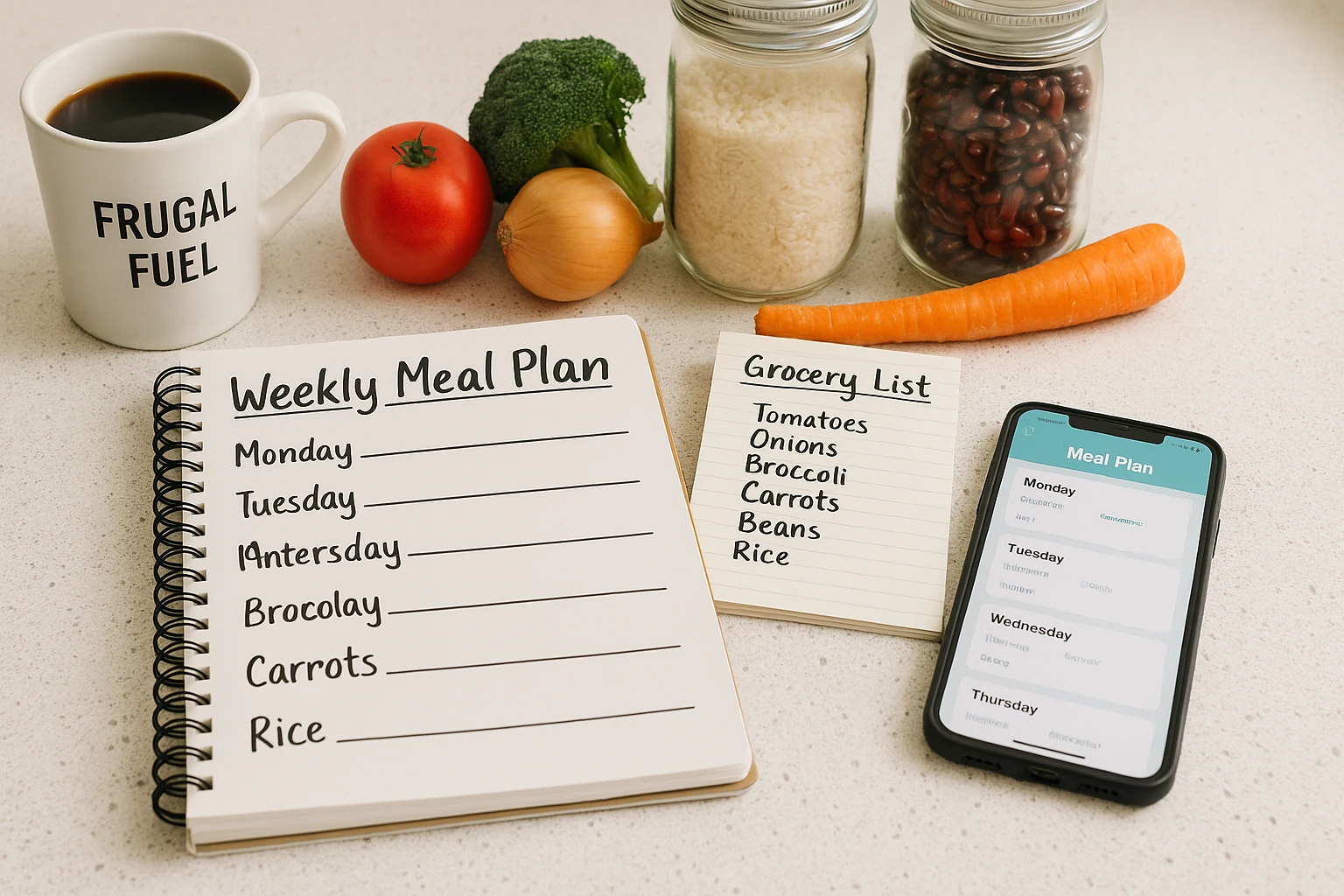
Meal planning saves the most friction when you start with what is already in the fridge, freezer, and pantry. Pick meals around those ingredients and the sales you can actually use, rather than choosing a perfect menu and buying every item from scratch. For a step-by-step grocery strategy, see grocery shopping on a budget.
- Inventory your fridge, freezer, and pantry before making the list.
- Choose a few meals that share ingredients so leftovers have somewhere to go.
- Shop with a list and leave room for one flexible meal that uses odds and ends.
- Freeze ingredients or portions before they become waste.
One recurring Reddit approach is to plan from the pantry and sale list first, then choose meals. For your next grocery run, plan three dinners from food you already own before you add anything to the cart.
Make Cooking at Home Easier Than Takeout
“Cook at home” is weak advice if dinner still feels like a project at 7 p.m. The practical version is to build a small rotation of meals you can make quickly and to leave yourself ready-to-eat or easy-to-reheat food for the next busy day.
- Choose two or three dinners you can repeat without much planning.
- Cook extra grains, proteins, soups, sauces, or casseroles when the leftovers will actually get eaten.
- Pack tomorrow’s lunch while dinner is already out.
- Keep one low-effort backup meal on hand for the night you would otherwise order in.
Cooking at home works best when it is easier than ordering out. Pick one “too tired to cook” meal and make sure its ingredients are always available.
Cancel Subscriptions That No Longer Earn Their Place
Subscriptions become expensive when they stop being decisions. Instead of cancelling everything, audit the charges that repeat automatically and ask whether each one still solves a problem you care about.
- Scan recent bank and card statements for recurring charges.
- Cancel services you rarely use or can replace with something you already pay for.
- Check whether an annual plan, pause, downgrade, or shared eligible plan is actually cheaper for your usage.
The useful Reddit habit is the audit itself: identify charges you barely use, then cut or renegotiate the ones that no longer earn their place. Cancel one low-value recurring charge before you look for a new savings hack.
Negotiate the Bills You Can Actually Switch
Internet, phone, and some insurance costs are easier to negotiate when you know the real alternative. Check a competing plan first, then ask whether your current provider can beat it without quietly changing the service you need.
- Collect a comparable competitor offer before you call.
- Ask whether there is a retention, loyalty, or lower-tier option that fits your usage.
- Confirm the new monthly price, fees, term, and what happens after any promotional period.
- Review the bill again later so price creep does not become invisible.
Negotiation works better with a credible fallback than with a generic threat to cancel. Choose the recurring bill with the clearest competitor and make that your first call.
Compare the Full Cost of Your Commute
Transportation is not just fuel. Parking, fares, maintenance, insurance, and time can change which option is actually frugal for you.
- Walk or bike short trips when the route is safe and practical.
- Compare transit, carpooling, and driving using the costs you actually pay.
- Keep up with routine maintenance and tire pressure instead of waiting for a bigger repair.
- Compare insurance when renewal arrives rather than assuming the current rate is still competitive.
Ask HR whether your employer offers commuter benefits; eligibility and tax treatment depend on the benefit and plan. Compare one week of real commute costs before changing your routine.
Cut Energy Waste Before Buying Upgrades
Start with waste you can see or measure before buying a new gadget. Drafts, inefficient lighting, unnecessary standby use, and an overly aggressive thermostat setting can all be worth checking, but the payoff depends on your home, climate, and utility rates.
- Seal obvious drafts around doors and windows when the fix is appropriate for the surface.
- Use efficient lighting in frequently used fixtures.
- Turn off or unplug devices that do not need to remain powered.
- When an appliance genuinely needs replacement, compare energy use and look for ENERGY STAR certified options where the category applies.
Your utility may offer rebates, usage data, or an energy audit that changes which improvement is worth doing first. Check that free information before paying for a major upgrade.
Repair Before You Replace
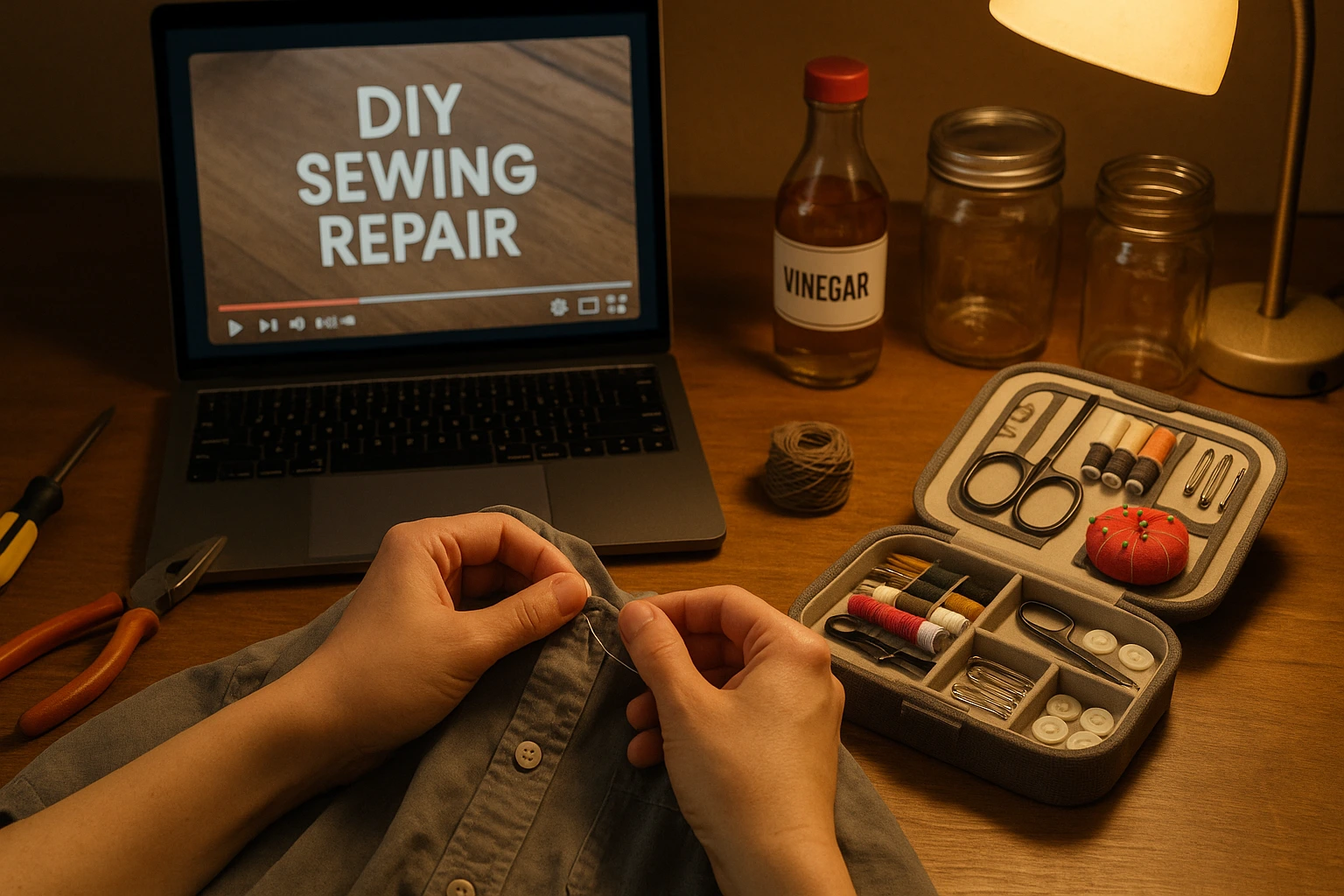
A small repair can be a strong frugal move when the failure is clear, the part is affordable, and the job is within your skill level. A basic minimalist tool kit can cover common low-risk fixes without turning your home into a hardware store.
- Diagnose the problem before ordering a part or replacing the item.
- Compare the repair cost with the remaining useful life of the item.
- Use reputable instructions and the correct tools.
- Skip DIY for electrical, gas, structural, or other safety-critical work you are not qualified to handle.
Reddit repair threads repeatedly show the value of pricing the failure before replacing the whole item. For the next broken household item, spend ten minutes diagnosing it before you start shopping.
Use Libraries and Buy Nothing Groups
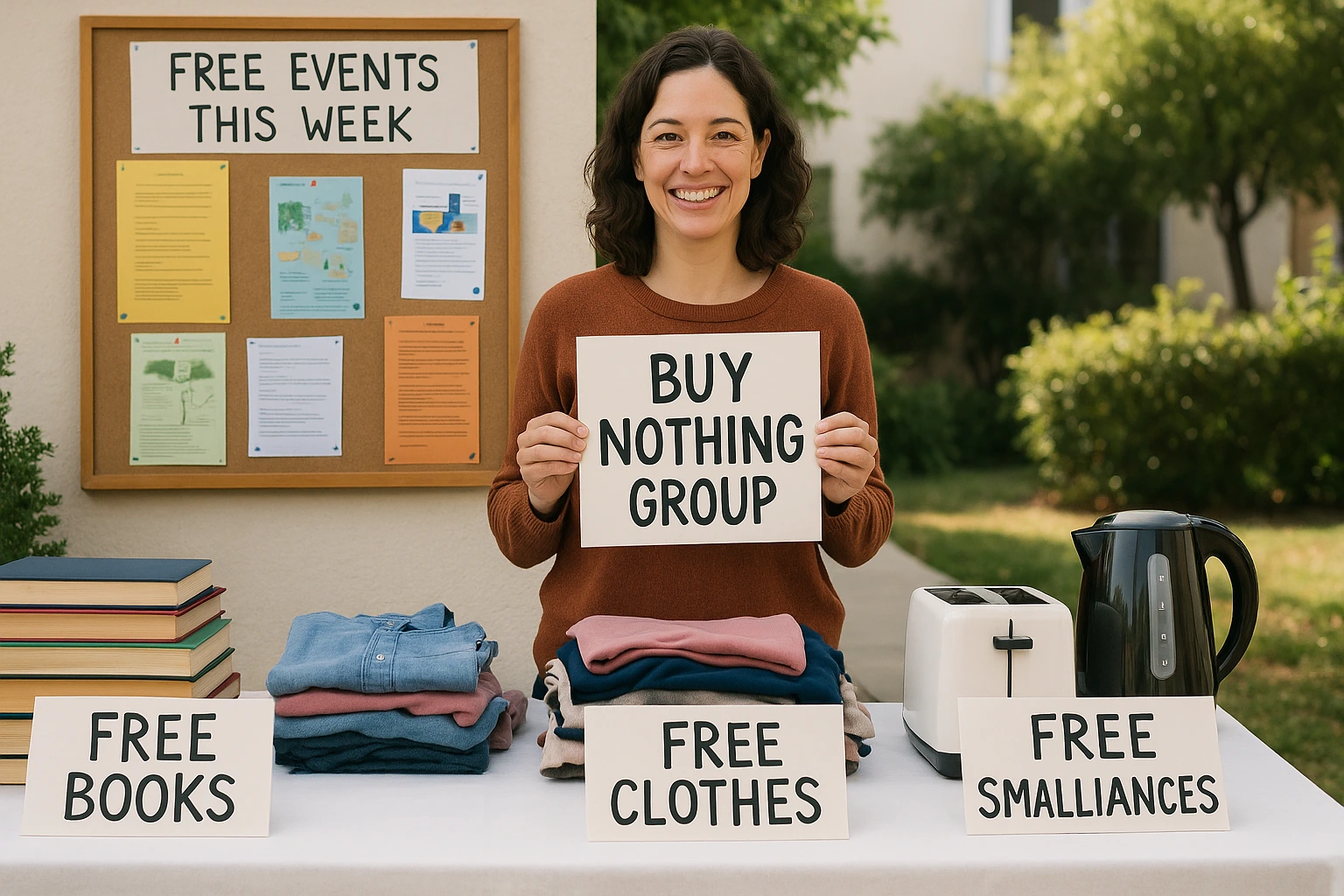
Free community resources work best when you check them before you buy. Libraries can offer much more than books, while Buy Nothing and other local reuse groups can help items move between neighbors instead of straight to a store or landfill.
- Check your library’s catalog and events page before buying a book, movie, course, or activity.
- See whether your library lends tools, passes, devices, or other non-book items.
- Use a local Buy Nothing or reuse group for items you are comfortable receiving secondhand.
- Subscribe to your city or community calendar for free events and services.
If you want book ideas before you browse the catalog, our frugal living books guide gives you a shortlist. Before your next non-urgent purchase, check one local free source first.
Add Friction Before You Buy
Frugal shopping is less about collecting coupon codes and more about making the purchase prove itself. Compare the total price, check whether you already own a workable substitute, and slow down nonessential decisions long enough to notice impulse.
- Compare prices and total costs, including shipping or recurring fees.
- Use coupons or cash-back only when they support a purchase you already intended to make.
- Buy shelf-stable staples in bulk only when you will use them before quality declines.
- Add one speed bump to impulse purchases: remove saved payment details or shopping apps where you tend to buy on autopilot, then use a waiting rule that fits the size and urgency of the decision.
For food purchases, see our Reddit grocery shopping tips. For your next nonessential purchase, compare one alternative and wait at least until tomorrow before checkout.
Capture the Savings Automatically
A frugal habit only improves your finances if the freed-up money stays available for a goal. Once a change proves itself in your real spending, automate a transfer you can sustain and review it periodically. Want a concrete target? See how to save $500 a month. If debt is the bigger priority, our debt management plan covers the broader sequence.
- Start with an amount your cash flow can handle consistently.
- Schedule the transfer near payday or another predictable income point.
- Keep enough cash available for bills and short-term needs.
- Raise the transfer only after the lower spending is showing up consistently.
The repeatable idea is to turn an observed saving into a system instead of relying on willpower. After one month, move part of the verified difference automatically rather than the amount you hoped to save.
Want a Separate Place for Money You Keep?
GO2bank’s savings vaults keep money separate from your everyday balance — useful if that separation helps you actually leave it alone. Check the fees and vault terms before deciding.
Review GO2bank savings details
Frequently Asked Questions
Pick One Frugal Experiment and Measure It
Do not try to become “more frugal” everywhere at once. Pick the tip that touches a recurring cost you actually have, run it for a month, and compare the result with your normal spending. If it saves money without creating a bigger problem, keep it and automate part of the difference; if it does not, drop it and test the next idea.
That is the useful part of Reddit-style frugality: not collecting hacks, but finding the few repeatable changes that fit your real life.
If these tips free up money, look at the rest of your finances before you decide where that difference should go.
See Your Income, Spending, Debts, and Goals on One Screen
Confirm to get the workbook and frugal money tips. Unsubscribe anytime.
Something went wrong. Please check your email address and try again.
This content is for informational purposes only and not financial advice. Consult a qualified professional for guidance tailored to your situation.

