
A minimalist tool kit should solve recurring jobs without becoming another collection to manage. Start with the problem, not the product. If one tool already handles a job well, the minimalist choice is usually to keep it rather than buy a duplicate.
This guide uses a 15-item template across home repair, kitchen, personal care, and a few digital supports. If you mainly want a minimalist home tool kit for basic repairs, start with the home-maintenance core and treat the other categories as optional until another recurring need appears. The full list is a starting filter, not a shopping list. Use the starter-kit builder to narrow it for your living setup and main priority. For the broader spending habits behind that approach, see our money mindset guide.
Build Your Starter KitThis page contains Amazon affiliate links. As an Amazon Associate, we earn from qualifying purchases at no extra cost to you. Links marked with ‘#ad’ are affiliate links. Learn more.
Table of Contents
- Key Takeaways
- What Is a Minimalist Tool Kit?
- Build Your Minimalist Starter Kit
- 15 Essentials for a Minimalist Tool Set
- Check the Numbers Before You Add Another Tool
- How to Adapt the Kit to Your Living Situation
- Tips for Maintaining Your Toolkit
- When to Add Another Tool
- FAQs
- Conclusion
Key Takeaways
- A minimalist toolkit is a small, deliberate set for recurring jobs, not a goal to own every item on a checklist.
- For a household kit, prioritize versatile hand tools first; count digital tools only when they replace paper, duplicate devices, or repeated admin.
- Buy after a repeated need appears. If an item you already own works well, keep it and skip the duplicate.
- Borrow, rent, share, or delay rarely used tools instead of expanding the kit by default.
What Is a Minimalist Tool Kit?
A minimalist tool kit is a deliberately small set of tools chosen around the jobs you actually do. The useful test is not “Is this a good tool?” but “Does this solve a recurring problem better than what I already have?” That keeps the focus on function, storage, and replacement cost rather than collecting gear.
The 15 items below are a template across home repair, cooking, personal care, and digital organization. Most readers will need only a subset. If budgeting is the main problem you are trying to solve, the separate guide to minimalist budgeting tools for beginners goes deeper on that digital side.
Before adding anything, ask three questions:
- What recurring task will this handle?
- Do you already own something that does the job well enough?
- Will you use it often enough to justify its cost and storage space?
If the answer is unclear, wait. A minimalist tool set gets better by proving what belongs, not by completing a shopping list.
Build Your Minimalist Starter Kit
Choose your living setup and the one priority you want this first kit to optimize. You’ll get a lean starting list plus a few items to leave for later.
Choose your living setup and main priority to build your starter kit.
Your lean starter kit
Start with these
Add later, only if needed
15 Essentials for Your Minimalist Tool Set
Use the builder result as a filter. The full list below shows 15 possible items, but you probably do not need all 15. If you came for a compact household repair kit, the first four items are the repair core; items 5–15 are optional extensions for kitchen, personal care, and digital organization. Start with the category that solves a problem you already have, then add another item only when it earns its space.
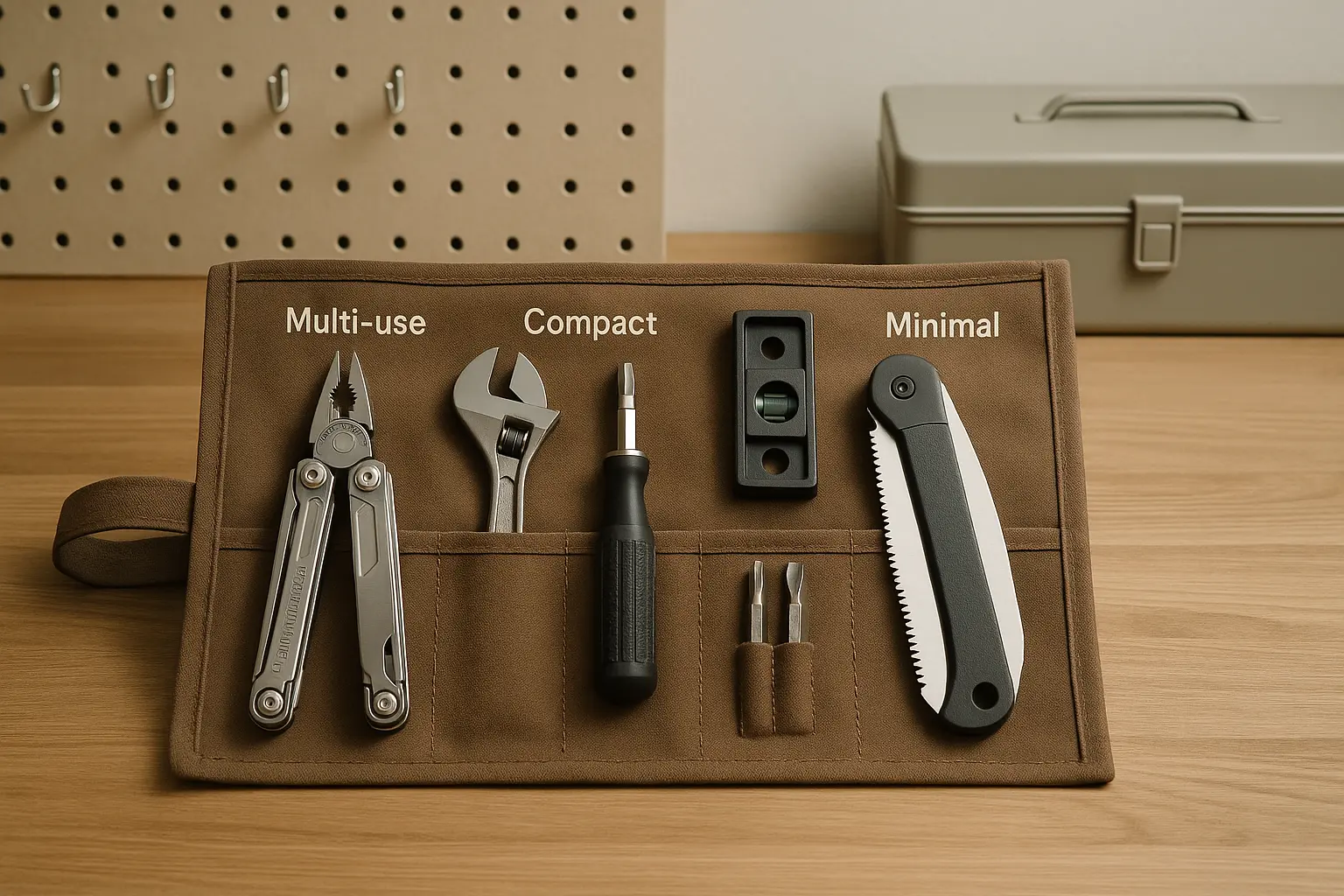
- Multi-tool: One compact piece for everyday repairs and quick fixes.
- Adjustable wrench: Handles multiple bolt sizes without a full wrench set.
- Screwdriver set with interchangeable bits: Covers most household screws in one case.
- Measuring tape: Essential for DIY projects and furniture layouts.
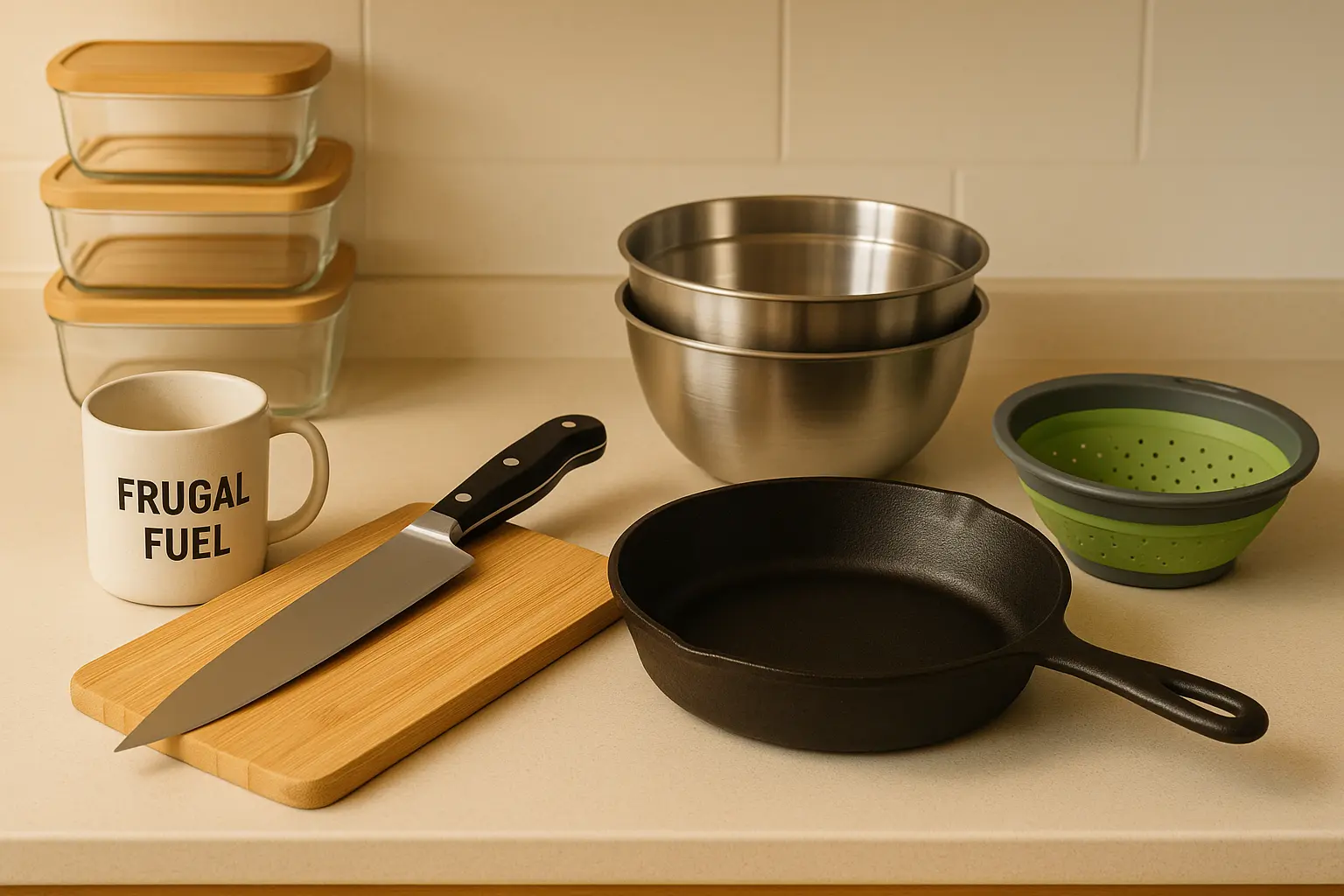
- Chef’s knife: A single, sharp knife for almost all prep tasks.
- Cutting board: Durable surface that protects counters and knives.
- Cast iron skillet: Versatile pan for stovetop and oven cooking.
- Nesting mixing bowls: Multi-purpose bowls that store compactly.
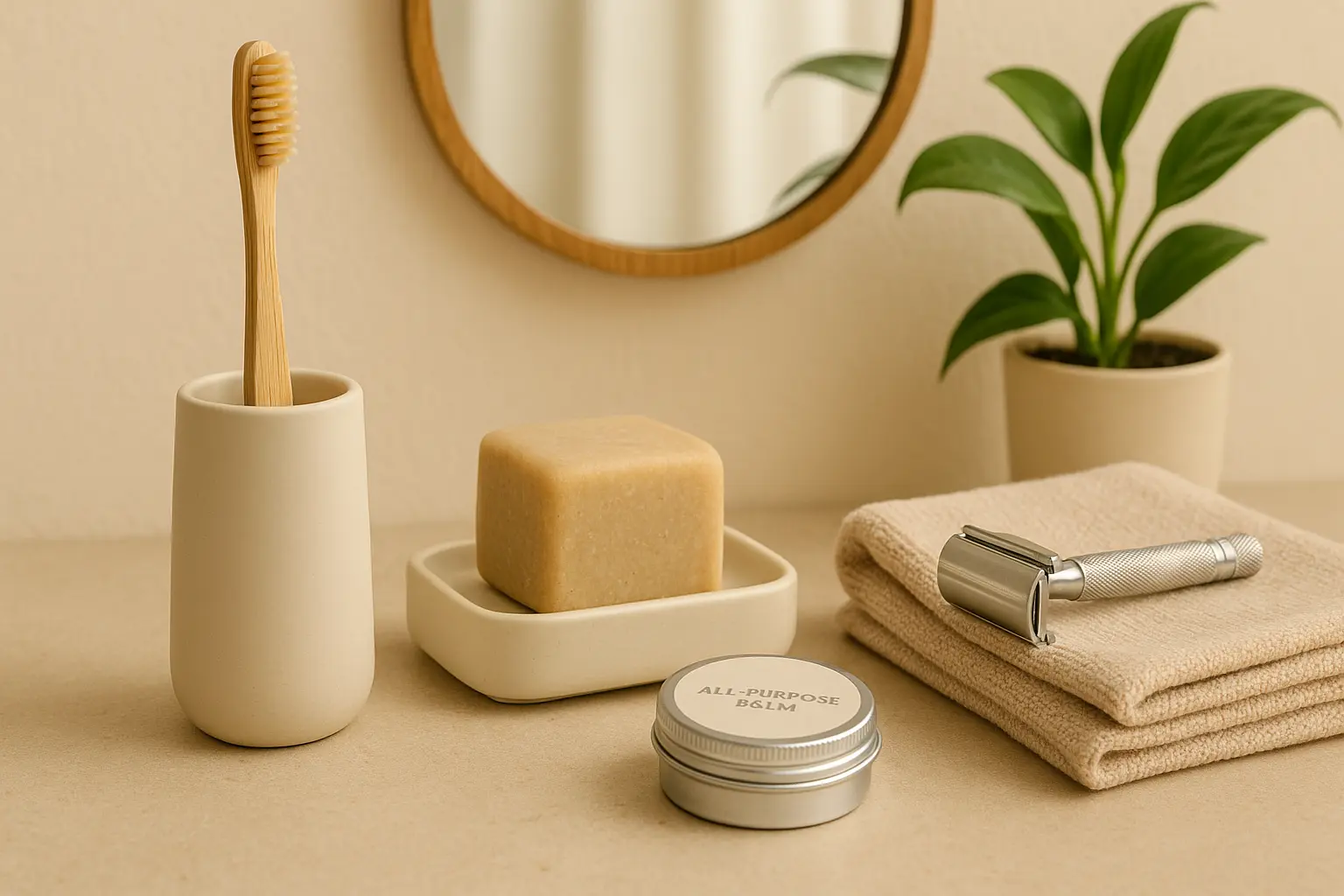
- Safety razor: Durable shaving option that can reduce reliance on disposable razor handles.
- Shampoo bar and soap bar: Solid cleansers that can reduce bottle clutter.
- Bamboo toothbrush: A lower-plastic handle option to consider when your current toothbrush needs replacing.
- Budgeting app: Central hub for tracking spending and goals.
- Laptop or tablet: All-in-one device for work, planning, and money management.
- Noise-cancelling headphones: Helps you focus on budgeting and deep work.
- Cloud storage: Keeps important files and receipts organized and paper-free.
Minimalist Home Tool Kit: Repair Core
For many renters and homeowners, a compact hand-tool core is enough: a multi-tool for light-duty fixes, an adjustable wrench for common fasteners, an interchangeable-bit screwdriver for screws, and a measuring tape for sizing and layout. Dedicated tools still beat a multi-tool for jobs that need more leverage or precision, so the minimalist move is to add them only when the task actually calls for them.
Kitchen Tools That Earn Their Space
Kitchen minimalism works best when a few durable basics cover the meals you make repeatedly. A chef’s knife and cutting board handle most prep; a cast iron skillet earns its place when you want one pan that can move between stovetop and oven; nesting bowls make sense when they replace several bulky containers. For the food-budget side of the decision, see grocery shopping on a budget.
If a chef’s knife is the real gap, the Mercer Culinary Millennia 8-Inch Chef’s Knife, White is a straightforward single-knife option for everyday prep, suited to common chopping, mincing, and slicing tasks; skip the purchase if you already own one comfortable chef’s knife you use consistently.
Buying rule: upgrade the category only when the current tool is missing, uncomfortable, unsafe, or repeatedly slowing the task down.
Personal Care & Grooming Tools
Personal-care items are best treated as replace-as-needed categories, not a reason to buy a new “minimalist” version of everything at once. A safety razor may reduce reliance on disposable razor handles if you are comfortable maintaining it; shampoo and soap bars can reduce bottle clutter; and a bamboo-handled toothbrush is only worth considering when your current toothbrush needs replacing.
Digital Tools That Replace Clutter
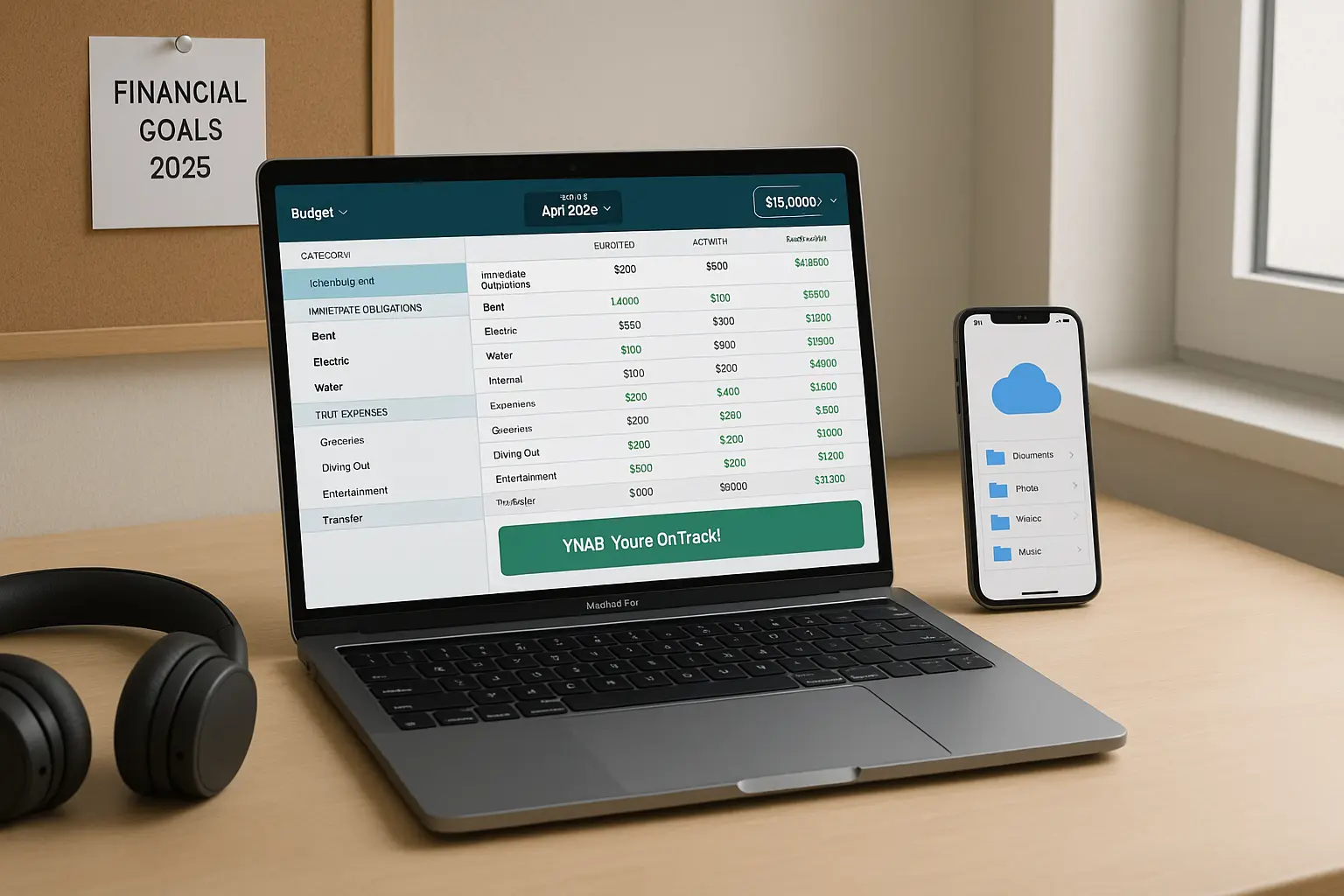
Digital tools are supporting tools, not mandatory gear. A budgeting app can replace paper tracking, a laptop or tablet can consolidate work and planning, cloud storage can reduce paper files, and noise-cancelling headphones are optional when they solve a real focus or noise problem. For additional no-cost options, see our list of free financial tools.
YNAB supports linked accounts for supported financial institutions, but imported transactions are not a real-time feed and may appear after the bank clears them. If you use bank import, review imported transactions and reconcile rather than assuming every transaction will appear immediately. See YNAB’s current linked-account guidance.
If the digital side of your toolkit is mostly about understanding your money, start with a snapshot before adding another app.
Check the Numbers Before You Add Another Tool
Enter income, spending, up to 8 debts, and up to 8 goals; the SNAPSHOT sheet brings the key numbers together automatically.
Confirm to get the workbook and frugal money tips. Unsubscribe anytime.
Something went wrong. Please check your email address and try again.
How to Adapt the Kit to Your Living Situation
The same 15-item template should produce different starting kits for different lives:
- Renter: favor compact repair basics and avoid buying specialized tools for work your landlord or building handles.
- Homeowner: keep the basic repair core, then add dedicated tools only for maintenance jobs that recur.
- Small space: storage footprint becomes part of the buying decision, so multi-use and nesting items deserve extra weight.
- Frequent traveler: default to digital and personal-care basics; check current carrier and security rules before packing blades or tools.
The starter-kit builder above applies the same principle automatically: living setup first, then the priority that matters most right now.
Tips for Maintaining Your Toolkit
A minimalist toolkit stays useful only if it can shrink as easily as it grows. Use these rules to keep the set practical:
- Add after repeated need: one frustrating task is not always enough evidence to buy a new tool.
- Prefer replacement over expansion: when a new item solves the same job better, retire or repurpose the old one instead of keeping both by default.
- Borrow or rent rare-use gear: ownership makes less sense for tools you need once or twice a year.
- Maintain before replacing: clean, sharpen, charge, update, or repair tools that still fit the job.
- Give every physical tool a home: one drawer, toolbox, shelf, or tray makes missing items and duplicates easier to spot.
- Trim digital clutter too: remove unused apps and files, and keep only the digital tools that still support a recurring task.
- Review linked financial data: bank-import tools can lag or miss transactions, so reconcile them against the source account.
A periodic review can help, but the best trigger is a change in your home, work, travel, or routine. The toolkit should follow your life rather than a fixed replacement schedule.
When to Add Another Tool
Minimalism does not mean refusing every upgrade. Add or replace a tool when the need is specific enough to describe:
- The same workaround keeps failing: a recurring task is costing time, creating frustration, or producing poor results.
- You keep borrowing the same thing: repeated borrowing can be evidence that the tool has become part of your normal routine.
- Your current tool no longer fits the job: replace something that is damaged, uncomfortable, unsafe, or too limited for a task you actually repeat.
- One better tool can replace duplicates: consolidation is useful when it reduces storage and still covers the work you do.
If a new item does not replace something, solve a recurring problem, or support a tool you already rely on, wait. That rule matters more than owning a perfectly curated set. If you want to connect it to broader spending habits, the frugal living minimalism guide is the natural next step.
FAQs
Conclusion
A minimalist tool kit is finished when it handles the jobs you actually repeat—not when it reaches 15 items. Keep what already works, add only after a need repeats, and borrow or rent specialized gear when ownership does not earn its space. If you are starting from scratch, use the builder above to choose your first few items, then stop until a real task exposes the next gap.
This content is for informational purposes only and not financial advice. Consult a professional before making financial decisions.

