

What would an extra $50, $100, or $500 a month actually do to your mortgage? Use our free mortgage payoff calculator with extra payments below to see how your current balance, fixed rate, remaining term, and extra principal change the estimated payoff month, months saved, and interest you may avoid.
If your statement feels like the balance barely moves, the calculator makes that amortization math easier to see. Test an amount you could realistically sustain, then use the sections below to check lender rules and the trade-offs with savings, other debt, retirement, and investing. For the broader mortgage picture—from payoff strategy to refinancing—see our homeowner’s guide to mortgages.
This post contains affiliate links. If you buy through our links, we may earn a commission at no extra cost to you. Learn more.
Table of Contents
- Mortgage Payoff Calculator with Extra Payments
- Key Takeaways for Paying Off Your Mortgage Early
- Why Pay Off Your Mortgage Early?
- How Extra Payments Work
- Ways to Make Extra Mortgage Payments
- Other Financial Considerations
- See the Rest of Your Money Before You Pay Extra
- Is Early Payoff Right for You?
- Frequently Asked Questions
- Build a Mortgage Payoff Plan You Can Sustain
Mortgage Payoff Calculator with Extra Payments
Replace the example values with your current balance, fixed rate, and remaining term. Add an optional one-time payment, monthly extra, or both; the estimate covers principal and interest only.
Optional. The estimate assumes this amount is applied to principal before the next scheduled payment.
Use the slider for quick comparisons, or type a larger amount directly.
Your Payoff Estimate
Adjust the extra monthly principal amount or add a one-time principal payment to compare a faster payoff with the baseline schedule.
Baseline: calculating estimated scheduled principal-and-interest payment and payoff month.
Assumptions: fixed rate, monthly payments, no recast, and each extra amount applied to principal. Taxes, homeowners insurance, HOA charges, escrow, fees, and any prepayment penalty are excluded.
View estimated monthly amortization schedule
This mortgage amortization schedule shows the accelerated principal-and-interest path from your inputs. If you entered a one-time principal payment, the schedule begins after that amount is applied.
| Month | Payment | Interest | Principal | Balance |
|---|
Key Takeaways for Paying Off Your Mortgage Early
Once you have a result, the next question is whether that extra payment fits the rest of your finances. Keep these four points in mind as you work through the options below.
- Extra principal changes the math: Paying principal sooner can shorten the term and reduce future interest.
- Use the calculator, then verify the setup: Treat the result as an estimate and confirm how your servicer applies extra payments.
- Choose a method that fits your cash flow: Recurring extras, biweekly payments, and lump sums can all work when the money reaches principal as intended.
- Protect the rest of your plan: Keep emergency savings, higher-cost debt, retirement goals, taxes, and lender rules in view before committing more cash to home equity.
Why Pay Off Your Mortgage Early?
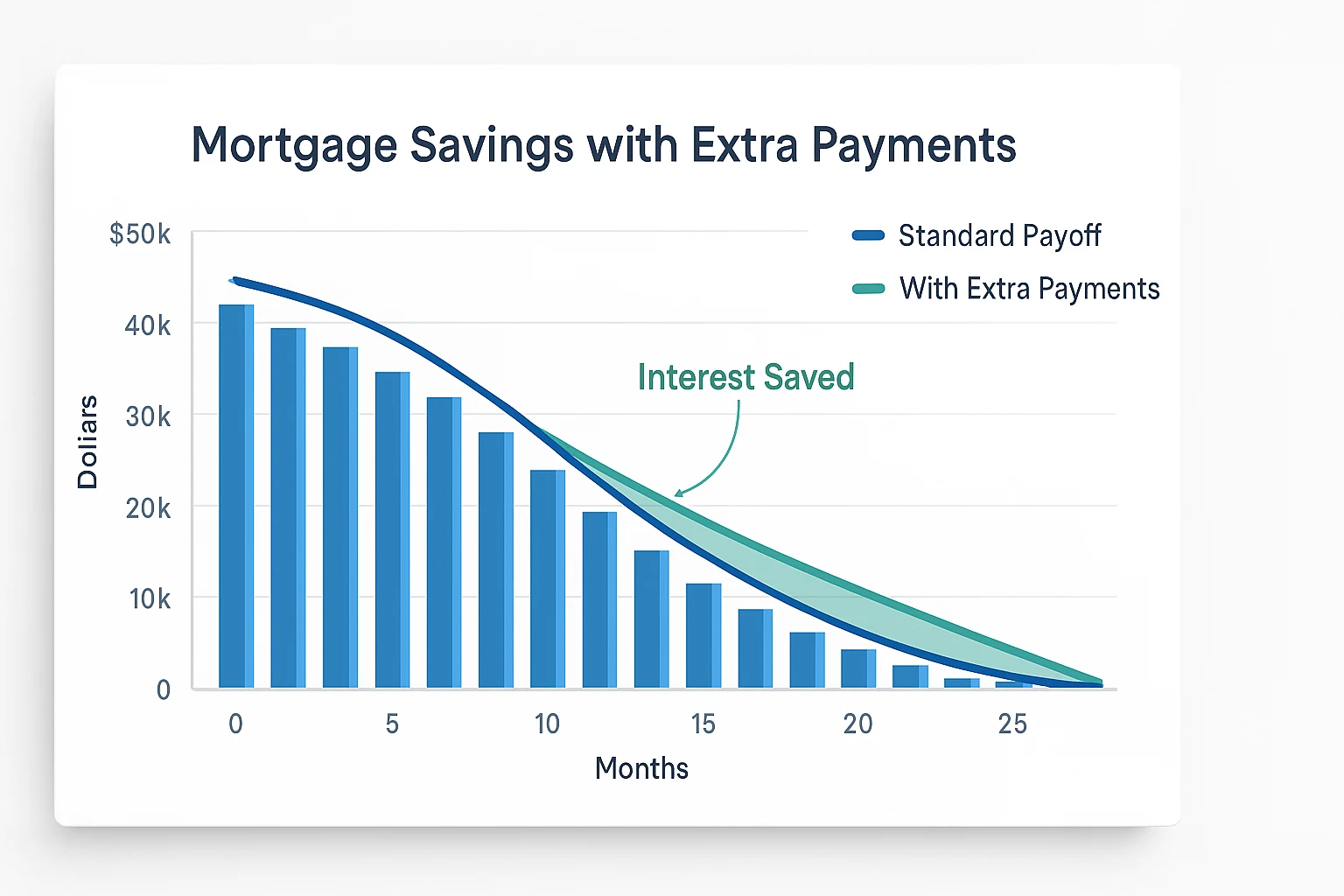
Early payoff can reduce lifetime interest and build home equity faster. Once the loan is gone, the required principal-and-interest payment disappears, which can free cash flow for other goals.
The trade-off is liquidity. Extra principal does not increase your home’s market value, and money moved into home equity is harder to access than cash in a savings account. That matters if your income is uncertain, you have higher-cost debt, or you expect another large expense.
Instead of treating “mortgage-free” as an automatic goal, decide what an earlier payoff would do for you: reduce fixed obligations, cut interest, or reach a debt-free date sooner. That goal should guide how aggressive your extra payment is.
How Extra Payments Work
Extra payments reduce principal sooner. On a fixed-rate mortgage, monthly interest is based on the outstanding balance, so lowering principal earlier can reduce later interest and shorten the payoff timeline.
Understanding Amortization
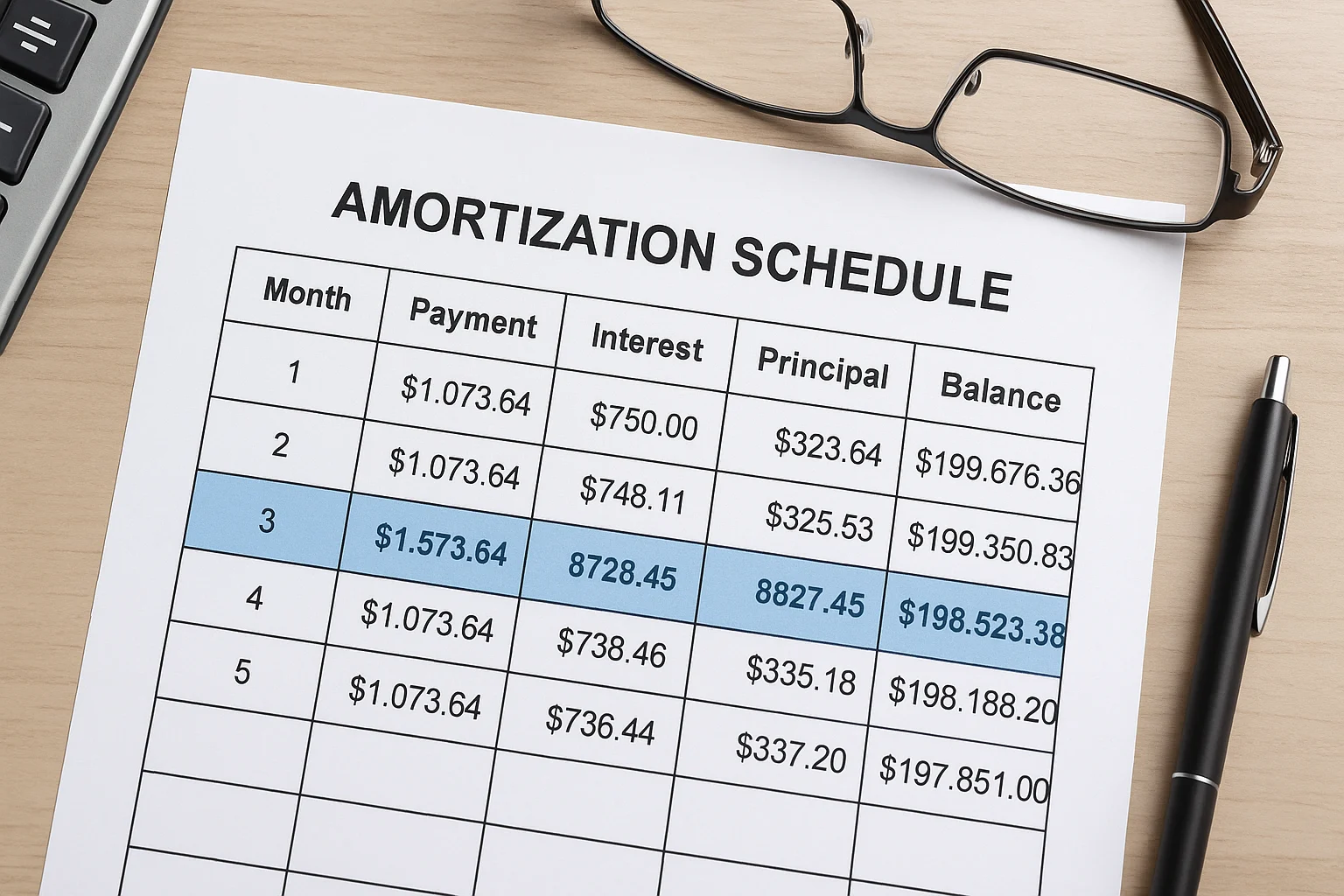
Early scheduled payments usually contain a larger interest share because the balance is higher. As the balance falls, more of the scheduled principal-and-interest payment goes to principal. Open the calculator’s monthly amortization schedule to see that pattern with your own inputs instead of relying on a generic example.
Why Earlier Principal Can Save More Interest
When an extra amount reaches principal earlier, there are more future months in which interest is calculated on a lower balance. Compare the calculator schedule with your latest statement to see how your actual principal-and-interest split is evolving. For the same payoff math on non-mortgage loans, try our simple loan amortization calculator with extra payments.
Ways to Make Extra Mortgage Payments
Choose a payment pattern that fits your cash flow and that your servicer applies to principal as intended. A recurring extra is easy to plan for; a lump sum can reduce the balance sooner when cash becomes available.
Extra Monthly Mortgage Payments
Add a fixed amount to the scheduled payment or round the payment up to a number that fits your budget. Start small enough that you can keep the rest of your financial plan intact, then reassess after a few months.
Biweekly Mortgage Payments
A true bi-weekly plan uses 26 half-payments per year, equal to 13 monthly payments. Before using that setup, confirm how your servicer handles partial payments; some servicers may hold a partial payment until enough money arrives to make a full periodic payment. If you want a deeper walkthrough of the timing and interest effects, see our bi-weekly mortgage payments guide.
One-Time Lump-Sum Payments
A bonus, refund, or other one-time cash amount can reduce principal without creating a larger recurring obligation. The calculator above can model a one-time principal payment alongside a recurring monthly extra. Follow your servicer’s instructions and verify the posting afterward. If you’re also modeling extra payments on student loans, use our student loan payoff calculator with extra payments.
Redirect Payments After Other Debts Are Gone
When another debt is paid off, you can redirect some or all of that freed-up payment toward the mortgage instead of increasing your monthly spending. If you’re deciding which debt to tackle first, our debt snowball vs. avalanche guide compares the two common payoff methods.
Other Financial Considerations
Extra mortgage principal is useful only if it fits the rest of your finances. Before increasing the payment, check these four areas.
Emergency Savings and Higher-Cost Debt
Keep an emergency cash cushion before committing too much money to home equity. The right amount depends on your household and risks; the goal is to handle an unplanned repair, medical bill, or income disruption without immediately needing new debt. The CFPB’s emergency-fund guide is a useful starting point.
Also compare other debts by interest rate, fees, minimum payments, and the consequences of falling behind. If minimizing interest cost is the goal, the highest-rate debt may deserve the extra dollar first. For a step-by-step framework, read our complete guide to debt management.
Lender Rules and Prepayment Penalties
Some mortgages have prepayment penalties, although the CFPB notes that they do not normally apply to small extra principal payments. Check your own loan terms and servicer instructions before changing your payment pattern, including how extra money should be designated and whether any limits apply. See the CFPB’s current prepayment-penalty guidance.
Retirement and Investing
If your workplace retirement plan offers an employer match, review its contribution and vesting terms before redirecting money to extra mortgage principal.
Do not compare an expected investment return with your mortgage rate as though both were guaranteed: extra principal can reduce future mortgage interest when it is applied to principal, while investments can gain or lose value. Compare your time horizon, liquidity needs, taxes, and risk tolerance; Investor.gov explains risk tolerance and asset allocation.
Taxes and Refinancing
On a fixed-rate mortgage, the scheduled principal-and-interest payment stays fixed, but taxes, insurance, and other housing costs can still change. Mortgage interest may be deductible for some taxpayers who itemize and meet the applicable limits; check the current IRS Publication 936 guidance or a qualified tax professional for your situation.
A lower refinance rate does not automatically make refinancing the better choice: closing costs, the new loan term, and how long you expect to keep the loan all matter. Start with our mortgage recast vs refinance guide, then use the mortgage refinance break-even calculator to estimate when upfront costs are recovered.
Before you commit to paying more toward the mortgage, check what that money would be competing with elsewhere in your finances.
See the Rest of Your Money Before You Pay Extra
The SNAPSHOT sheet totals income, spending, up to 8 debts, and up to 8 goals automatically.
Confirm to get the workbook and frugal money tips. Unsubscribe anytime.
Something went wrong. Please check your email address and try again.
Is Early Payoff Right for You?
An early mortgage payoff is more attractive when it strengthens your overall plan rather than crowding out cash you may need elsewhere.
Early Payoff May Fit Better When
- You have emergency savings that fit your household’s risks.
- Higher-cost debt is under control.
- You understand any employer retirement match and are comfortable with your contribution level.
- Reducing fixed debt obligations matters more to you than keeping the extra cash liquid.
- Your lender confirms how extra principal will be applied.
Pause and Compare Other Uses for the Money When
- Your emergency savings are thin or your income is uncertain.
- You carry substantially higher-cost debt.
- You would give up a valuable employer match without understanding the trade-off.
- You expect to need the cash for a near-term goal or major expense.
- You prefer investing after accounting for risk, time horizon, liquidity, and taxes.
Use the calculator to test a payment that fits between those priorities rather than aiming for the largest extra amount you can technically afford. Then verify the payment method with your servicer before making it recurring.
Still Unsure Where the Extra Cash Should Go?
If the payoff math looks good but you’re still weighing extra principal against savings, debt, taxes, or investing, a finance expert can help you think through the trade-off before you change the payment.
Frequently Asked Questions
Build a Mortgage Payoff Plan You Can Sustain
Start with one extra-payment amount that leaves room for the rest of your priorities. Use the calculator to see the estimated trade-off, then check your emergency savings, other debt, retirement plan, taxes, and lender rules before you make the change recurring.
If the number still works after those checks, verify that your servicer applies the extra amount to principal and revisit the plan whenever your income, expenses, or goals change. Treat the calculator as a way to choose a sustainable payoff pace, not a target to maximize.

This content is for general information and education only and is not personalized financial, tax, or investment advice. Your interest rate, lender terms, and personal circumstances are unique, so your actual results may differ from the examples on this page. Use this calculator as a starting point only, and consider speaking with your lender or a qualified financial or tax professional before making big changes to your mortgage or payoff plan.

