

A side hustle is not frugal just because it makes money. If it requires new gear, long commutes, paid ads, or hours of unpaid setup, the extra income can disappear into costs. The better side hustles for frugal living start with skills, time, or assets you already have and let you test demand before spending much.
This guide compares 19 ideas by setup, trade-offs, and where to start. Use the side-hustle matcher to find a practical lane, then run one small test and calculate what you kept for the time you spent. If your goal is to save money fast, give the extra income a specific job in your budget; for the broader income picture, see our increase your income guide.
This post contains paid/affiliate links. As an Amazon Associate we earn from qualifying purchases, and we may earn commissions from other partners at no extra cost to you. Learn more.
Table of Contents
- Find Your Best Side-Hustle Lane
- How to Choose a Frugal Side Hustle
- See Your Money on One Screen Before You Add More Work
- Resale Side Hustles: Start With What You Own
- Local Service Side Hustles
- Digital Side Hustles
- Passive-ish Side Hustles That Can Build Over Time
- Before You Choose: Costs, Taxes, and Rules
- Frequently Asked Questions
- Your Next Step: Run One Cheap Test
Find Your Best Side-Hustle Lane
Answer three quick questions. You’ll get one practical starting lane and one low-cost test to try before you spend more time or money.
Use the match as a starting point. The next section gives you a quick frugal filter for deciding whether the lane is actually worth testing before you scan the detailed ideas.
How to Choose a Frugal Side Hustle
Frugal living has two levers: spend deliberately and earn more. If your budget still has obvious leaks, cutting monthly expenses may beat adding more work. If not, use these four filters before you invest money in a side hustle.
- Start with what you already have. Existing skills, spare time, useful items, or available space usually make a cheaper test than buying equipment or inventory first.
- Test demand before you scale. Try one listing, one tightly scoped service, or one small outreach batch before paying for tools, inventory, ads, or a bigger setup.
- Judge the real return, not just revenue. Count platform fees, fuel, supplies, travel, and unpaid admin time so an attractive headline rate does not hide a weak result.
- Match the hustle to the job. Selling unused items can produce quick one-off cash; client services can become repeatable work; reusable digital assets usually need more setup before they have a chance to scale.
Run a Three-Step Test
- Use the matcher above to choose one starting lane.
- Define a small test with a spending cap: one listing, one service offer, or one short outreach batch.
- Track the money received, direct costs, and total time before you decide to repeat, adjust, or drop the idea.
Calculate your true hourly return after the test: (money received − direct costs) ÷ total time spent. For example, if a $60 job takes 2.5 hours including travel and costs $10 in fuel or supplies, the pre-tax return is $20 per hour.
If you’re adding a side hustle to save money fast or fund a goal, first get clear on what the extra income needs to support.
See Your Money on One Screen Before You Add More Work
Track income, spending, up to 8 debts, and up to 8 goals; the SNAPSHOT sheet totals everything automatically.
Confirm to get the workbook and frugal money tips. Unsubscribe anytime.
Something went wrong. Please check your email address and try again.
Resale Side Hustles: Start With What You Own
Resale is one of the clearest ways to test a side hustle with assets you already control. Start with your own unused items before buying inventory; that gives you real data on pricing, fees, pickup or shipping effort, and local demand.
Selling Used Items Online
- Frugal fit: Selling items you already own avoids buying initial inventory, though listing fees, packing materials, shipping, and your time can still reduce the return.
- What you need: Items to sell, a smartphone for photos, packing materials and skills.
- Pricing reality: Your return depends on what you already own, condition, demand, shipping or pickup costs, and marketplace fees.
- Where to start: eBay, Facebook Marketplace, Poshmark, Mercari.
Flipping Furniture or Thrift Store Finds
- Frugal fit: Low-cost or free finds can create a resale margin when repair materials, transport, labor, and selling fees still leave room for profit.
- What you need: DIY skills, a good eye for design, basic tools, and transport.
- Pricing reality: Profit depends on purchase price, materials, transport, labor, and local resale demand; calculate those costs before calling a flip profitable.
- Where to start: Facebook Marketplace, Craigslist, Etsy.
Book Flipping
- Frugal fit: Books can be sourced cheaply, but edition, condition, fees, shipping, and demand determine whether a flip is actually worthwhile.
- What you need: A smartphone for research and listings, plus packing materials if you ship orders.
- Pricing reality: Margins vary widely by edition, condition, sourcing cost, marketplace fees, shipping, and current demand.
- Where to start: Amazon, eBay.
Upgrade only after shipping becomes repeatable. Do not turn a low-cost resale test into a gear-shopping spree. If you are shipping enough orders that package weighing has become a recurring task, the Accuteck 8250 is a dedicated postal/shipping scale. Skip it if you mainly sell through local pickup or your current setup already gives you reliable package weights.
Local Service Side Hustles

Local service gigs can be a practical starting point when you have time, reliability, and a skill people already pay for. The trade-off is that travel, scheduling gaps, supplies, and platform fees can matter as much as the advertised rate.
Pet Sitting and Dog Walking
- Frugal fit: You can sell a service that depends more on reliability and animal care than on inventory or expensive equipment.
- What you need: Comfort caring for animals, reliability, and any screening a client or platform requires.
- Pricing reality: Rates vary by service and location. On marketplace platforms, compare nearby sitter listings and account for platform fees before setting your price.
- Where to start: Rover, Wag!, PetSitter.com, or local classifieds.
General Errands and Task Services
- Frugal fit: The work can use time, local knowledge, and a vehicle or bike you already have, but travel needs to be priced into the job.
- What you need: Reliability, communication skills, and maybe a car.
- Pricing reality: Price the task, travel time, fuel, and any waiting time together so a convenient-looking job does not turn into a poor hourly return.
- Where to start: TaskRabbit, Instacart, Shipt, or local classifieds.
House Sitting and Plant Care
- Frugal fit: Paid house sitting can use trust and availability rather than inventory; accommodation-exchange networks are a different model and should not be counted as cash income.
- What you need: Trustworthiness and attention to detail.
- Pricing reality: Paid rates vary by location, duties, and whether pet care is included; some house-sitting networks offer accommodation rather than cash.
- Where to start: Paid house-sitting listings, HouseSitter.com, local referrals, or pet-care marketplaces when animals are involved. TrustedHousesitters is an accommodation exchange rather than a paid-work marketplace.
Cleaning Services
- Frugal fit: You can start with a small service area and a basic supply list, but do not assume client-safe supplies, transport, or insurance cost nothing.
- What you need: Hard work, attention to detail, basic cleaning supplies.
- Pricing reality: Local labor rates, home size, supplies, and job scope drive pricing. Compare several local quotes before setting an hourly or flat-job rate.
- Where to start: Care.com, local classifieds, or word-of-mouth.
Tutoring or Teaching a Skill
- Frugal fit: Teaching a subject or skill can use knowledge you already have, with online formats reducing travel when the subject and platform fit.
- What you need: Expertise, patience, and a good internet connection.
- Pricing reality: Rates depend on subject, credentials, format, and local demand. Specialized subjects can support different pricing than general homework help.
- Where to start: Tutor.com, established tutoring marketplaces that are hiring in your location, or local schools and community networks.
Handyman or Odd Jobs
- Frugal fit: Existing repair skills and tools can support paid odd jobs, but only take work you are qualified, insured, and legally permitted to perform.
- What you need: Appropriate tools, proven DIY skills, reliability, and any license or insurance the job requires.
- Pricing reality: Rates depend heavily on the task, local licensing rules, tools, materials, and travel. Quote only jobs you are qualified and permitted to perform.
- Where to start: TaskRabbit, Thumbtack, local community groups, or referrals.
Digital Side Hustles
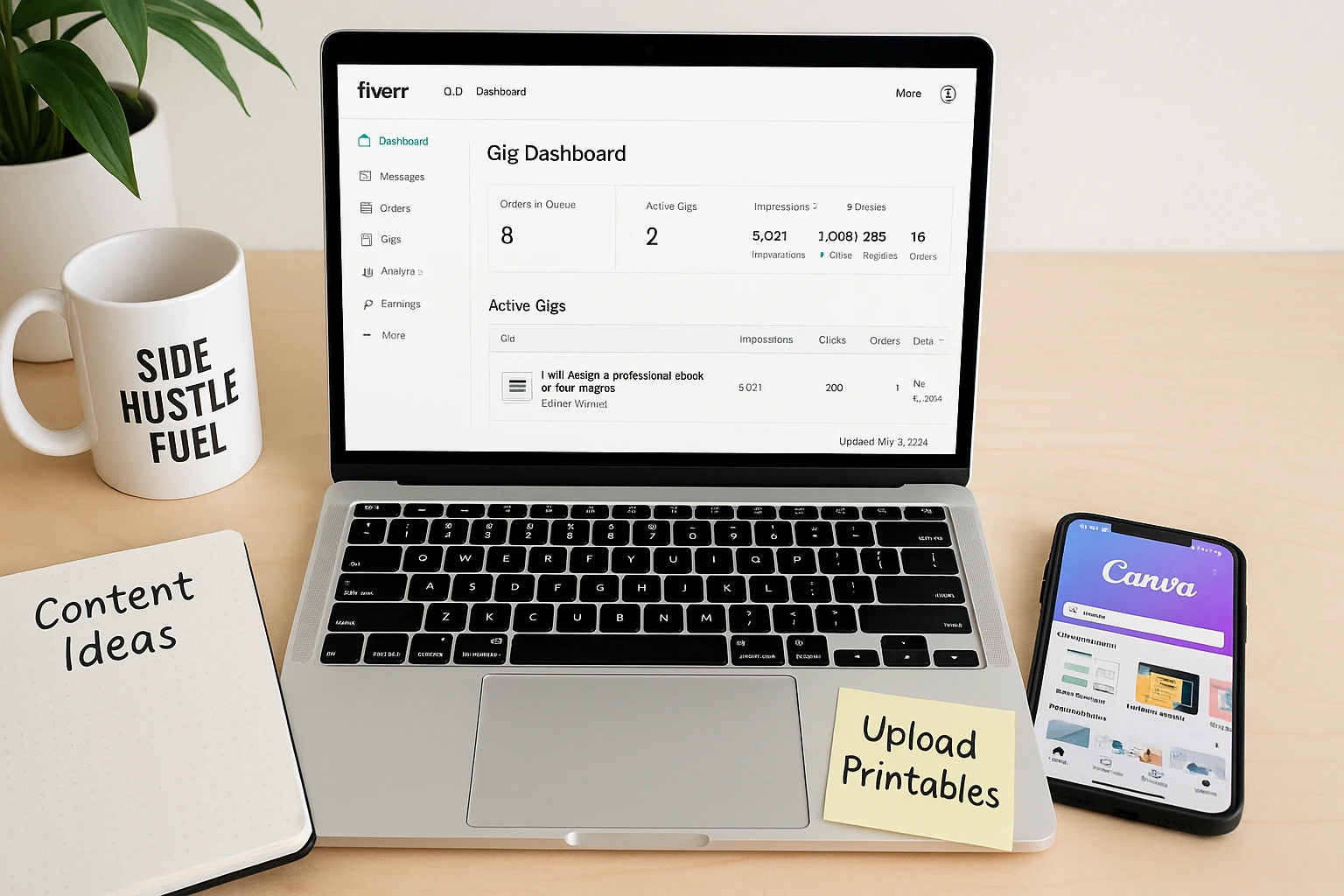
Digital side hustles can avoid commuting and physical inventory, but they are not automatically free or easy. The strongest options usually start with a specific skill or problem you can solve, then add a portfolio, client outreach, audience, or product only as the work proves itself.
Freelance Writing or Editing
- Frugal fit: Writing or editing can use an existing skill set without inventory, although software, research time, and client acquisition still have costs.
- What you need: Solid writing or editing skills, good grammar, and a portfolio (even personal blog posts work).
- Pricing reality: Rates vary by deliverable, niche, research burden, experience, and client type. Compare current project budgets and freelance rate guidance before quoting.
- Where to start: Upwork, Fiverr, ProBlogger, or direct outreach.
- Tip: Start with a tightly scoped offer and a few relevant samples. Price from the work involved and the value you can credibly deliver rather than underpricing by default.
Virtual Assistant Services
- Frugal fit: Administrative and operational skills can become a service without physical inventory, especially when you define a narrow set of tasks first.
- What you need: Organization, familiarity with tools like Google Workspace or Microsoft Office, and reliability.
- Pricing reality: Rates vary by responsibilities, specialization, location, and whether the work is ongoing or project-based.
- Where to start: Upwork, Fiverr, Fancy Hands, or VA agencies.
Social Media Management
- Frugal fit: Existing content and platform skills can become a service, but client work also adds planning, approvals, reporting, and communication.
- What you need: Platform fluency, content planning skills, and reliable client communication.
- Pricing reality: Pricing depends on the number of platforms, posting frequency, content production, reporting, and community-management scope.
- Where to start: Upwork, Fiverr, or local businesses.
Want a closer look before you browse projects? Read our Upwork review before you spend time building a profile or sending proposals.
Selling Digital Products (e.g., Printables)
- Frugal fit: A digital product can be created without physical inventory, but listings, platform fees, updates, customer questions, and marketing can continue after launch.
- What you need: Design skills (Canva’s fine), creativity, and market research.
- Pricing reality: Income is highly uneven and depends on demand, pricing, platform fees, traffic, and how well the product solves a specific problem.
- Where to start: Etsy, Gumroad.
Online Surveys and Microtasks
- Frugal fit: The setup burden is low, but the trade-off is limited control over task availability and payout.
- What you need: A computer or smartphone and patience.
- Pricing reality: Treat surveys and microtasks as variable bonus income rather than a dependable wage; availability and payouts can change by platform and participant profile.
- Where to start: Swagbucks, Survey Junkie, or other established research/microtask platforms that are currently accepting participants in your location.
Want higher payouts from surveys? Compare the best paid survey sites first so you’re not wasting time on low-value platforms.
Affiliate Marketing
- Frugal fit: You do not need physical inventory, but you do need useful content or an audience path and must follow each program’s current rules and disclosure requirements.
- What you need: A platform, content creation skills, and audience insight.
- Pricing reality: Income can range from zero upward and depends on qualified traffic, conversion rates, commission terms, and program rules; there is no dependable beginner earnings range.
- Where to start: Amazon Associates, Awin, ClickBank, or a direct merchant program that matches your audience.
Drop Servicing or Reselling Digital Services
- Frugal fit: You can sell a clearly defined service and subcontract delivery, but you remain responsible for client communication, quality control, revisions, and the gap between client price and contractor cost.
- What you need: Marketing skills, client communication, and reliable freelancers.
- Pricing reality: Your margin depends on the client price, contractor cost, revisions, tools, payment fees, and the time you spend managing delivery.
- Where to start: Fiverr, Upwork, LinkedIn, or your website.
Passive-ish Side Hustles That Can Build Over Time
“Passive” income usually still needs setup, maintenance, customer support, marketing, or asset management. These ideas make more sense when you are willing to do work upfront for a chance at income that is not tied one-for-one to each hour; for more options, see these passive income ideas.
Renting Out Spare Space or Items
- Frugal fit: Existing space or equipment can produce income without buying new inventory, but use, wear, insurance, local rules, and platform terms all matter.
- What you need: Spare space or items, good communication skills.
- Pricing reality: Rates vary sharply by location, asset type, season, local rules, insurance, platform fees, and utilization.
- Where to start: Airbnb, Turo, Neighbor, local classifieds.
Stock Photography or Videography
- Frugal fit: Existing photo or video equipment can produce licensable assets, but demand is uneven and you need rights or releases where applicable.
- What you need: Camera, editing software, market research.
- Pricing reality: Royalties vary by platform, license type, portfolio size, subject demand, and download volume; expect uneven results rather than a fixed per-image return.
- Where to start: Shutterstock, Adobe Stock, Getty Images.
Creating an Online Course or Ebook
- Frugal fit: A course or ebook can turn existing expertise into a reusable asset, but creation, updates, support, and marketing still take work.
- What you need: Expertise, communication skills, basic design tools.
- Pricing reality: Results vary by audience, pricing, platform fees, subject demand, launch effort, and ongoing marketing.
- Where to start: Teachable, Thinkific, Amazon.
Before You Choose: Costs, Taxes, and Rules
A low-cost side hustle can still cost time, fuel, fees, supplies, insurance, or energy. Before you commit, check the economics and the rules that apply to the exact work you plan to do.
- Keep records of gig income and business expenses, and check the current IRS gig-work tax guidance plus applicable state or local rules; tax treatment depends on how you earn and your circumstances.
- Track your true return after direct costs, platform fees, travel, supplies, and unpaid admin time—not just gross revenue.
- Check licenses, permits, insurance, platform terms, and local rules before offering regulated, property-based, driving, or repair services.
- Set a realistic schedule and stop point. A side hustle that consistently damages your main job, health, or relationships is not a frugal win.
Frequently Asked Questions
Your Next Step: Run One Cheap Test
You do not need to choose a forever hustle today. Pick one lane and define a small test with a spending cap—for example, one paying client, a few serious inquiries, or a profitable first sale can be enough to tell you whether the idea deserves another round.
Then track the time, fees, travel, supplies, and money that actually came in. Keep the idea if the return and schedule fit your life; adjust it if demand is real but the economics are weak; drop it if it needs more cash or energy than it gives back. If you are still deciding, run the side-hustle matcher again with a different goal or setup level.
This article provides general information only and is not financial, tax, or legal advice. Side-hustle earnings and costs vary by skills, time, location, demand, platform terms, and individual circumstances. Check current fees, tax guidance, insurance needs, and local rules before committing money or taking on regulated work.

