
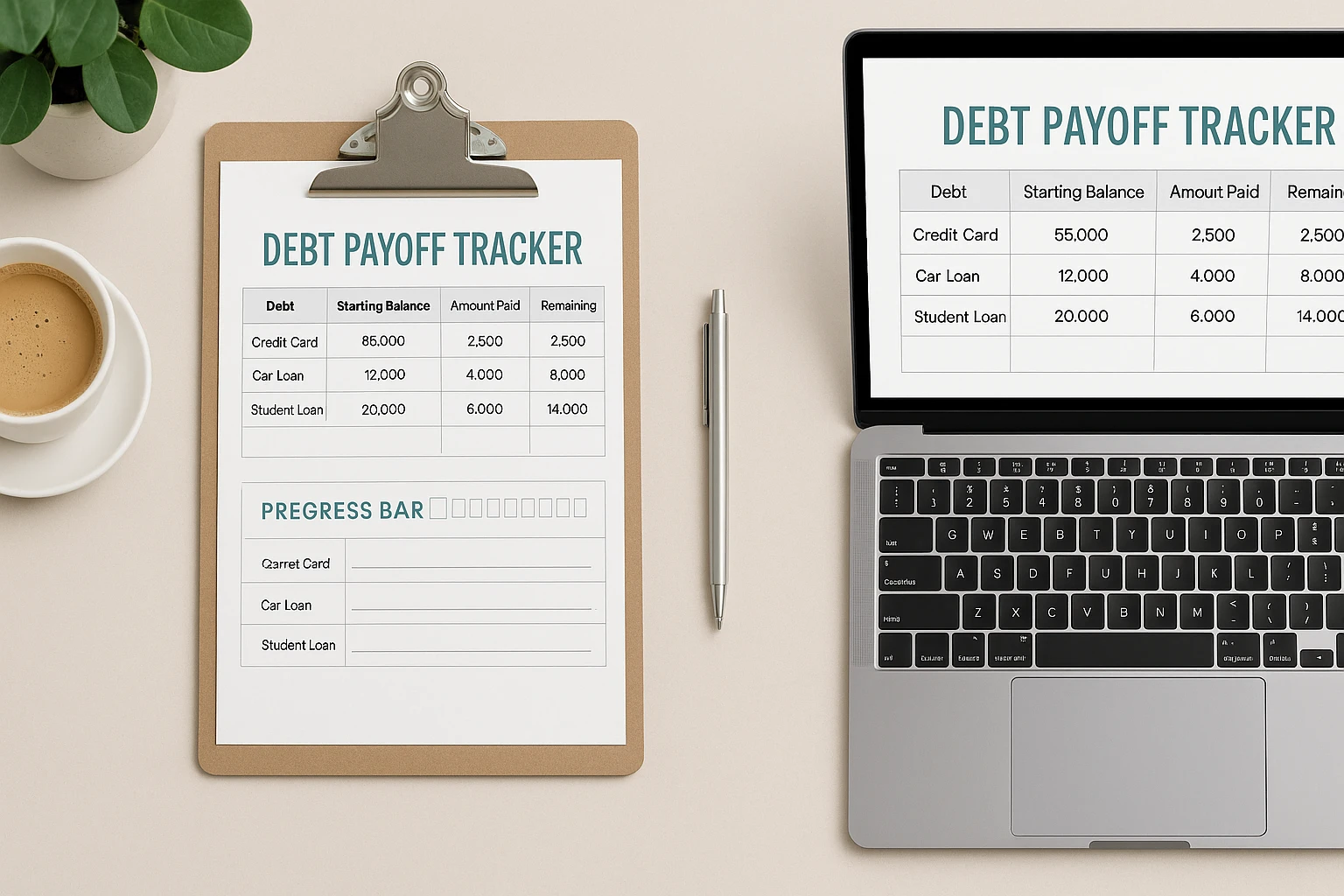
Stop guessing which balance gets the next extra dollar. This free printable debt payoff tracker gives you two ways to turn your numbers into a plan: download the five-page PDF for an offline worksheet, or use the calculator below to estimate a Snowball or Avalanche payoff order with your own balances, APRs, minimum payments, and extra monthly amount. If you need the bigger picture before you start, see our Debt Management Plan guide.
The printable includes a strategy page, a debt worksheet, a monthly payment tracker, and milestone/progress pages. Download the free printable PDF, then use the calculator to estimate your payoff order before you copy the plan onto paper.
Table of Contents
- Debt Payoff Tracker: Build Your Plan
- What the Free Debt Payoff Printable Includes
- Snowball vs. Avalanche: Choose Your Payoff Order
- How to Use the Printable and Calculator Together
- Put Income, Spending, Debts, and Goals on One Screen
- Keep Your Debt Payoff Tracker Accurate
- Frequently Asked Questions
- Start Your Debt Payoff Plan
Ready to build the first version of your plan? Gather your latest balances, APRs, and minimum payments, then use the calculator below.
Debt Payoff Tracker: Build Your Plan
Add each debt with its balance, APR, and monthly minimum. Then add any extra monthly amount, choose Snowball or Avalanche, and calculate an estimated payoff order and timeline.
Added Debts
No debts added yet. Add at least one debt to calculate a plan.
| Debt Name | Balance ($) | Interest Rate (%) | Minimum Payment ($) | Actions |
|---|
Your Estimated Payoff Plan
| Debt Name | Starting Balance ($) | Interest Rate (%) | Estimated Payoff Month | Focus Order | Estimated Interest ($) |
|---|
Estimate assumes APRs and monthly minimums stay constant, no new charges are added, and freed minimum payments roll to the next focus debt starting the following month.
This planner provides estimates from the numbers you enter; it does not reproduce a lender’s exact daily-interest or payment-allocation rules. Verify balances, rates, minimums, and payoff terms with your lenders before relying on the schedule.
What the Free Debt Payoff Printable Includes
The download is a five-page debt payoff worksheet and tracker kit built around the same Snowball/Avalanche choice as the calculator. It gives you:
- A strategy page to choose Snowball or Avalanche.
- A debt worksheet for each debt’s name, balance, APR, and minimum payment.
- A monthly payment tracker for the focus debt, extra payment, payoff status, and notes.
- Milestone and progress pages for recording wins as balances fall.
The calculator is best for estimating the order and timeline. The printable is best for keeping the plan visible after you close the browser.
Snowball vs. Avalanche: Choose Your Payoff Order
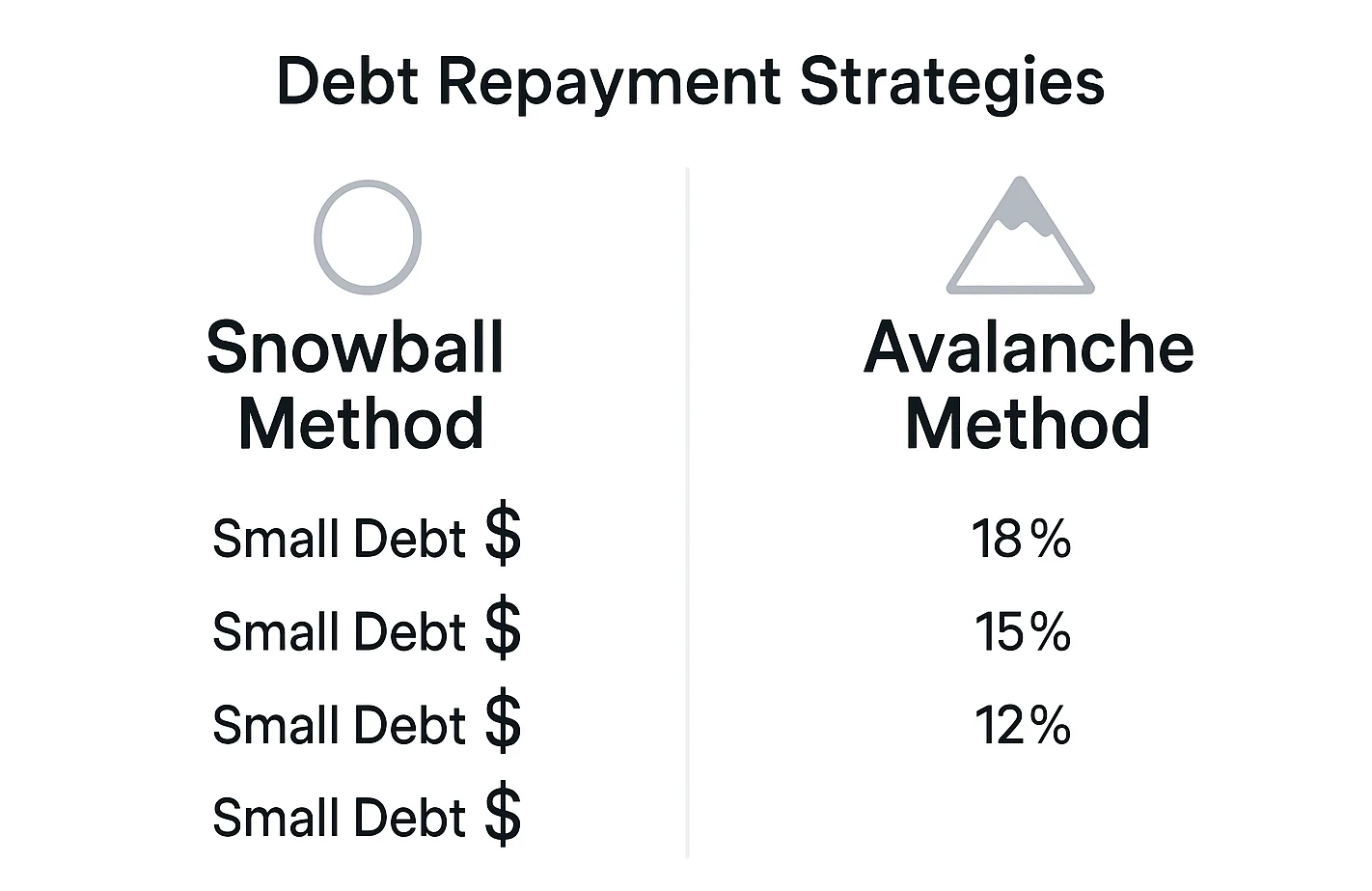
Both methods keep the minimum payment going on every debt and send your extra money to one focus debt at a time. The difference is how that focus debt is chosen. The Consumer Financial Protection Bureau describes the same two basic approaches: smallest balance first for Snowball, or highest interest rate first for the highest-interest method. CFPB notes that the highest-interest approach can save money in the long run, while Snowball can create quicker visible progress but may cost more overall.
Debt Snowball: smallest balance first
Choose Snowball when early account payoffs help you stay engaged. Order debts from the smallest balance to the largest, keep minimums on the rest, and direct extra money to the smallest balance. When it is paid off, roll that freed payment to the next-smallest debt.
Debt Avalanche: highest APR first
Choose Avalanche when minimizing interest is the stronger priority and you can stay consistent even if the first payoff takes longer. Order debts from the highest APR to the lowest, keep minimums on the rest, and direct extra money to the highest-rate debt. When it is paid off, roll that payment to the next-highest rate.
| Decision | Snowball | Avalanche |
|---|---|---|
| First focus | Smallest balance | Highest APR |
| Main advantage | Earlier visible wins | Can reduce total interest |
| Main trade-off | May cost more interest | First payoff may take longer |
| Use it when | Quick wins help you stay consistent | Interest savings keep you motivated |
Still deciding? Our full Debt Snowball vs. Avalanche guide goes deeper. You can also run both methods through the calculator above and compare the estimated payoff order and interest.
How to Use the Printable and Calculator Together
- Gather current numbers. Use your latest statements to collect each debt’s current balance, APR, and minimum monthly payment.
- Choose a sustainable extra amount. Enter the monthly amount you can realistically add after required minimum payments and essential expenses.
- Add every debt to the calculator. Keep making the minimum payment on every debt; the selected method determines where the extra money goes first.
- Calculate Snowball or Avalanche. Review the estimated focus order, payoff month, and interest. If you prefer an editable spreadsheet, use our Snowball vs. Avalanche spreadsheet.
- Transfer the plan to paper. Print the calculator result or copy the focus order into the printable worksheet.
- Update with real lender balances. Recheck the plan after statements post or whenever an APR, minimum payment, balance, or available extra payment changes.
A tracker does not make a payment for you; its job is to keep the next payment decision visible and consistent.
Once the debt order is clear, the next useful check is whether the extra payment fits the rest of your month.
Put Income, Spending, Debts, and Goals on One Screen
The debt tracker helps you choose what to pay next. The Money Reset shows what that payoff plan has to fit around—income, spending, up to 8 debts, and up to 8 goals, all summarized on the SNAPSHOT sheet.
Confirm to get the workbook and frugal money tips. Unsubscribe anytime.
Something went wrong. Please check your email address and try again.
Keep Your Debt Payoff Tracker Accurate
Your lender’s actual balance is the source of truth. The calculator is a planning estimate, so timing, interest calculations, fees, payment allocation, or account changes can make the real balance differ from the projection.
- Update balances after your latest payments have posted.
- Edit the APR or minimum payment when the lender changes it.
- Rerun the plan when your extra monthly amount increases or decreases.
- Record the real payoff date on the printable instead of relying only on the estimate.
- Keep the same tracker long enough to see progress instead of rebuilding the system every week.
When to rerun your payoff plan
Recalculate after a major balance change, a new charge, a changed APR or minimum payment, or a meaningful change in what you can pay each month. For one fixed loan rather than several debts, our loan amortization calculator is the more focused tool.
Frequently Asked Questions
Start Your Debt Payoff Plan
You do not need a perfect payoff date before you start. Use the calculator to choose a focus order, put the plan on paper, and then replace estimates with your real balances as the months pass.
Download the free debt payoff printable
The useful tracker is the one you update after the next statement—not the one you fill out perfectly once and forget.
This content is for informational purposes only and not financial advice. Tools provide estimates and may not reflect your lender’s terms. Consider consulting a qualified financial professional before making decisions.

