
Approval is not the same as a good deal. If you’re comparing debt consolidation loans with a 600 credit score, you may still see offers—but a lower monthly payment can hide a longer term or fees that raise what you pay overall. The goal is a loan that covers the balances you want to consolidate, fits your budget, and improves the payoff math.
This guide compares five current personal-loan options, shows you what to check in an actual quote, and gives you a same-term calculator for a quick reality check. If you’re still deciding whether consolidation belongs in your payoff plan at all, start with our Debt Management Plan guide.
This post contains affiliate links. If you buy through our links, we may earn a commission at no extra cost to you. Learn more.
Table of Contents
- Can You Get a Debt Consolidation Loan With a 600 Credit Score?
- 5 Personal-Loan Options to Compare
- How to Tell If a Consolidation Offer Is Actually Better
- How Debt Consolidation Works
- When Debt Consolidation Isn’t the Right Move
- Free 30-Minute Money Reset
- Frequently Asked Questions
- Bottom Line
Can You Get a Debt Consolidation Loan With a 600 Credit Score?
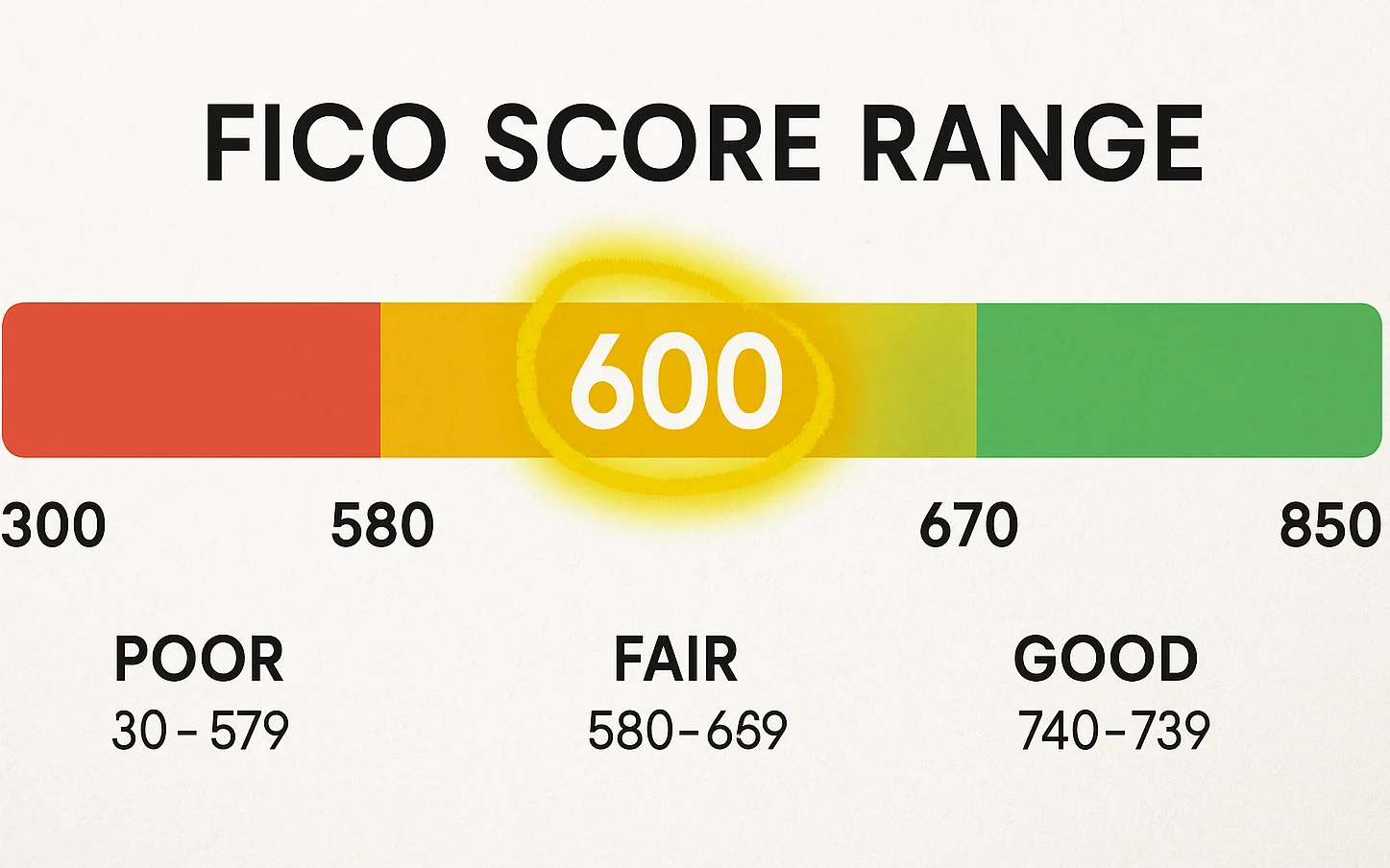
Yes, it may be possible. A 600 FICO Score falls in the fair range of 580–669. FICO says many lenders approve loans in this range, but the score is only one part of underwriting. Income, existing debt, recent credit history, loan amount, and each lender’s rules can all change whether you qualify and what you pay.
That means a 600 score is best treated as a starting point, not a prediction. Check your credit reports for errors, know the balances you actually want to consolidate, and use soft rate checks where lenders offer them. If you want a deeper look at qualification, see our guide to the credit score for a debt consolidation loan.
Use the quote, not the advertised minimum, to make the decision. Lender-wide ranges show what is possible across many borrowers; your APR, fee, payment, and approved amount are what matter for your debt.
5 Personal-Loan Options to Compare With a 600 Credit Score
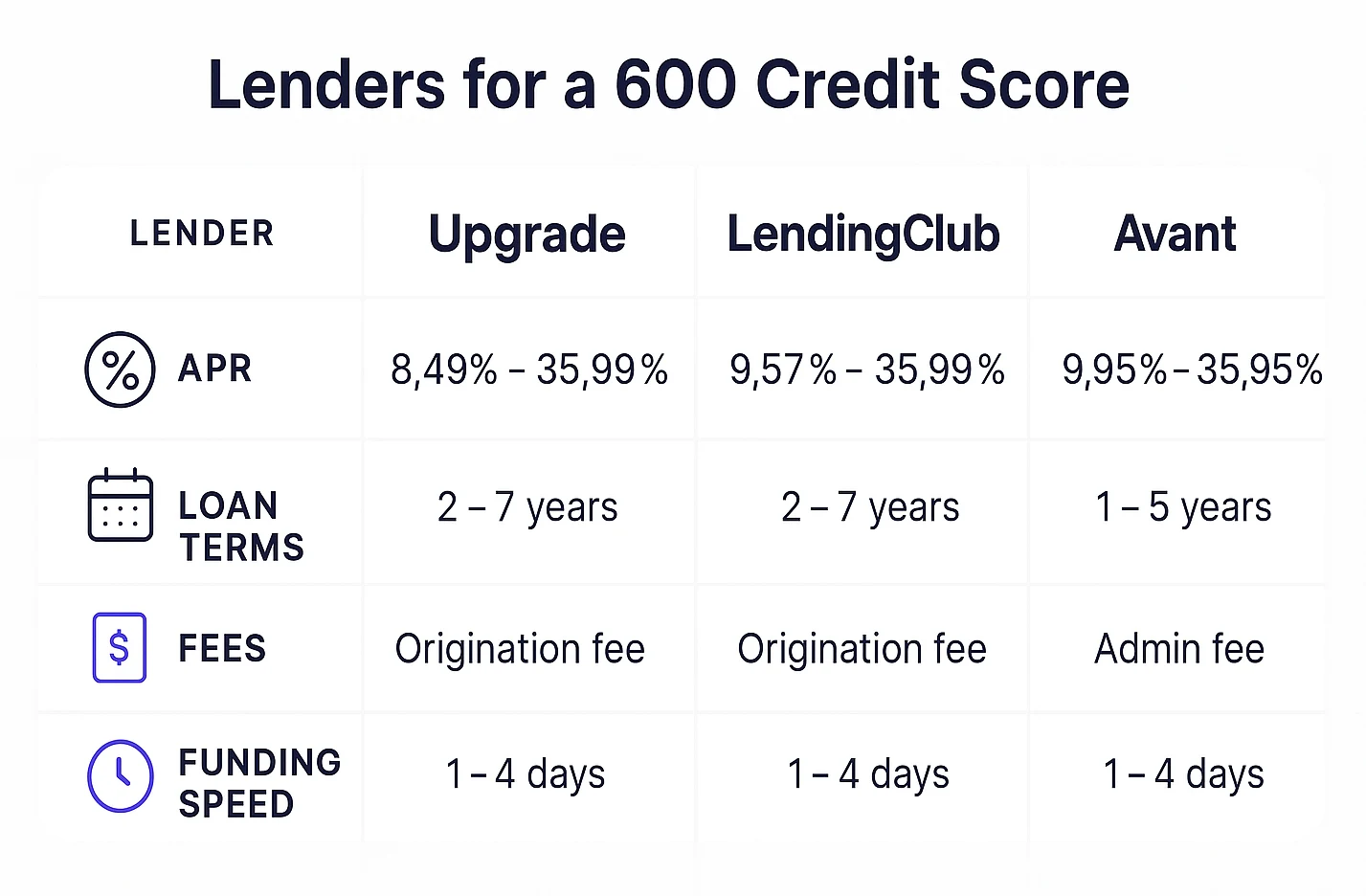
These five companies currently publish personal-loan options and let you check or explore pricing before committing to a loan. None of the lender-wide ranges below is a promised offer for a 600 score. For fair credit debt consolidation, compare the actual APR, fee, net proceeds, payment, and term you are shown.
| Company | Published pricing | Loan amounts | Terms | Published fees | Soft rate check? | Why compare |
|---|---|---|---|---|---|---|
| Upgrade | 7.74%–35.99% APR | $1,000–$50,000 | 24–84 months | Origination: 1.85%–9.99% | Yes | Debt-payoff option may send eligible loan proceeds directly to creditors. |
| Happen Bank | 5.96%–35.96% APR | $1,000–$75,000 | 24–84 months | Origination/processing: 0%–8% | Yes | Formerly LendingClub; the offered rate and fee depend on the application and other credit factors. |
| Avant | 9.95%–35.99% APR | $2,000–$35,000 | 24–60 months | Administration: up to 9.99% | Yes | Published range reaches smaller loan sizes than several competitors; state rules still apply. |
| Best Egg | 6.99%–35.99% APR | $2,000–$50,000 | 36–60 months | Origination: 0.99%–9.99% | Yes | Eligibility depends on the full credit, income, and overall financial profile; checking a rate uses a soft inquiry. |
| Upstart | 6.3%–35.99% interest rate; APR varies by offer | $1,000–$75,000; state minimums vary | 36 or 60 months | Origination fee may apply; compare the offer APR | Yes | Marketplace underwriting considers several factors; checking a rate uses a soft inquiry. |
Rates and terms checked August 17, 2026. These are company-wide published ranges, not 600-score quotes. Always compare the Truth in Lending or loan-offer disclosures you receive before applying.
How to Tell If a Consolidation Offer Is Actually Better
The lowest payment is not automatically the best offer. A consolidation loan should pass three tests before it replaces your existing debt.
1. Will the Net Proceeds Cover the Debts You Want to Consolidate?
Start with the amount that actually reaches you or your creditors—not just the headline loan amount. Origination or administration fees may be deducted from the proceeds, so a $10,000 approval may leave less than $10,000 available to pay balances. Compare the fee in dollars as well as the APR.
2. Can You Afford the Payment Without Stretching the Debt Too Far?
A longer term can make the payment look easier while increasing total interest. The Consumer Financial Protection Bureau warns that a lower consolidation payment can come from paying over a longer period, which can increase what you pay overall.
3. Does the Total Cost Actually Improve?
APR is broader than the interest rate because it incorporates certain loan fees. Compare the new APR, fee, term, and total repayment against the debts you are replacing. If the only improvement is “one payment instead of several,” decide whether that convenience is worth any added cost.
Test a Quote With the Debt Consolidation Calculator
Use the defaults only as an example. Replace them with the balance you want to consolidate, an approximate current interest rate, the lender’s quoted interest rate, and a comparison term. Then evaluate the lender’s APR and fees separately.
Use approximate interest rates to compare the same balance over the same repayment term.
Est. monthly payment — current rate
$—
Est. monthly payment — new rate
$—
Same-term payment difference
$—
Same-term interest difference
$—
Scenario only: both balances are modeled over the same term. This does not model your actual minimum-payment schedule, lender approval, or fees deducted from loan proceeds. If a lender lists both an interest rate and APR, use the interest rate for this payment estimate and compare the APR and fees separately.
If the quote looks better only because the repayment term is longer, treat that as a cash-flow trade-off—not automatic savings. For a deeper amortization check, use our loan amortization calculator.
How Debt Consolidation Works
A debt consolidation loan uses one new installment loan to pay off several existing balances. You replace multiple payments with one fixed loan schedule. The loan does not erase debt; it changes its structure, so the old balances need to be paid off and the new payment needs to fit your budget.
- List the balances you actually want to consolidate. Include current balances and approximate rates.
- Check several offers. Use soft rate checks where available and compare APR, fees, net proceeds, payment, and term.
- Apply only after the math works. A full application may involve a hard credit inquiry.
- Pay off the targeted balances. Some lenders can send funds directly to eligible creditors; otherwise make the payoff yourself.
- Keep the old balances from rebuilding. The consolidation only helps if the paid-off cards do not refill while you are repaying the new loan.
A fixed payoff date and fewer due dates can make repayment easier to manage. Paying down revolving balances may also lower utilization, but no credit-score increase is guaranteed and a new account or hard inquiry can affect your profile too. FICO does not use 30% utilization as a hard threshold; generally, lower reported revolving utilization is better.
For month-by-month follow-through, use our free debt payoff tracker to keep the new balance and due date visible.
When Debt Consolidation Isn’t the Right Move
Skip a new loan when the quoted APR and fees do not improve the cost enough to justify switching, when you can pay the balances off quickly without refinancing, or when the new payment only looks better because the term is much longer.
- If you can attack the balances directly: compare a debt snowball vs. avalanche plan.
- If you qualify for a strong promotional card: a no-fee 0% balance transfer card may be worth comparing if you can repay within the promotional period.
- If minimum payments are already unaffordable: taking another loan may not solve the underlying cash-flow problem. Contact creditors about hardship options or consider reputable credit counseling before borrowing again.
If you’re searching for debt relief loans because you are already missing payments, separate that problem from ordinary consolidation shopping. Credit counseling, creditor hardship programs, debt settlement, and consolidation have different costs and consequences; the CFPB’s comparison of credit counseling, settlement, consolidation, and credit repair is a useful place to understand the differences.
If the loan, balance transfer, or direct-payoff routes all look plausible, put the debts beside the rest of your month before choosing which path gets the next dollar.
See What Your Debt Plan Has to Fit Around
Enter income, spending, up to 8 debts, and up to 8 goals; the SNAPSHOT sheet brings the key numbers together automatically.
Confirm to get the Money Reset and frugal money tips. Unsubscribe anytime.
Something went wrong. Please check your email address and try again.
Frequently Asked Questions
Yes, it may be possible. A 600 FICO score is in the fair range, but approval and pricing also depend on income, existing debt, credit history, loan size, and the lender’s underwriting. Use soft rate checks where available before deciding whether a full application is worthwhile.
It can affect your score in more than one direction. A full application may create a hard inquiry and a new loan changes your credit profile. Paying down revolving balances and making on-time payments can help over time, but the exact result depends on your full credit history.
Possibly, but there is no guaranteed score increase. Paying down credit-card balances can lower revolving utilization, while the new account and any hard inquiry can also affect your score. The most important factor is making the new payment on time and avoiding new balances you cannot repay.
There is no universal minimum across lenders. Each company sets its own eligibility rules, and a published cutoff does not guarantee approval or favorable pricing. Check the lender’s current disclosures and use a soft rate check where available.
Check why the payment is lower. If the new loan stretches repayment over more months, you may pay more interest even though each payment is easier. Compare the APR, fees, term, and total repayment—not just the monthly number. A lower payment can still be useful for cash flow, but that is a different benefit from lowering total cost.
If you have an actual consolidation offer in front of you and the APR, origination fee, net proceeds, term, and monthly payment still point in different directions, this can be one of those final-step decisions worth running past a finance professional before you sign.
Bottom Line
With a 600 credit score, shop for proof—not optimism. Check several soft-rate offers when available, then keep only the ones that leave enough net proceeds to clear the targeted balances, fit your monthly budget, and improve the cost or repayment path after fees and term length are included.
If no quote passes those tests, do not consolidate just to turn several bills into one. Use a payoff strategy or another appropriate debt-management route instead. A simpler bill is not automatically cheaper debt.
This article provides general educational information, not individualized financial advice. Loan approval, APRs, fees, available amounts, state availability, funding times, and credit-score effects vary by lender and borrower; verify the lender’s current disclosures and make sure any payment fits your budget before applying.

