
If you’re looking for an average credit score for a debt consolidation loan, 670 is a useful FICO reference point—not a lender rule. It begins FICO’s Good range, while lenders set their own criteria and may approve some borrowers below it. Even then, an approval only helps if the new APR, fees, payment, term, and total repayment improve your plan.
This guide shows how score ranges affect loan shopping, what lenders may consider besides your score, whether it makes more sense to apply now or improve first, and how to compare an actual offer. If your bigger problem is choosing a payoff path rather than qualifying for a loan, start with our debt management plan.
This post contains affiliate links. If you buy through our links, we may earn a commission at no extra cost to you. Learn more.
Table of Contents
- What Credit Score Do You Need?
- Debt Consolidation Readiness Check
- When a Consolidation Loan May Make Sense
- See Your Money Picture Before You Apply
- How to Strengthen Your Credit Before Applying
- What to Do About Credit Report Errors
- Frequently Asked Questions
- Your Next Move
What Credit Score Do You Need for a Debt Consolidation Loan?
If you’re looking for a minimum credit score for a debt consolidation loan, there isn’t one universal cutoff. FICO says lenders choose their own approval criteria and may consider factors such as income, debt, credit history, and the type of loan in addition to a score. A higher score can improve your access to competitive terms, but it does not promise approval or a particular APR. See FICO’s current score-range guidance for the underlying bands.
FICO Score Ranges
| FICO score | Rating | What it means for loan shopping |
|---|---|---|
| 800–850 | Exceptional | Very strong score range, though lender-specific underwriting still applies. |
| 740–799 | Very Good | Strong score range for comparing offers, with lender-specific criteria still applying. |
| 670–739 | Good | A useful benchmark range, but not a universal debt-consolidation cutoff. |
| 580–669 | Fair | Some lenders may approve borrowers here; rates and fees deserve extra scrutiny. |
| 300–579 | Poor | Options may be more limited or expensive, so improving the application picture may be worthwhile. |
Why 670 Matters Without Being a Magic Number
FICO’s Good range begins at 670, which is why that number appears so often in credit discussions. But it is a score-category boundary, not a universal lender rule. If your score is around 620, our 620-score debt consolidation guide looks more closely at the middle of the fair-credit range.
What Lenders May Consider Besides Your Score
- Income and employment: Whether your income appears sufficient and stable for the proposed payment.
- Debt-to-income ratio (DTI): Your monthly debt payments divided by your gross monthly income; lenders may use it to judge how much room you have for another payment. See the CFPB definition.
- Credit history: Recent late payments, collections, account age, and other information in your reports.
- Loan amount and term: A larger request or longer term can change both underwriting and total cost.
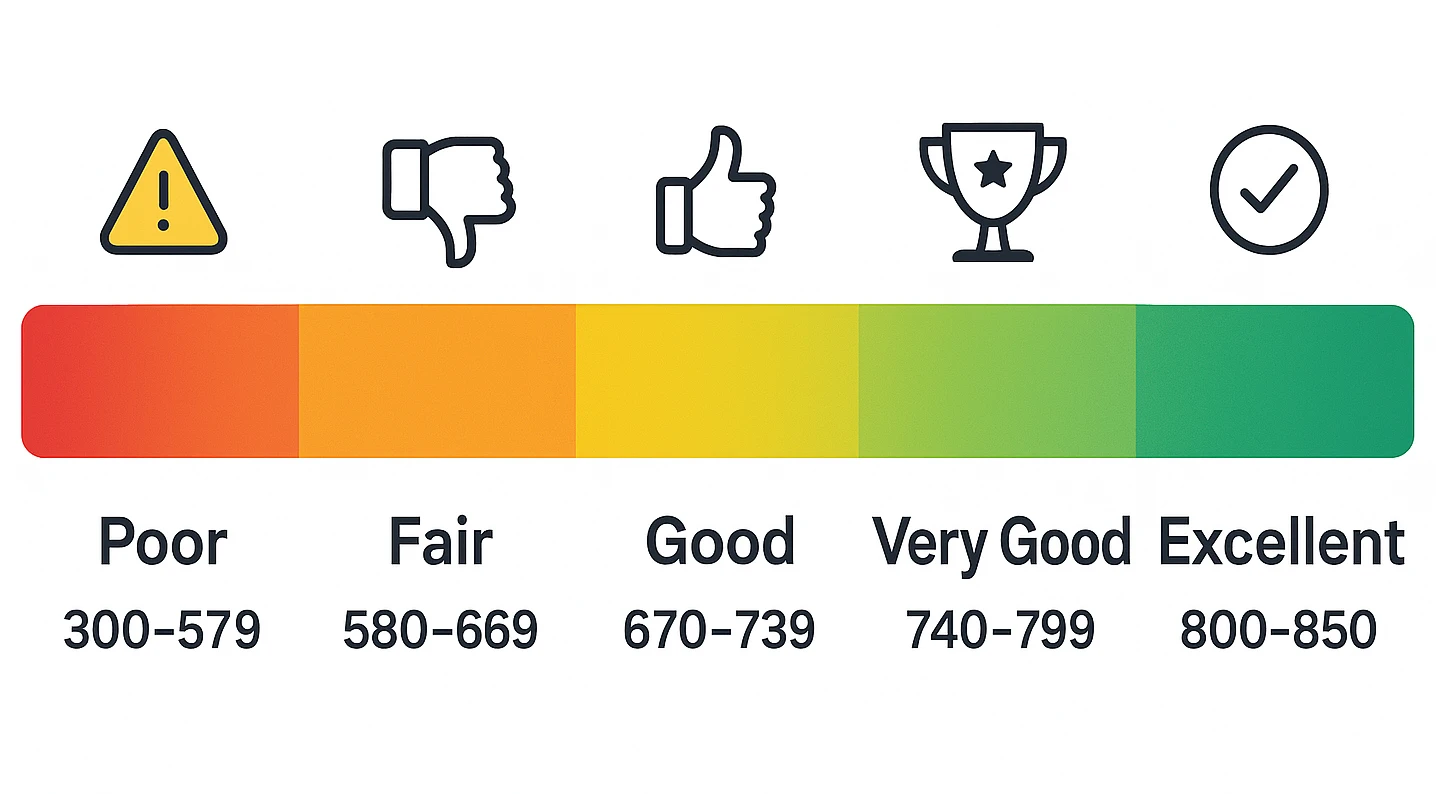
Use the check below to turn those score ranges into a practical apply-now versus improve-first next step.
Debt Consolidation Readiness Check
Answer three quick questions to get a practical next step. This does not predict approval, and the score ranges below are broad FICO bands—not lender cutoffs.
Answer all 3 questions to see your next step.
When a Debt Consolidation Loan May Make Sense
A consolidation loan is useful only when the new structure is better than the debts you are replacing. The Consumer Financial Protection Bureau warns that consolidation can cost more when fees, rates, or a longer repayment period outweigh the apparent monthly-payment relief.
Before a full application, check whether a lender offers prequalification and whether that check uses a soft inquiry. The CFPB says soft inquiries do not affect your credit scores, so this can be a useful way to compare likely terms when the lender offers it. Confirm the lender’s specific process before continuing. See the CFPB explanation of credit inquiries.
Compare These Five Numbers Before You Apply
- APR: Compare the new annual percentage rate with the rates on the debts you plan to pay off.
- Fees: Include origination fees and any other charges in the real cost of borrowing.
- Monthly payment: Make sure the payment fits your budget without relying on new credit to cover basics.
- Loan term: A longer term can lower the payment while increasing the amount of interest you pay over time.
- Total repayment: Compare what you would repay under the consolidation loan with a realistic payoff plan for the current debts.
A lower monthly payment is not automatically a cheaper loan. Check the total repayment and the payoff date before you decide.
Illustrative example: Suppose Offer A is $330 a month for 36 months plus a $500 origination fee, for $12,380 in total payments and fees. Offer B is $280 a month for 48 months with no fee, for $13,440 total. Offer B feels easier month to month, but it costs $1,060 more overall. The point is not that either offer is “good”—it is that payment size and total repayment need to be read together.
Consolidation is a stronger fit when you can make the new payment consistently and the new loan improves the overall plan. If you are already missing minimum payments, start with the debt-management alternatives instead of assuming another loan is the answer. Also confirm that you are comparing an actual loan: the CFPB warns that some services marketed as consolidation are really debt-settlement programs. See its debt-consolidation guidance.
If you’re still deciding whether a new payment really fits, bring your current debts, income, and spending into one view first.
See Your Money Picture Before You Apply
The 30-Minute Money Reset holds up to 8 debts and 8 goals, and its Snapshot sheet totals everything automatically.
Confirm to get the workbook and frugal money tips. Unsubscribe anytime.
Something went wrong. Please check your email address and try again.
How to Strengthen Your Credit Before Applying
If the offers available today are too expensive, some credit score improvement may give you a better starting point later—but chasing points should not be the goal by itself. Focus on habits that also improve your debt position rather than a single score threshold.
- Pay on time: Payment history is the largest category in a typical FICO Score.
- Lower revolving balances: Keep credit-card balances low relative to their limits; FICO does not treat 30% as a universal cutoff.
- Avoid unnecessary applications: Apply for new credit deliberately instead of sending many applications at once.
- Keep useful older accounts thoughtfully: Closing a card can reduce available credit, but keeping a costly or tempting account open is not always the right trade-off.
- Check your reports: Make sure the information lenders may review is accurate before you apply.
Paying down balances can help both utilization and cash flow. Use the free debt payoff tracker to keep balances visible, or build a sustainable routine with Budgeting Habits That Stick.
If you prefer an app-based routine instead of managing these steps on your own, Brigit includes credit-building features inside a budgeting app. Review the current pricing and terms and decide whether the added structure is worth the cost for you; score changes are not guaranteed, and the free steps above do not require a paid service.
Prefer to research it first? Read our Brigit app review before deciding.
What to Do if Your Credit Report Has Errors
Credit repair is most useful when the report itself may be wrong. Start by checking your reports from Equifax, Experian, and TransUnion. Free weekly reports are available through AnnualCreditReport.com.
Dispute Inaccurate or Incomplete Information
If you find an error, dispute it with the credit bureau and the business that supplied the information. The FTC says credit bureaus generally have 30 days to investigate. Keep copies of the documents you submit and review the result when the investigation is complete.
Know What Credit Repair Cannot Do
Accurate, current negative information generally cannot be removed simply because it lowers your score. A legitimate credit-repair company also cannot guarantee a specific score increase, loan approval, or deletion of accurate information.
When Paid Help May Be Worth Considering
You can legally do the dispute work yourself for little or no cost. Paid help may still be useful if you have several legitimate disputes and do not want to manage the paperwork and follow-up alone. If you hire a service, look for a written contract, clear pricing and cancellation rights, and avoid any company that tells you to dispute information you know is accurate or promises a guaranteed result. The FTC’s credit-repair guidance explains these protections in more detail.
Frequently Asked Questions
If you have an actual consolidation offer in front of you and still can’t tell whether the APR, fees, longer term, and monthly payment leave you better off overall, this may be one of those decisions worth running past a finance professional before you sign.
Your Next Move
Start with the loan math, not a target score. If an actual offer lowers your borrowing cost and gives you a payment you can sustain, compare it carefully. If the offers available to you are too expensive, strengthen your credit and fix report errors before trying again. If minimum payments are already slipping, another loan may not be the best first move—work on the debt plan itself. The goal is not just to get approved; it is to end up with a better payoff path.
This article is for educational purposes and is not financial advice. Loan approval, rates, fees, and credit-score effects vary by lender and borrower. Compare your actual offers and consider a nonprofit credit counselor or other qualified professional if payments are difficult.

