
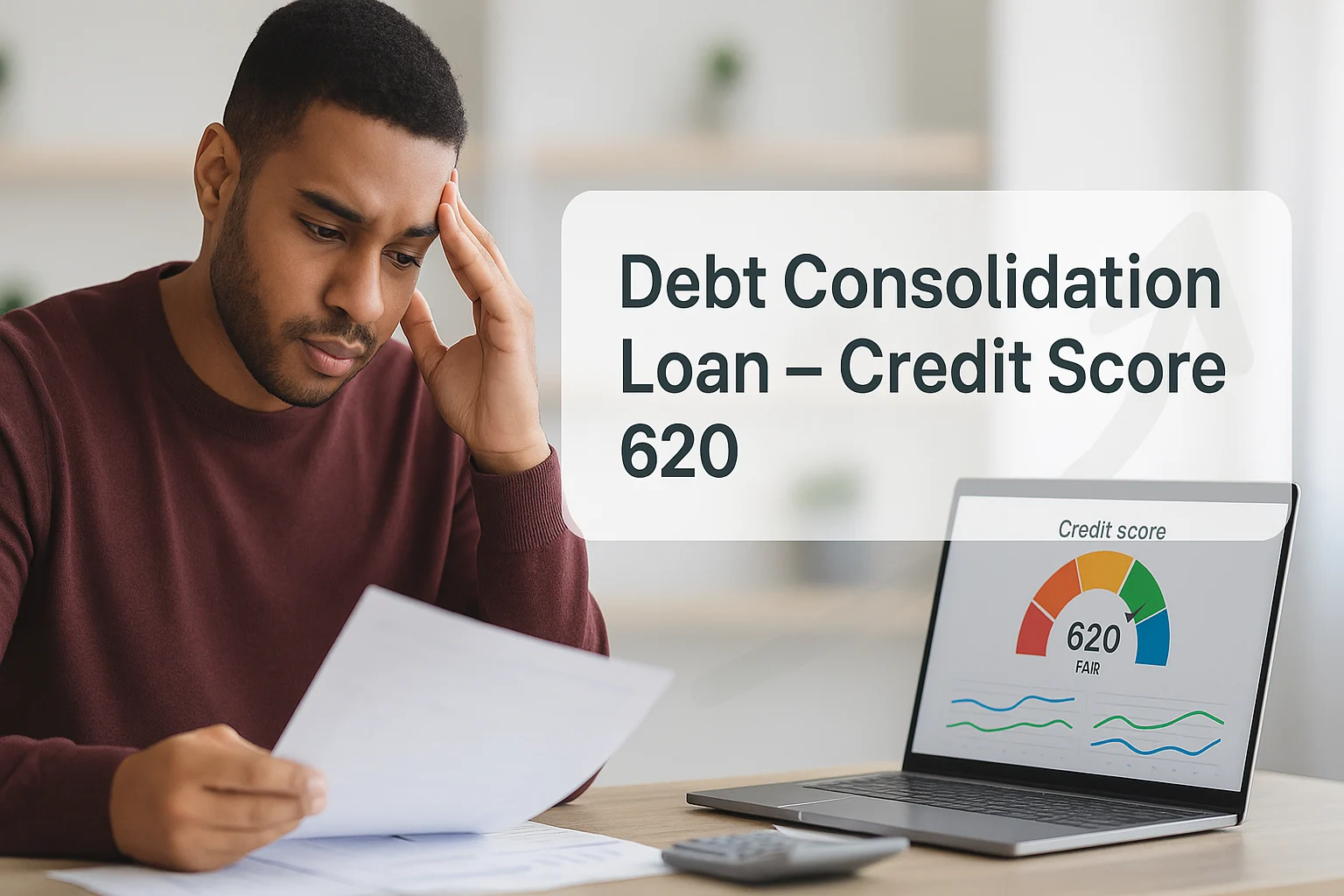
If you’re comparing a debt consolidation loan with a 620 credit score, start with the offer—not the score alone. For base FICO Scores, 620 falls in the “Fair” range (580–669), but lenders also consider income, existing debt, credit history, and their own underwriting rules.
The useful question is whether a real offer improves your payoff. This guide shows you what to compare, how current lender terms differ, and how to test an offer’s rate, fee, payment, and term before you apply.
If affordable loan offers do not improve the math, a Debt Management Plan or another nonprofit counseling route may be a better next step.
This post contains affiliate links. If you buy through our links, we may earn a commission at no extra cost to you. Learn more.
Table of Contents
- What a 620 Credit Score Means for Consolidation Loans
- What Makes a Consolidation Offer Worth Considering?
- How to Compare Lenders Before You Apply
- Lenders to Compare with a 620 Credit Score
- Compare a Real Offer with Your Current Debt
- Alternatives When a Consolidation Loan Doesn’t Fit
- How to Apply for a Debt Consolidation Loan
- Avoiding Scams and Predatory Lenders
- Improving Your Credit Score
- Debt Consolidation at 620: Key Questions
- The Bottom Line for a 620 Credit Score
- See Your Debts, Spending, and Goals on One Screen
What a 620 Credit Score Means for Consolidation Loans
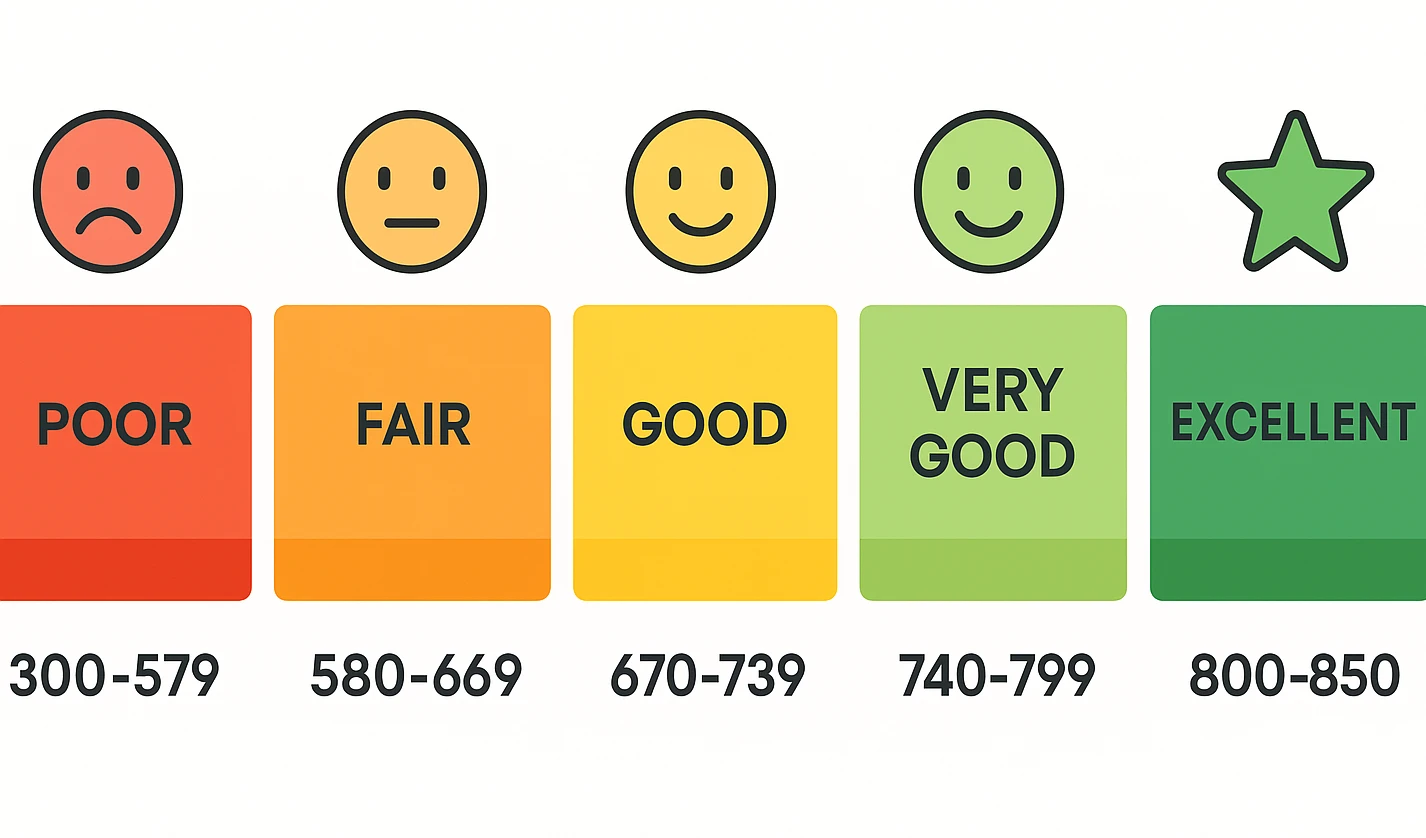
For base FICO Scores, the commonly published bands are:
- Exceptional: 800–850
- Very Good: 740–799
- Good: 670–739
- Fair: 580–669
- Poor: 300–579
At 620, you’re in FICO’s “Fair” band—often described as fair credit. A consolidation loan may be available, but the score alone does not determine approval, loan amount, or APR. Lenders set their own criteria and may also weigh income, debt-to-income ratio (DTI), credit history, and other factors.
You may also see products marketed as bad credit loans. Treat that label as marketing, not proof that approval will be easier or the offer will be cheaper.
What Makes a Consolidation Offer Worth Considering?
A consolidation loan can simplify several balances into one payment, but convenience alone is not enough. The offer should improve the debt plan after fees and term length are included.
| Decision | What to check | Why it matters |
|---|---|---|
| Total cost | APR, origination fee, term, and total dollars repaid | A lower advertised rate can still be a worse deal after fees or a longer term. |
| Monthly payment | Whether the payment fits your budget without stretching repayment unnecessarily | A smaller payment can help cash flow while still increasing total interest. |
| Payoff coverage | How much you actually receive after any fee deduction | The loan needs to cover the balances you intend to consolidate. |
| Risk | Whether the loan is unsecured or backed by collateral | A secured loan can put a vehicle, savings, or another pledged asset at risk. |
If most of your debt is on credit cards, also compare a no-fee balance transfer card when you could realistically clear the balance during the promotional period.
How to Compare Lenders Before You Apply
Many personal-loan lenders let you check options or prequalify with a soft inquiry, but confirm the lender’s process before you submit information. Prequalification is not approval, and a full application may involve a hard inquiry.
Compare the actual APR, origination fee, repayment term, monthly payment, total repayment, and whether the lender pays creditors directly. Shorter terms usually reduce total interest but raise the monthly payment; longer terms can improve cash flow while increasing total cost.
Before you apply, pull your free reports at AnnualCreditReport.com, the only website authorized to fill orders for the free annual credit reports you’re entitled to by law. Fix any errors, then compare each loan’s APR, fees, term length, monthly payment, and total repayment.
Once you know the numbers you need to beat, a marketplace-style comparison can help you screen installment-loan options before you commit to a full application or one lender.
Lenders to Compare with a 620 Credit Score
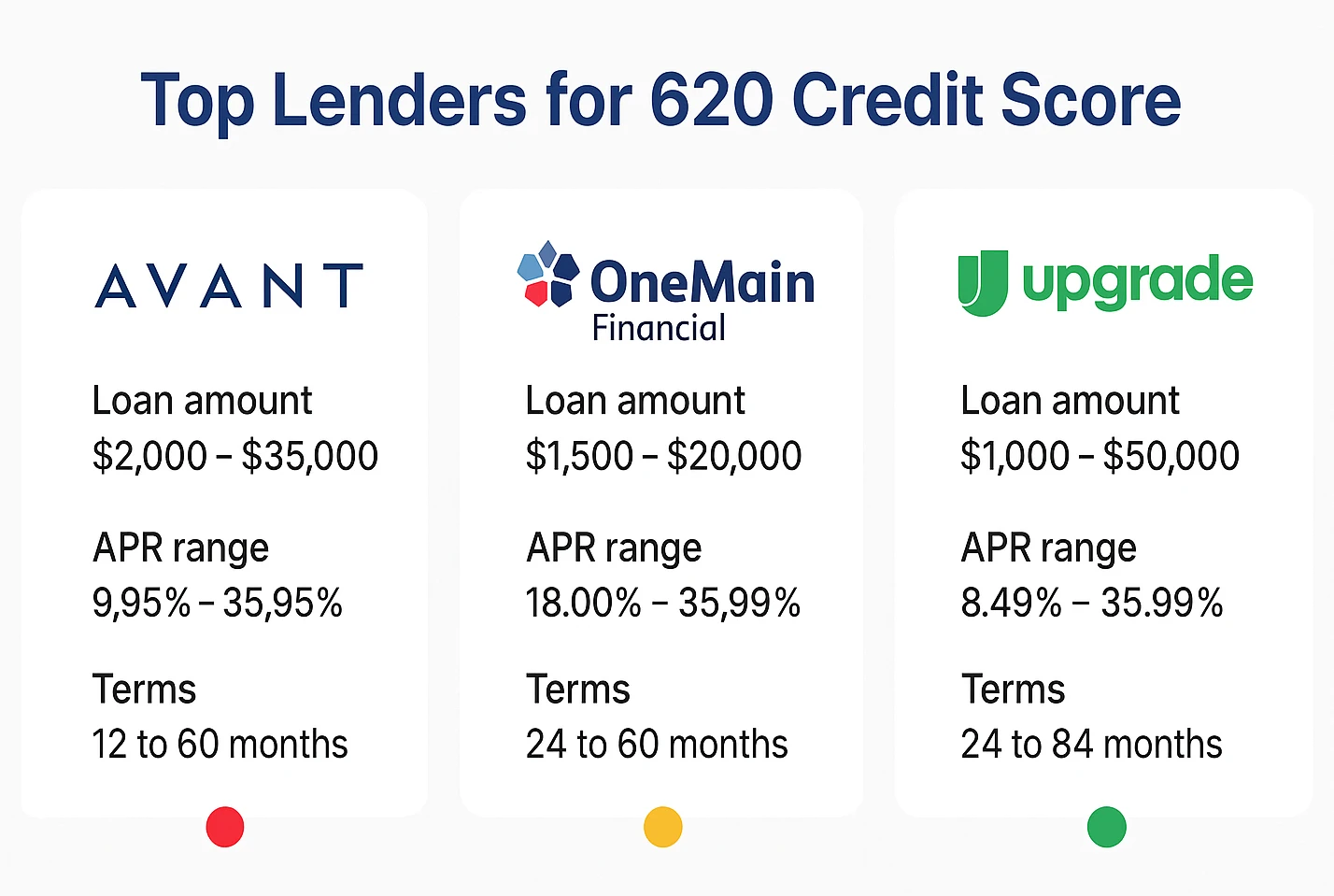
The lenders below publish personal-loan ranges that can be useful comparison points, but none of these published terms means a 620 score will qualify. Your actual offer depends on the lender’s underwriting and your broader financial profile. For more context, see what credit score you need for consolidation.
Avant
- Loan Amounts: $2,000–$35,000
- APR: 9.95%–35.99%
- Terms: 24–60 months
- Pros: Money can arrive quickly, and you won’t be charged for paying the loan off early.
- Cons: Rates can run high, and Avant lists an administration fee of up to 9.99%, deducted from loan proceeds.
- Notes: Published terms vary by credit determination, state law, and other factors.
OneMain Financial
- Loan Amounts: $1,500–$30,000
- APR: 11.99%–35.99%
- Terms: 24–60 months
- Pros: OneMain publishes both secured and unsecured personal-loan options.
- Cons: Origination fees apply and vary by state.
- Notes: Actual rates and amounts depend on the application and loan structure.
Upgrade
- Loan Amounts: $1,000–$50,000
- APR: 7.74%–35.99%
- Terms: 24–84 months
- Pros: Its Debt Payoff option may send funds directly to eligible creditors, and Upgrade lists no prepayment fee.
- Cons: Origination fees currently range from 1.85% to 9.99% and are deducted from loan proceeds.
- Notes: Lowest advertised rates have conditions; actual terms depend on the offer and borrower profile.
LendingPoint
- Loan Amounts: $1,000–$36,500
- APR: 7.99%–35.99%
- Terms: 24–72 months
- Pros: Checking loan options uses a soft credit pull and does not affect your credit score.
- Cons: Origination or other fees of up to 10% may apply depending on state.
- Notes: Approval is not guaranteed; offers vary with credit, financial condition, and other underwriting factors.
Local Credit Unions
- Why compare: A local credit union may offer another fixed-rate personal-loan option alongside banks and online lenders.
- What varies: Membership rules, loan amounts, APRs, fees, terms, and underwriting differ by institution.
- What to check: Compare the actual APR, origination fee, repayment term, collateral requirement, and total dollars repaid before choosing.
Verify current terms before applying: lender ranges and fees can change. Check the official pages for Avant, OneMain Financial, Upgrade, and LendingPoint, then rely on the disclosures in your actual offer.
Once you have a real prequalified offer, compare it with your current debt before you submit a full application. If you do not have an offer yet, use the lender criteria and options above first.
Compare a Real Offer with Your Current Debt
Enter the terms from an actual prequalified offer. Use the loan’s stated interest rate—not its APR—plus any origination fee. This planning estimate compares the new loan with paying the same balance over the same number of months; it does not predict approval or a lender-specific rate.
Alternatives When a Consolidation Loan Doesn’t Fit
If the best offer you can get does not lower total cost, creates an uncomfortable payment, or requires collateral you do not want to risk, do not force the loan. Compare the alternative that matches the actual problem.
Balance Transfer Card
If most of the debt is on credit cards, a 0% promotional transfer can be worth comparing when the transfer fee is reasonable and you can realistically repay the balance before the promotional period ends. See our no-fee balance transfer guide.
Nonprofit Credit Counseling or a Debt Management Plan
A nonprofit counselor can review your budget and debts without requiring a new loan. If a debt management plan fits, you generally make one payment to the agency, which distributes funds to participating creditors; enrolled credit-card accounts may need to be closed. Learn more in our Debt Management Plan guide or at nfcc.org.
DIY Payoff Plan
If your current minimums are manageable and the new loan does not improve the math, keeping the existing accounts and paying them down directly may be simpler. Compare the debt snowball and avalanche methods to choose between faster motivational wins and lower-interest prioritization.
Secured Personal Loan
A secured personal loan may broaden the offers available from some lenders, but it changes the risk: missing payments can put the pledged vehicle, savings, or other collateral at risk. Treat that as a separate decision, not merely a cheaper version of an unsecured loan.
Debt Settlement (Last Resort)
Debt settlement asks creditors to accept less than the full balance. Creditors do not have to agree, fees may apply, missed payments can worsen your credit, and forgiven debt can have tax consequences. It is not a substitute for comparing a sustainable repayment plan first.
If borrowing does not improve the math, changing the debt strategy can be better than adding another loan.
How to Apply for a Debt Consolidation Loan
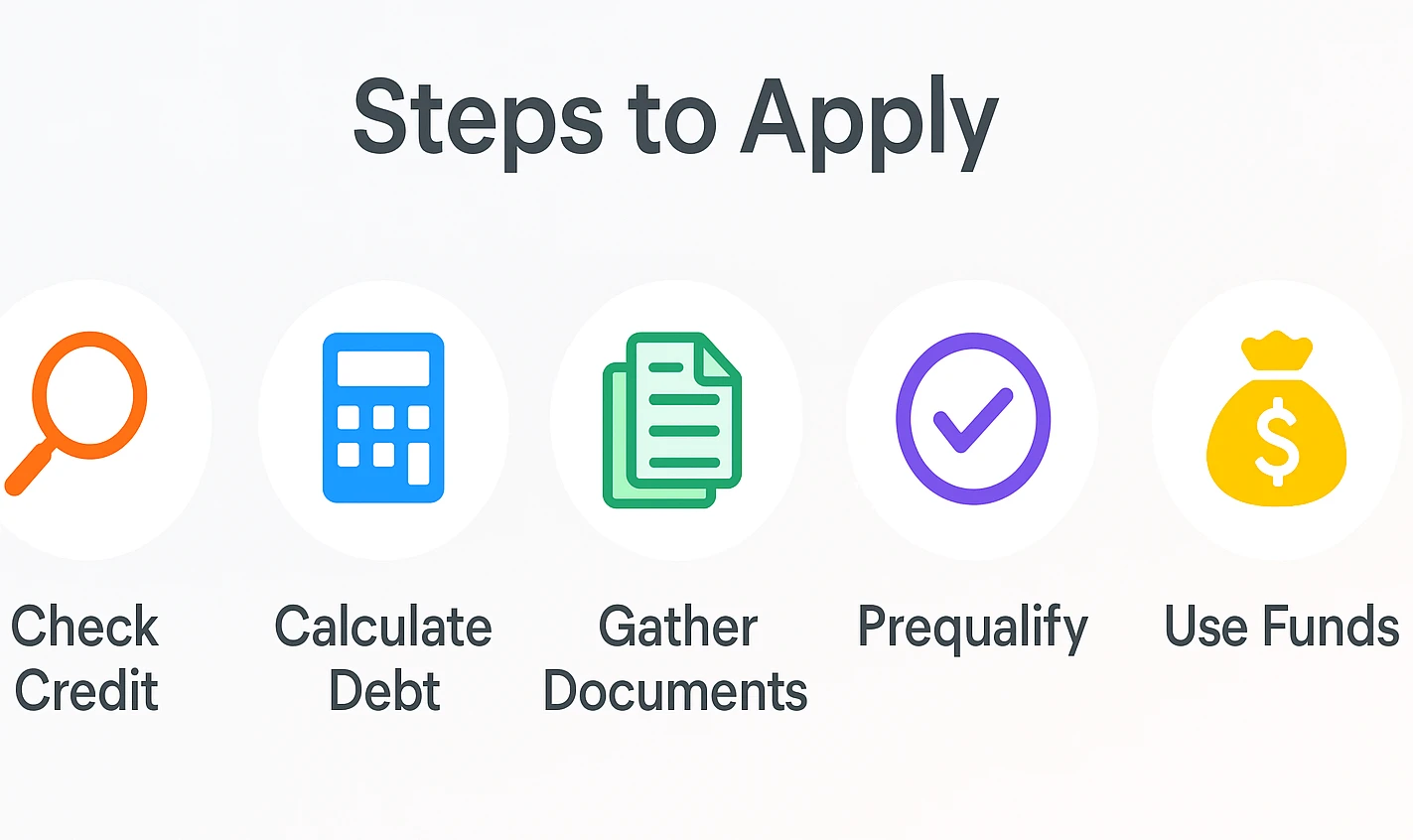
If a prequalified offer still looks worthwhile after you compare the cost and payment, use this checklist before submitting a full application:
- Check Credit: Get free reports and fix errors at AnnualCreditReport.com.
- Calculate Debt: Add up balances and fees to consolidate.
- Gather Documents: Have identification, income information, and bank details ready; exact requirements vary by lender.
- Prequalify: When a lender offers soft-pull prequalification, use it to compare estimated terms before a full application.
- Compare Offers: Look at APR, fees, and monthly payment. Line up offers side by side before authorizing any hard inquiry. You can also model costs with our loan amortization calculator.
- Apply: Submit the full application after you choose an offer; confirm when the lender will perform a hard inquiry.
- Confirm Payoff: Make sure the intended balances are actually paid, whether funds go through you or directly to creditors.
Avoiding Scams and Predatory Lenders
Be skeptical of anyone who guarantees approval regardless of your credit or demands an upfront payment to secure a loan. The FTC warns that advance-fee loan scams often promise access to credit and then require a fee for “processing,” “insurance,” or another reason before any loan exists.
- Do not pay upfront for a promised loan: verify the lender and the loan terms before sending money.
- Do not treat an unsolicited call, text, or email as proof of approval: scammers use fake prequalified offers to collect personal or banking information.
- Read the loan disclosure: compare APR, fees, amount financed, payment schedule, and total repayment before signing.
For current warning signs, see the FTC’s advance-fee loan guidance and the CFPB’s guidance on unexpected preapproved loan offers.
Improving Your Credit Score
If current offers are too expensive, improving the credit habits lenders can see may strengthen future applications. Focus on payment history, revolving balances, unnecessary new applications, and report accuracy.
- Pay On Time: Use reminders or autopay.
- Lower Utilization: Keep card balances low relative to your limits; getting close to the limit can hurt scores.
- Limit Applications: Apply only for credit you need; hard inquiries can affect scores.
- Review Reports: Check and dispute errors regularly.
Debt Consolidation at 620: Key Questions
If you have a real offer in front of you and the math still feels like a close call, this can be one of those final-step decisions worth running past a finance professional. A lower payment, a longer term, an origination fee, and your other debts can pull in different directions.
The Bottom Line for a 620 Credit Score
A 620 credit score can put you in range for some personal-loan offers, but approval is not the goal by itself. The loan has to improve the debt plan. Prequalify when you can do so with a soft inquiry, compare total cost and monthly payment, and use the estimator above on the real terms you receive.
If no offer lowers the cost without creating a payment you cannot comfortably sustain, do not force a consolidation loan. Compare a Debt Management Plan, nonprofit credit counseling, or a direct payoff strategy instead.
If you want the numbers in one place before deciding what to do next, organize your debts, income, spending, and goals in one snapshot.
See Your Debts, Spending, and Goals on One Screen
The 5-sheet workbook holds up to 8 debts and 8 goals, and the SNAPSHOT sheet totals everything automatically.
Confirm to get the workbook and frugal money tips. Unsubscribe anytime.
Something went wrong. Please check your email address and try again.
This content is for informational and educational purposes only and is not financial advice. Loan offers, APRs, and eligibility vary by lender and your profile. Review terms carefully and consider speaking with a qualified professional before borrowing.

