

If you’re retiring at 55 with a pension, start with what your plan will actually pay at 55—not the full benefit quoted for a later age. Then ask whether that pension plus savings you can access can cover spending, health care, and taxes until Medicare and any later Social Security claim begin.
Use the calculator below with your own plan figures, then work through the reduction rules, payout choices, account access, health coverage, taxes, and later benefits that shape the bridge. For the bigger picture, see our guide to financial independence and early retirement.
Pension Calculator: Estimate Your Benefit at 55
This post contains affiliate links. If you use one to sign up or make a purchase, we may earn a commission at no extra cost to you. Learn more.
Table of Contents
- Pension Calculator: Estimate Your Benefit at 55
- Five Checks Before You Retire at 55 With a Pension
- Understanding Your Pension
- Navigating Early Withdrawal Reductions
- Evaluating Pension Payout Options
- Health Insurance Before Medicare
- Coordinating Income Streams After 55
- Planning for Inflation If Your Pension Has No COLA
- Managing Taxes
- Social Security: How Delaying Changes Your Benefit
- Steps to Plan
- Put Your Money on One Screen Before You Retire
- Frequently Asked Questions
- Before You Retire at 55, Test the Bridge
Five Checks Before You Retire at 55 With a Pension
- Plan rules come first: Verify vesting, earliest start ages, reduction schedules, and payout options before relying on a pension estimate.
- Starting early can shrink your check: Use your plan’s own reduction schedule because some plans subsidize early retirement while others reduce it.
- Payout choice changes the risk: Compare lifetime income and survivor protection with the flexibility of any lump-sum option your plan offers.
- Map the bridge from 55: Know which pension, employer-plan, Roth, brokerage, and cash dollars are accessible—and how taxes affect them.
- Budget the years before later benefits: Include health coverage before Medicare and decide how long savings must bridge before Social Security.
The practical test is the bridge from 55: can the pension plus accessible savings cover spending, health care, and taxes until Medicare and any later Social Security claim begin?
Understanding Your Pension
A defined-benefit pension promises a benefit under a formula set by the plan. Service, earnings, age, and the form of payment may matter, but the exact rules come from your own plan documents. For private ERISA-covered plans, the Summary Plan Description (SPD) explains key features such as vesting, benefit calculations, and when benefits can be paid.
Core Pension Concepts for Early Retirement at 55
- Vesting: Check your plan rather than assuming a universal service period. Private ERISA defined-benefit plans can use schedules such as five-year cliff vesting or graded vesting that reaches 100% after seven years, and plans may vest faster.
- Normal retirement age: This is the plan-defined age tied to the normal retirement benefit. Your plan may also provide an earlier retirement age.
- Early retirement: Some plans let you start before normal retirement age. The monthly benefit is usually reduced, although some plans partially or fully subsidize early retirement.
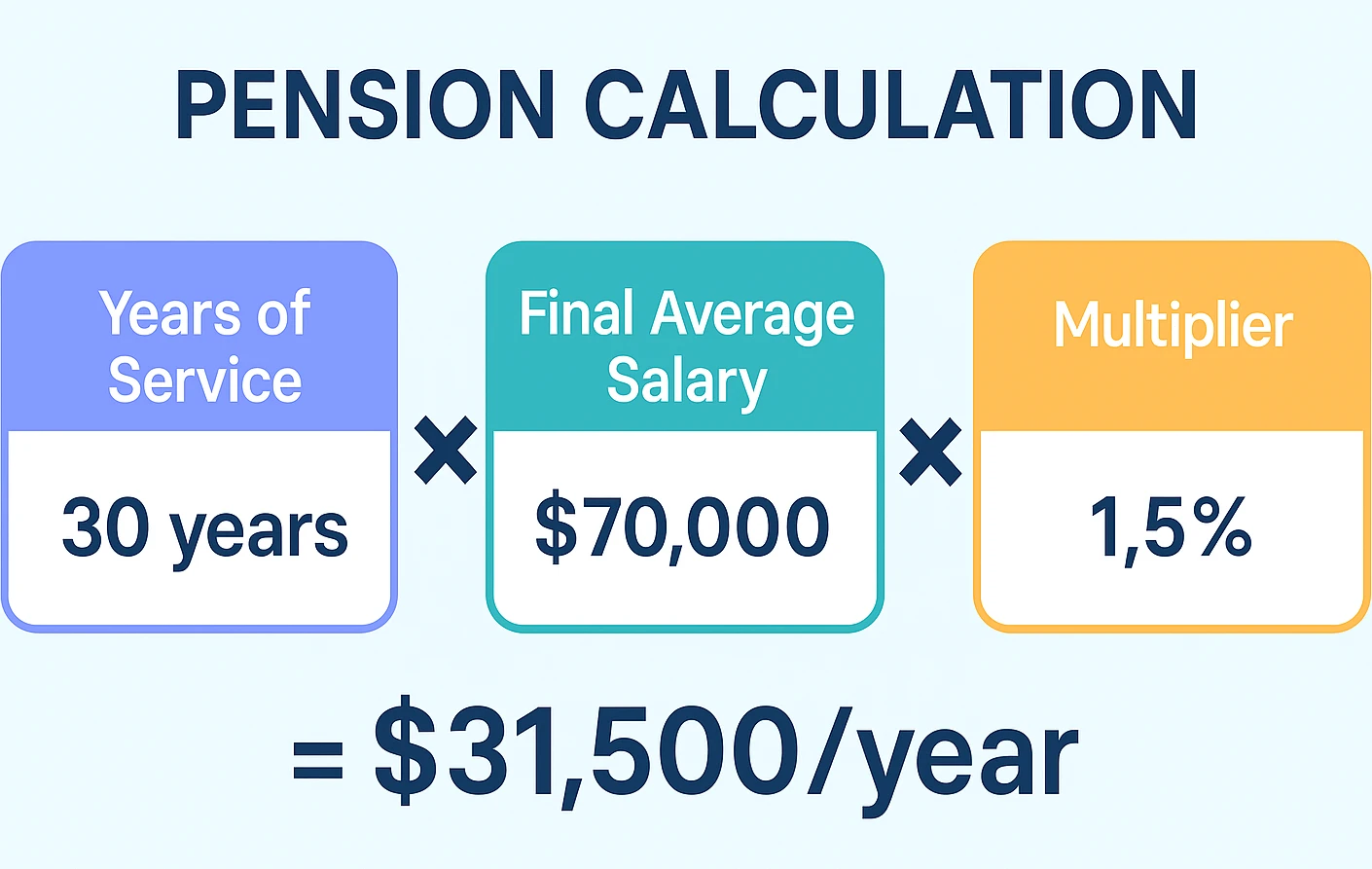
- Benefit formula: One common design uses
(Years of Service) × (Final Average Salary) × (Multiplier), but your plan may use a different formula. Hypothetical example: 30 × $70,000 × 1.5% = $31,500/year before any plan-specific early-start adjustment.
Navigating Early Withdrawal Reductions at 55
Starting a pension before the plan’s normal retirement age often means a smaller monthly benefit, but the reduction schedule is plan-specific and some plans subsidize early retirement.
How to Calculate Your Reduction
Hypothetical example: Assume a plan applies a 5% reduction for each year the pension starts before age 65. Your plan may use a different schedule.
- Full Benefit Age: 65
- Retirement Age: 55
- Years Early: 10
- Full Pension: $31,500/year
- Reduction Rate: 5% per year early
Calculation:
- Total Reduction: 10 × 5% = 50%
- Reduced Annual Benefit: $31,500 × 0.50 = $15,750/year
- Monthly Benefit: $15,750 ÷ 12 = $1,312.50/month
Some plans use age-and-service thresholds that can provide subsidized or unreduced early retirement. Check the governing plan document or benefits guide for the exact eligibility rule.
Evaluating Pension Payout Options
The right payout form depends on which risks you want the pension to handle and which you are prepared to manage yourself. If your plan offers a lump sum, the tax treatment of a pension withdrawal also matters.
Lump Sum vs. Monthly Annuity
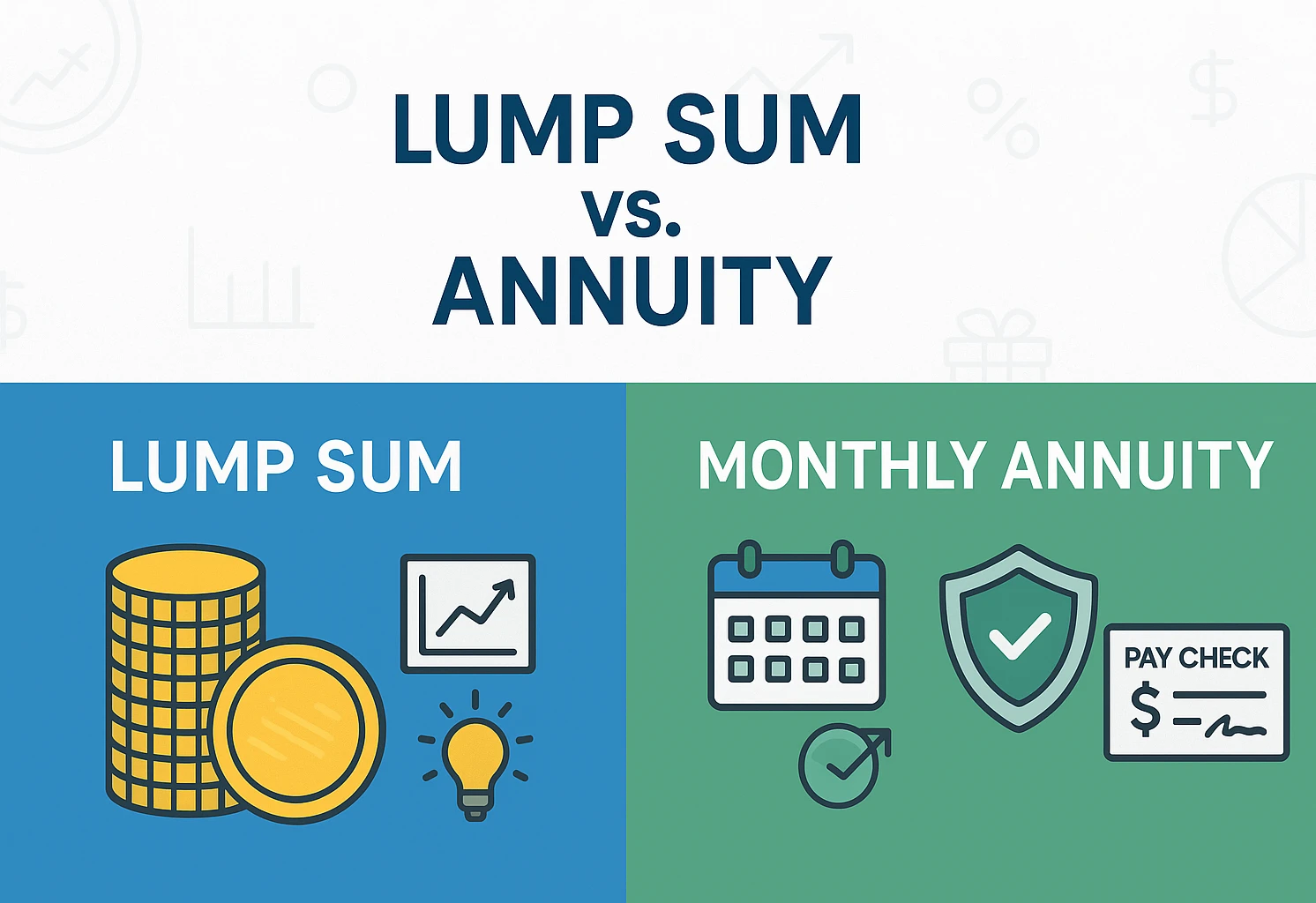
Monthly annuity: Provides predictable lifetime payments without requiring you to invest a pension lump sum. The trade-offs are less liquidity and potential inflation exposure when the plan has no COLA.
- Pros: Predictable lifetime income and less responsibility for managing pension assets.
- Cons: Less liquidity, inflation risk, and less estate flexibility under some payment forms.
Lump sum: Provides liquidity and investment control, and any assets left later may become part of your estate. You also take on market, withdrawal, and longevity risk.
- Pros: Flexibility, investment control, and potential assets for heirs.
- Cons: Market and sequence risk, the possibility of outliving the money, and rollover or tax complexity.
There is no universal winner. Compare the value of predictable lifetime income with the flexibility of managing a lump sum, then check what forms your own plan actually offers.
Single Life vs. Joint & Survivor Annuity
Single-life annuity: Typically pays more per month and ends when you die. Joint-and-survivor annuity: Usually pays less while you are alive in exchange for continuing a stated survivor benefit after your death. Your plan controls the available percentages and election rules.
If the monthly annuity, survivor option, and lump sum all solve different problems
If the payout forms your plan offers each fit a different priority and you’re not sure which trade-off to make, a finance professional can help before you file the pension election.
Health Insurance Before Medicare
Bridging coverage before 65? Compare plans that fit your timeline:
Next, revisit your budget with premiums included.
Coverage before 65 is a major cost. Options can include COBRA, which is generally offered for 18 months and can last 36 months in some cases, Marketplace coverage for retirees with income-based savings when eligible, spousal coverage, or employer retiree plans. Compare premiums, deductibles, networks, and expected out-of-pocket costs before choosing a bridge.
Coordinating Income Streams After 55
Your pension may cover part of the monthly budget; the rest has to come from accounts you can access on the right tax timeline.
401(k) and 403(b): Using the Rule of 55
If you separate from service during or after the year you turn 55, distributions from that employer’s qualified plan can qualify for an exception to the 10% additional early-distribution tax. The age-55 separation exception does not apply to IRAs, and your plan’s own distribution rules still determine when money is available. See the IRS exceptions to the early-distribution tax. For more detail, our Rule of 55 guide walks through examples and common pitfalls.
Roth IRA: Contributions and Earnings Have Different Rules
- Regular contributions: Roth IRA ordering rules treat regular contributions as coming out first, and a return of those contributions is not included in gross income.
- Earnings: Earnings are tax-free when the Roth IRA distribution is qualified—generally after the five-year period and once you reach age 59½, or under another qualifying event.
That ordering can make Roth contributions useful for flexibility, but conversions and other Roth amounts have separate rules. See IRS Publication 590-B for the current distribution and ordering rules.
Other Savings: Brokerage Accounts & HSAs
Brokerage accounts have no retirement-plan withdrawal restriction, but selling investments can create taxable capital gains. HSA distributions used for qualified medical expenses can be tax-free; non-qualified distributions are taxable and generally face an additional 20% tax before age 65. That additional 20% tax no longer applies after you reach 65, although a non-qualified distribution can still be taxable income. See IRS Publication 969 for the current HSA tax rules.
Planning for Inflation If Your Pension Has No COLA
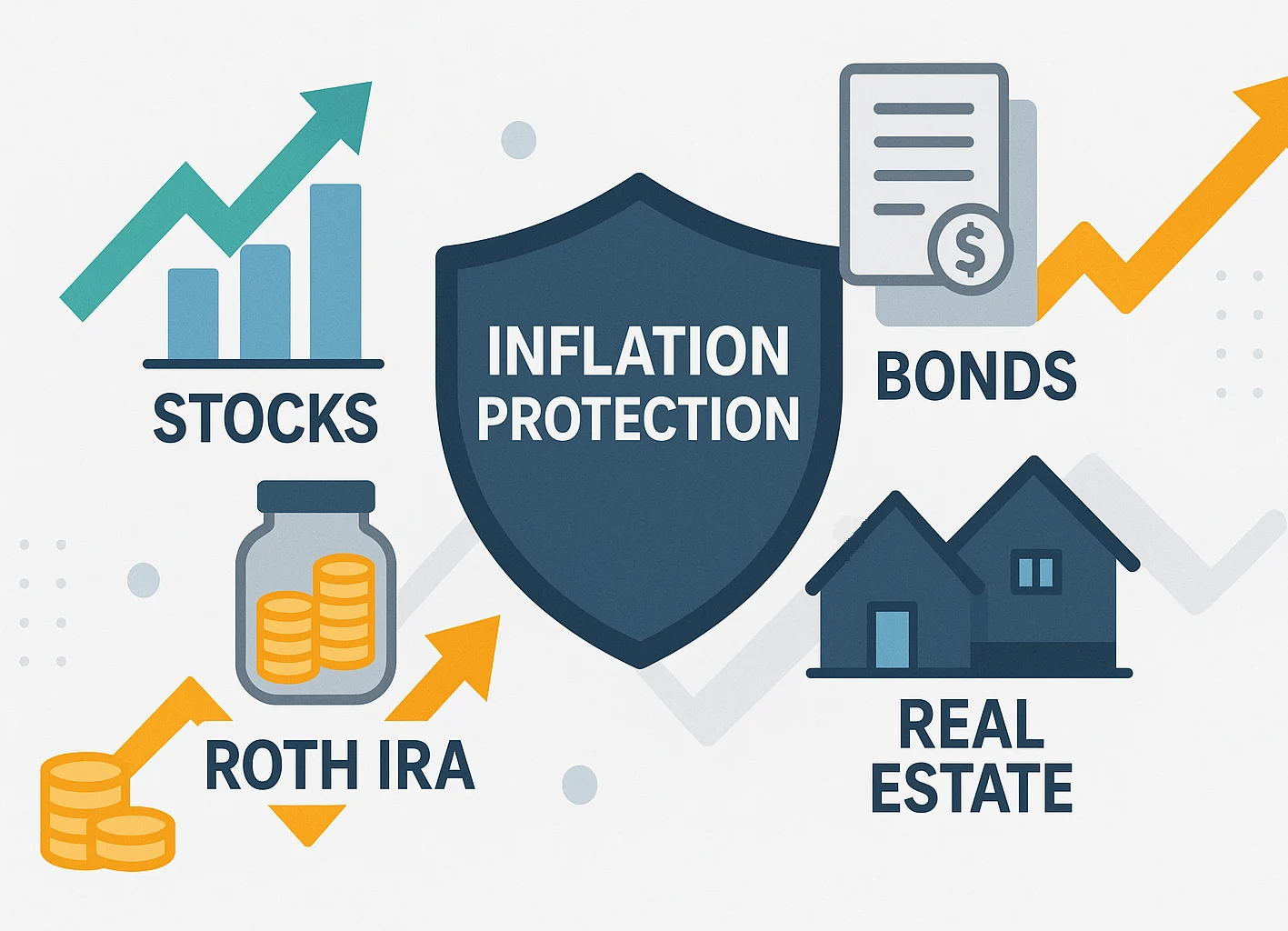
If your pension has no cost-of-living adjustment (COLA), a fixed check loses purchasing power as prices rise. At 2% annual inflation, a fixed $1,312.50 monthly pension would have purchasing power of about $1,077 in today’s dollars after 10 years.
- If you take a lump sum, build an investment mix with inflation risk in mind rather than assuming returns will outpace prices.
- If you keep an annuity, identify which flexible savings could absorb rising expenses if the pension has no COLA.
If you’re planning to pair pension income with portfolio withdrawals, our explainer on the 4% rule for financial independence can help you sanity-check your assumptions.
Managing Taxes and Pension Withdrawal
For federal taxes, all or part of a pension or annuity payment may be taxable; after-tax contributions can make part of a payment tax-free. Retirement-plan distributions are generally reported on Form 1099-R. State treatment varies, so check your state’s official tax agency for current rules rather than assuming pension income is exempt.
Tax Planning Moves to Review
- Mix account types: Draw from taxable, tax-deferred, and tax-free buckets.
- Evaluate Roth conversions carefully: a conversion can create taxable income in the year of conversion, so model the tax impact before using one as a bridge strategy. See IRS Publication 590-A.
- Set or adjust federal withholding on retirement payments (Form W-4P for periodic pension or annuity payments; Form W-4R for nonperiodic payments and eligible rollover distributions) so you’re less likely to underpay during the year.
- Pay estimated taxes if withholding won’t cover you.
Social Security: How Delaying Changes Your Benefit
Social Security retirement benefits can start as early as 62. Claiming before full retirement age reduces the monthly amount, while delaying after full retirement age increases it until age 70. For someone born in 1960 or later, full retirement age is 67.
| Claiming Age | % of Full Benefit | Benefit at FRA ($2,000) |
|---|---|---|
| 62 | 70% | $1,400 |
| 65 | 86.7% | $1,734 |
| FRA (67) | 100% | $2,000 |
| 68 | 108% | $2,160 |
| 70 | 124% | $2,480 |
For people born in 1943 or later, delayed retirement credits increase retirement benefits by 8% per year after full retirement age, up to age 70. For the 1960-or-later example above, claiming at 70 is 124% of the full-retirement-age benefit. See the SSA explainer on delayed retirement credits.
Once you’re claiming, you can stretch your check further with the strategies in our guide to living frugally on Social Security.
Retiring at 55 with a Pension: Key Steps
- Pull the official pension numbers: confirm vesting, the benefit at 55, the normal-retirement benefit, and the early-start reduction schedule.
- Compare payout forms: review any annuity, survivor, and lump-sum choices your plan actually offers before focusing on the biggest starting check.
- Map the income bridge: list which employer-plan, Roth, brokerage, HSA, and cash dollars are accessible from 55 onward and note the tax rules that apply.
- Build the pre-65 budget: include health premiums, expected out-of-pocket costs, federal and state taxes, and irregular spending—not only core bills.
- Stress-test more than one start date: compare the pension at 55 with one or two later ages and see how much portfolio income each scenario requires.
- Test-drive the spending plan: live on the projected monthly amount before leaving work, then verify the final pension election with your plan administrator before filing paperwork.
You’ve mapped the pension bridge; before you make the call, it can help to put the rest of your money picture in one place.
Put Your Money on One Screen Before You Retire
The 30-Minute Money Reset tracks income, spending, debts, and goals, and the SNAPSHOT sheet totals them automatically.
Confirm to get the workbook and frugal money tips. Unsubscribe anytime.
Something went wrong. Please check your email address and try again.
Frequently Asked Questions
Before You Retire at 55, Test the Bridge
Put three things on one page: the pension your plan says you can start at 55, the monthly spending you expect including pre-Medicare health costs and taxes, and the savings or other income you can actually access to fill the gap. Then run the same plan with a later pension start date so you can see what timing changes.
If the bridge only works by ignoring health costs, taxes, or account-access rules, the plan needs another round. Use the calculator as a planning estimate, then verify the official benefit, payout form, and election rules with your plan administrator before filing your pension paperwork.
This content is for general educational purposes, not individualized financial, tax, or legal advice. Pension terms, tax treatment, health coverage, and Social Security choices depend on your circumstances. Verify plan rules and current benefit or tax guidance before making a retirement decision.

