

If you’re figuring out how to retire at 50 with 2 million, start by translating the balance into spending. Yes, $2 million can be enough, but $60,000 of annual spending is a 3% first-year draw; $70,000 is 3.5%; and $80,000 is 4%, before taxes and Social Security.
Start with spending—not a headline withdrawal rate. Then solve the bridge years: account access before 59½, healthcare before Medicare, Social Security no earlier than 62, and the risk of bad markets early in retirement. Use the spending stress test after the first withdrawal-rate table, then work through the access, investing, healthcare, and tax sections. For the broader FIRE framework, see our financial independence & early retirement guide.
This post contains affiliate links. If you buy through our links, we may earn a commission at no extra cost to you. Learn more.
Table of Contents
- Is $2M Enough to Retire at 50?
- Retirement Spending Stress Test
- Withdrawal-Rate Scenarios for a $2M, Age-50 Retirement
- Budget Blueprint for a $2M, Age-50 Retirement
- Free Money Reset Workbook
- How to Fund Retirement Before Age 59½
- Investing Strategies for Early Retirement
- Healthcare Before Medicare in Early Retirement
- Tax Strategies for Early Retirement
- Signs Your $2M Retirement Plan Needs More Margin
- Ongoing Wealth Planning After Retirement
- Frequently Asked Questions
- Final Check Before You Retire at 50
Is $2 Million Enough to Retire at 50?
$2 million can be enough, but only in relation to the spending it must support. The margin changes with taxes, healthcare, inflation, investment returns, Social Security, and how much you can adjust spending after bad markets.
A 4% first-year withdrawal from $2 million is $80,000. The classic 4% framework was built around roughly a 30-year retirement; Vanguard notes that FIRE horizons can run 50 years or more and should be modeled differently. Treat 4% as a scenario to test, not a promise; our 4% rule guide walks through the assumptions in more detail.
| Withdrawal Rate | Annual Income from $2M |
|---|---|
| 4.0% | $80,000 |
| 3.5% | $70,000 |
| 3.0% | $60,000 |
Those percentages are only a starting point. Use the spending stress test below to see how much of your portfolio your entered spending would require before and after Social Security begins.
Withdrawal-Rate Scenarios for a $2M, Age-50 Retirement
The goal is not to find one magic percentage. It is to choose a starting draw that fits the horizon and a spending rule you can adjust when reality differs from the plan.
What Does a Starting Withdrawal Rate Mean?
A starting withdrawal rate is the share of the portfolio you spend in year one, often followed by inflation adjustments. The classic 4% rule was built around about 30 years. A retirement beginning at 50 may need a much longer horizon, so test lower starting rates and flexible spending rather than treating any single percentage as guaranteed “safe.”
Why Test a Lower Starting Rate?
- Sequence risk: Early downturns hurt more when withdrawals are already coming out of the portfolio.
- Long horizon: More years of withdrawals create more time for markets, inflation, and spending surprises to matter.
- Inflation: Your plan has to protect purchasing power, not just preserve the starting account balance.
Flexible withdrawals: Build a plan that can trim discretionary spending after weak markets, rebalance when your allocation drifts, and hold enough liquid assets for near-term spending without assuming a universal cash-or-bond buffer. Early bad returns can be especially damaging when withdrawals are already underway.
Budget Blueprint for a $2M, Age-50 Retirement
Start with what you actually spend, then rebuild that budget for retirement. A $70,000 ceiling is useful only if the line items underneath it are realistic for your household.
Step 1: Track Current Spending
Track every dollar for a few months using a budgeting app. Categorize expenses to set a baseline.
Step 2: Project Retirement Expenses
Some costs drop while others rise:
- Decreasing: Commuting, work costs, retirement contributions, and possibly mortgage if paid off.
- Increasing: Healthcare (pre-Medicare), travel and hobbies, and inflation on essentials.
Sample Budget Within a $70,000/Year Plan
This is an illustrative household budget, not a current cost estimate. The listed categories total $59,400, leaving $10,600 of a $70,000 planning ceiling unassigned rather than pretending every household has the same taxes and irregular costs.

| Category | Illustrative Monthly Amount | Illustrative Annual Amount | Notes |
|---|---|---|---|
| Mortgage/Rent | $0 | $0 | Paid-off house |
| Property Taxes | $350 | $4,200 | |
| Home Insurance | $100 | $1,200 | |
| Utilities | $300 | $3,600 | |
| Home Maintenance | $200 | $2,400 | Repairs, landscaping |
| Groceries | $600 | $7,200 | |
| Dining Out | $300 | $3,600 | |
| Car Insurance | $150 | $1,800 | |
| Gas/EV Charging | $150 | $1,800 | |
| Car Maintenance | $100 | $1,200 | |
| ACA Premiums | $800 | $9,600 | Illustrative only—use a current Marketplace quote |
| Out-of-Pocket Medical | $200 | $2,400 | Co-pays, prescriptions |
| Personal Care/Clothing | $150 | $1,800 | |
| Hobbies/Entertainment | $400 | $4,800 | Movies, concerts |
| Travel | $500 | $6,000 | Vacations |
| Subscriptions | $50 | $600 | Streaming, gym |
| Gifts/Charity | $100 | $1,200 | |
| Contingency | $500 | $6,000 | 10% buffer |
| Illustrative Monthly Subtotal | $4,950 | ||
| Illustrative Annual Subtotal | $59,400 | Before income taxes; $10,600 remains within the $70,000 planning ceiling |
The useful takeaway is the gap between a spending ceiling and the costs you have actually assigned. Replace every row with your own numbers, add a realistic tax estimate, and rerun the stress test before treating the budget as retirement-ready. Then make sure the dollars needed before 59½ actually sit in accounts you can use.
Before you map which accounts will fund the bridge, make sure the day-to-day numbers behind your retirement budget are in one place.
See What Your $2 Million Retirement Has to Cover
Enter income, spending, up to 8 debts, and up to 8 goals; the SNAPSHOT sheet brings the key numbers together automatically.
Confirm to get the workbook and frugal money tips. Unsubscribe anytime.
Something went wrong. Please check your email address and try again.
How to Fund Retirement Before Age 59½
At 50, portfolio size and portfolio access are different problems. If most of the $2 million sits in a 401(k), traditional IRA, or another tax-deferred retirement account, map the years before 59½ separately instead of assuming every dollar is equally spendable on day one.
Separate Accessible Money from Accounts with Age-Based Rules
- Taxable brokerage and cash: You can generally use these when needed, although selling investments can create taxable gains or losses.
- Roth IRA regular contributions: IRS ordering rules treat regular contributions as coming out before conversions and earnings, and returns of regular contributions are not included in gross income.
- Traditional IRAs and many workplace-plan distributions: Taxable distributions before 59½ can be subject to an additional 10% tax unless an exception applies.
That makes an access map just as important as the withdrawal rate: list each account, the amount you expect to use from it, and the rule that makes the withdrawal available. IRS Publication 590-B explains the current IRA ordering and early-distribution rules.
Rule of 55, Roth Ladders, and Other Bridge Routes
If you leave an employer before the year you turn 55, the Rule of 55 generally does not apply to that employer’s qualified plan. In other words, it can help someone leaving around 55, but it is not a default solution for someone retiring at 50. See our Rule of 55 guide and the IRS early-distribution exceptions.
Other bridge approaches can include taxable assets, Roth IRA regular contributions, a Roth conversion ladder planned years in advance, or a properly structured series of substantially equal periodic payments under Section 72(t). Conversion and SEPP rules are easy to get wrong, so verify the current IRS SEPP rules before using them; our Roth conversion ladder spreadsheet can help organize conversion timing.
Social Security does not cover the first part of the bridge either: retirement benefits can generally start at 62, and claiming before full retirement age reduces the monthly benefit. The stress test separates the pre-Social-Security draw from the later draw so you can see how much portfolio pressure the bridge creates.
Investing Strategies for Early Retirement
Balancing Growth and Stability
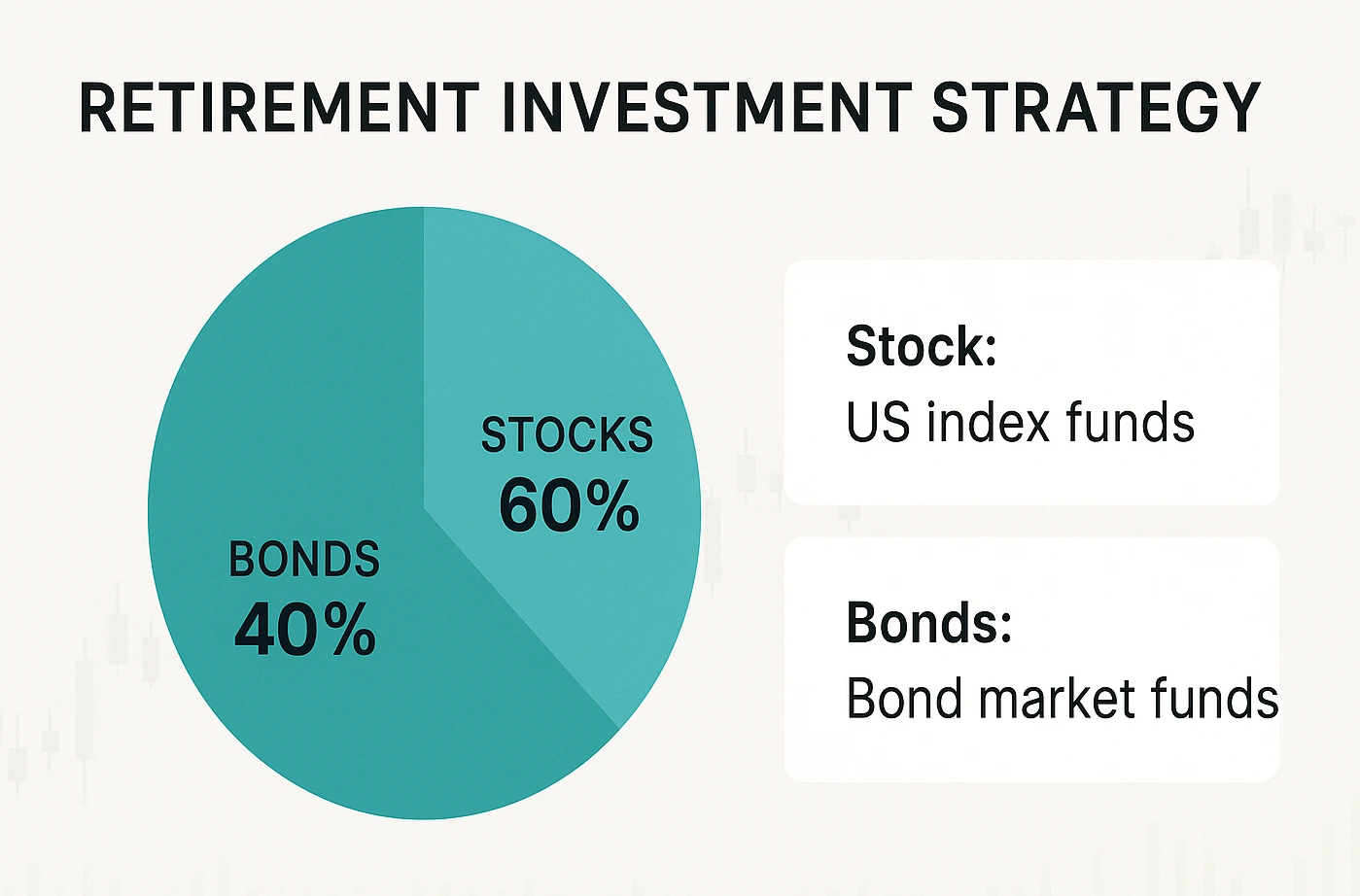
Your $2 million has to fund spending while retaining enough growth potential for a retirement that may last decades. The right stock/bond mix depends on your risk capacity, spending flexibility, time horizon, and other income. If you’re new to index funds, start with our beginner’s guide to investing.
- Stocks: Provide long-term growth potential; broad index funds can diversify company and sector risk.
- Bonds: Can reduce portfolio volatility and provide a source of planned withdrawals.
- Cash: Can cover near-term spending without forcing a sale after a market drop; size the reserve to your own plan rather than a fixed rule.
Why Keep Some Growth Assets?
An all-bond portfolio reduces stock exposure but can give up growth potential over a retirement that may last decades. The goal is not a magic ratio; it is an asset mix you can stick with through downturns while funding near-term spending.
Implementing Your Strategy
- Diversify: Spread risk across industries, geographies, and asset classes.
- Control costs: Low-cost index funds or ETFs can reduce investment expenses.
- Rebalance deliberately: Review the allocation on a regular schedule or when it drifts materially from your target.
Good wealth planning means revisiting the mix when your spending, income sources, or tolerance for losses changes—not defending one ratio forever.
Healthcare Before Medicare in Early Retirement
Healthcare Options
Healthcare is a major variable in an age-50 retirement because most people first become eligible for Medicare at 65, although some qualify earlier. For a deeper look at premiums, subsidies, and networks, see our health insurance guide for early retirees. Common bridge options include:
- ACA Marketplace: Compare current plans at HealthCare.gov. Premium tax credits depend on household size and estimated income, and the enhanced pandemic-era savings ended after 2025, so a 2026 premium may be higher even if you still qualify for help.
- COBRA: Employer continuation coverage is usually available for up to 18 months after certain job-loss or hours-reduction events; some circumstances allow longer coverage. See the Department of Labor’s COBRA guidance.
- Off-Marketplace coverage: You can buy individual coverage outside the Marketplace, but Marketplace premium tax credits do not apply to those plans.
- Health care sharing ministries: These arrangements are generally not health insurance and do not carry the same consumer protections as insurance.
- Employer or spouse coverage: A spouse’s employer plan or a job with benefits can be another bridge when available.
Budgeting for Healthcare
Get a current premium quote, budget for deductibles and other out-of-pocket costs, and verify HSA eligibility before choosing a plan. For 2026, all Bronze and Catastrophic Marketplace plans are HSA-eligible, while Catastrophic plans still have separate enrollment rules and some other plan categories may also qualify.
Healthcare note: Use the official Marketplace at HealthCare.gov or get help from a Marketplace-certified assister or licensed agent/broker. Avoid look-alike sites and verify plan details before enrolling.
Tax Strategies for Early Retirement
Coordinate MAGI, Taxes, and Marketplace Credits
Marketplace premium tax credits depend on household size and estimated income, so tax decisions that change income can also change health-insurance assistance. Model taxes and Marketplace coverage together instead of targeting one fixed MAGI number.
That coordination matters because a conversion or withdrawal that looks efficient in isolation can change the rest of the year’s tax picture.
Key Tax Strategies
- Roth conversions: Converting pretax IRA or employer-plan money to a Roth generally creates taxable income in the conversion year; future qualified Roth distributions can be tax-free.
- Withdrawal sequencing: Coordinate taxable, tax-deferred, and Roth accounts. There is no universal best order because tax brackets, Marketplace credits, required distributions, and estate goals differ.
- Tax-loss harvesting: Capital losses first offset capital gains. If losses still exceed gains, current IRS rules allow up to $3,000 against income ($1,500 if married filing separately), with excess losses generally carried forward.
- HSAs: When eligible, contributions may be deductible or excluded from income, earnings can grow tax-free, and qualified medical withdrawals can be tax-free.
For current federal rules, review IRS guidance on capital gains and losses and Health Savings Accounts.
If Roth conversions, early-access withdrawals, and Marketplace income all affect the same tax year, it can be worth having a tax professional check the interaction before you act.
Signs Your $2M Retirement Plan Needs More Margin
A $2 million balance can look reassuring while the plan underneath it is fragile. Before leaving work, look for pressure points that stack on top of one another.
- Required spending is close to the highest draw rate you are willing to test. If $80,000 is non-negotiable, that is a 4% first-year draw before taxes and Social Security, leaving less room for bad early returns than a lower-spending plan.
- Most of the money is not readily accessible at 50. A strong total balance does not fund the bridge if the accounts you can actually use are too small.
- Healthcare depends on an old premium or subsidy assumption. Re-price coverage with a current quote instead of carrying an old Marketplace estimate forward.
- There is almost no discretionary spending to cut. A rigid budget gives you fewer ways to respond to a weak market without increasing portfolio pressure.
- The plan needs every assumption to break your way. If it only works with strong returns, low inflation, full Social Security, and no major surprise costs, test a later retirement date, more accessible savings, additional income, or lower spending.
One tight assumption may be manageable. Several tight assumptions at once are a signal to build more margin before you retire.
Ongoing Wealth Planning After Retirement
A $2M retirement plan is not set-and-forget. Review the assumptions that change the withdrawal burden, then adjust the plan because the evidence changed—not because one market headline was scary.
Annual Review Checklist
- Spending: Compare the last 12 months with the budget you used to justify retirement.
- Portfolio draw: Recalculate the withdrawal rate using the current portfolio and upcoming spending needs.
- Allocation: Rebalance when your target mix has drifted enough to matter, not merely because the calendar changed.
- Taxes and healthcare: Refresh Marketplace, Medicare, tax, and account-withdrawal assumptions before year-end decisions.
- Income sources: Update Social Security, pensions, part-time income, or other cash flows that reduce the portfolio draw.
Keep More Than One Lever
If the plan gets tight, you do not have to solve everything through the portfolio. Discretionary spending, the timing of a large purchase, part-time income, or the timing of retirement itself can create room without pretending the market is predictable.
Frequently Asked Questions
Final Check Before You Retire at 50
Retiring at 50 with $2 million is not a yes-or-no balance check. It is a four-part test: your spending has to fit the portfolio, the years before 59½ need an access plan, healthcare and tax assumptions need to be current, and the plan needs room for weak early returns.
Run your real spending through the stress test, map which accounts fund the bridge, and refresh Marketplace, Social Security, and tax inputs before you give notice. If the plan only works when every assumption goes right, build more margin first.
Educational planning content only—not individualized financial, investment, tax, legal, or healthcare advice. Withdrawal rates and tool outputs are scenarios, not guarantees. Verify current tax, benefit, and insurance rules for your situation before acting.

