
When you need cash quickly and your credit is not ideal, a loan-matching site can look like a shortcut. HonestLoans.net is not a lender: it is a paid lead generator that can share a request with third-party financial-service providers, and its own disclosures say it does not promise to find the best loan for you.
This honestloans.net review explains what the site’s current disclosures say, what information you may authorize it to share, how to compare any offer you receive, and which lower-cost routes are worth checking first. If you’re also juggling multiple balances, our debt management plan guide can help you build a safer long-term strategy.
Last updated: August 2026.
Table of Contents
- Quick Verdict
- Should You Use HonestLoans.net? 3-Question Decision Check
- How HonestLoans.net Works
- Interest Rates, Fees, and True Costs
- Is HonestLoans.net Legit? What the Disclosures Reveal
- State Availability and Lender Licensing
- Safer Alternatives to Consider
- How to Protect Yourself When Considering Online Lenders
- See Whether Your Month Has Room for Another Payment
- Frequently Asked Questions
- Should You Use HonestLoans.net? The Bottom Line
- References
Quick Verdict
- HonestLoans.net can widen your search, but there is a privacy trade-off. You are submitting information to a lead-generation network, not applying with one lender, and your request may be shared with multiple financial-service parties.
- Do not assume the service is finding the cheapest or “best” loan. HonestLoans.net says it does not make that promise, and its own pages even use different minimum loan figures.
- The real decision starts with any offer you receive. The actual provider—not HonestLoans.net—sets the amount, APR, fees, payment schedule, and eligibility rules.
- Best use: treat it as a backup comparison channel. Check lower-cost options first, and use HonestLoans.net only if you are comfortable with the information-sharing model and can compare the provider’s full terms before accepting anything.
Should You Use HonestLoans.net? 3-Question Decision Check
Answer three questions you can answer from your own budget and situation. This check does not approve or reject a loan; it points you to the part of this guide that is most useful next.
How HonestLoans.net Works
HonestLoans.net currently describes itself as a lender-connection service and advertises requests up to $50,000. Its own pages disagree on the lower end: the homepage FAQ says $200 to $50,000, while the How It Works page says $100 to $50,000. Both say limits vary by lender and creditworthiness, and the operator is not a lender, broker, or credit decision-maker.
The Lead Generation Model
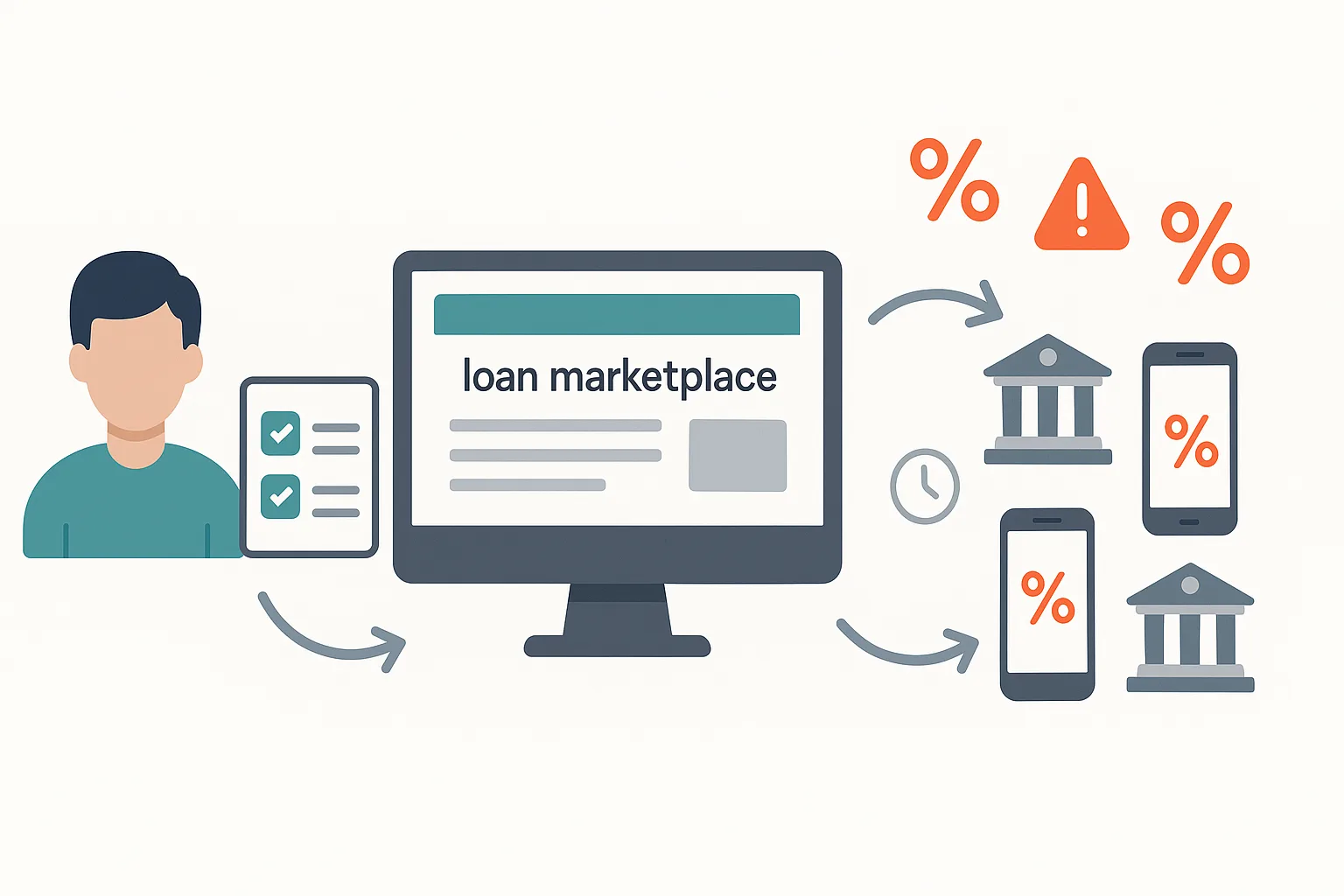
The clearest description is in HonestLoans.net’s own lead-generation disclosure. It says the company acts as both a lead generator and lead aggregator, may buy and sell leads, and may share a request with lenders, data managers, data brokers, remarketing companies, and other financial-service providers.
- You are not applying to HonestLoans.net for credit.
- The site does not guarantee that a lender will contact you or offer a loan.
- The site says it does not know the terms you will be offered and does not try to connect you with the “best” loan for your situation.
- Its disclosure says lead purchasers are ordered in a “ping tree” primarily by the price they are willing to pay for a lead.
Who the Site Markets To
HonestLoans.net’s current pages emphasize urgent expenses, bad-credit borrowing, personal loans, cash advances, installment loans, and emergency loans. That positioning may appeal to people who have had trouble qualifying elsewhere, but it does not establish a minimum qualifying credit score.
If you are researching personal loans for a 620 credit score or debt consolidation loans for a 620 credit score, treat the score as only one input. The provider that ultimately receives your information sets its own underwriting criteria, loan amount, rate, and terms.
What Happens When You Submit a Request
The form is a request to be connected with third parties, not an application to HonestLoans.net for a loan. HonestLoans.net’s current Terms of Use say its forms may request your name, address, phone number, email address, Social Security number, bank-account information, and employment information.
Credit-check language deserves special attention. The homepage says Honest Loans itself does not perform a credit check, while the detailed lead-generation disclosure says that by submitting information you authorize HonestLoans.net under the Fair Credit Reporting Act to obtain your Social Security number, credit report, and credit score for identity verification and connection purposes. It also says connected service providers may separately obtain credit reports and scores. The site does not promise that every such access will be a soft inquiry, so review the specific provider’s disclosure before continuing.
After you submit the request, HonestLoans.net says it shares your information with lead purchasers. If a purchaser decides your information meets its criteria, you may be redirected to that provider’s website to review its terms. HonestLoans.net says it has no further role in the provider’s approval process. Its current How It Works page also says that if no lender is found, the site may present offers for credit repair, debt relief, or other services.
- You may receive solicitations for a different form of credit than the one you originally wanted.
- The terms offered may be worse than the terms you hoped to find, and the site says it does not select the best loan for you.
- Your consent can allow marketing contacts by email, phone, mobile device, or direct mail from parties that receive your information.
Interest Rates, Fees, and True Costs
HonestLoans.net does not publish one network-wide APR or fee schedule because it does not set the lender’s terms. Its current disclosures say rates, fees, loan size, renewal policies, and payment consequences vary by provider and state. That makes the lender’s own disclosure—not a marketplace headline—the document that matters.
What to Compare in Any Offer
| Cost item | What to verify before accepting |
|---|---|
| APR | Use the disclosed APR to compare borrowing cost across products, not just the payment amount. |
| Finance charges and fees | Check origination or other finance charges and whether they reduce the cash you actually receive. |
| Payment schedule | Confirm the payment amount, frequency, first due date, and whether the loan amortizes or has a large final payment. |
| Late, nonpayment, and renewal terms | Read the provider’s policy for late or partial payments, collections, and any renewal or extension option. |
| Total repayment | Add up what you must repay and compare that total with the amount you actually receive. |
Why APR Matters
Short terms can make a seemingly small fee extremely expensive on an annualized basis. The Consumer Financial Protection Bureau gives a common payday-loan example: a $15 fee for every $100 borrowed over two weeks works out to an APR of almost 400%. That is a general payday-loan example, not a quote from HonestLoans.net, but it shows why comparing APR is more useful than looking only at the dollar fee.
What HonestLoans.net Charges
HonestLoans.net currently says consumers are not charged a fee to submit information through the website. If a provider offers you a loan, that provider is responsible for presenting the interest rate and fees before you accept. HonestLoans.net also says it does not control late-payment, nonpayment, or partial-payment fees that a provider may charge.
Is HonestLoans.net Legit? What the Disclosures Reveal
HonestLoans.net is an operating website that identifies its operator and publishes detailed lead-generation disclosures. That confirms what the service says it is; it does not tell you whether a particular provider or offer is suitable for you. This review evaluates current public disclosures and consumer-protection guidance rather than claiming a firsthand borrowing experience.
Claims to Read Carefully
- Approval language: HonestLoans.net itself says submitting information does not guarantee approval or a loan offer.
- Fast-funding language: the site says funding may be as soon as the next business day if you are approved, but transfer time varies by lender.
- Credit-check language: the homepage and detailed disclosures use different wording, so assume credit-report access is possible and read the provider’s terms before proceeding.
- Dispute terms: the current Terms of Use include mandatory individual arbitration and a class-action waiver. Read those terms before using the service if dispute rights matter to your decision.
Lead-Generation Trade-offs the Site Discloses
Several of the most important cautions come from the company’s own disclosure rather than from third-party reviews:
- The site says it does not attempt to connect you with the best loan for your needs.
- Lead position in its “ping tree” is determined primarily by how much a purchaser is willing to pay for the lead.
- You may receive marketing or solicitations for other products after submitting your information.
- The site says it does not validate or investigate the licensing and qualifications of the service providers in its network.
Data Privacy and Contact Risk
The current terms and lead-generation disclosure say your information may be stored and shared with lead purchasers and other parties involved in lead processing. They also describe consent to marketing communications from parties that receive your information.
- Read the privacy policy and lead-generation disclosure before entering a Social Security number or bank information.
- Expect that more than one company may receive or evaluate your information.
- If you receive unwanted marketing, you may need to opt out with the sender directly; HonestLoans.net says it cannot control communications from third parties beyond its direct control.
State Availability and Lender Licensing
Consumer-lending rules differ by state, so the same type of loan may be available, restricted, or priced differently depending on where you live.
Limited State Coverage
HonestLoans.net’s current disclosures state that the service and participating lenders are not available in all states. Its current Terms of Use specifically say the service does not seek to do business with New York residents, while availability elsewhere still depends on the provider and applicable law. The site also says you should not use the service for a loan that is illegal where you live.
Do not rely on an old “approved states” list. Check the current provider’s legal name, terms, and licensing with the appropriate state financial regulator or attorney general before accepting an offer.
Provider Licensing Deserves Its Own Check
This is especially important because HonestLoans.net’s lead-generation disclosure says the site does not validate or investigate service-provider licensing or qualifications. The same disclosure says some lead purchasers may be tribal or offshore lenders that claim immunity from state regulation. That does not tell you whether a specific offer is lawful in your state, so verify the actual provider rather than assuming the marketplace has done that screening for you.
Safer Alternatives to Consider
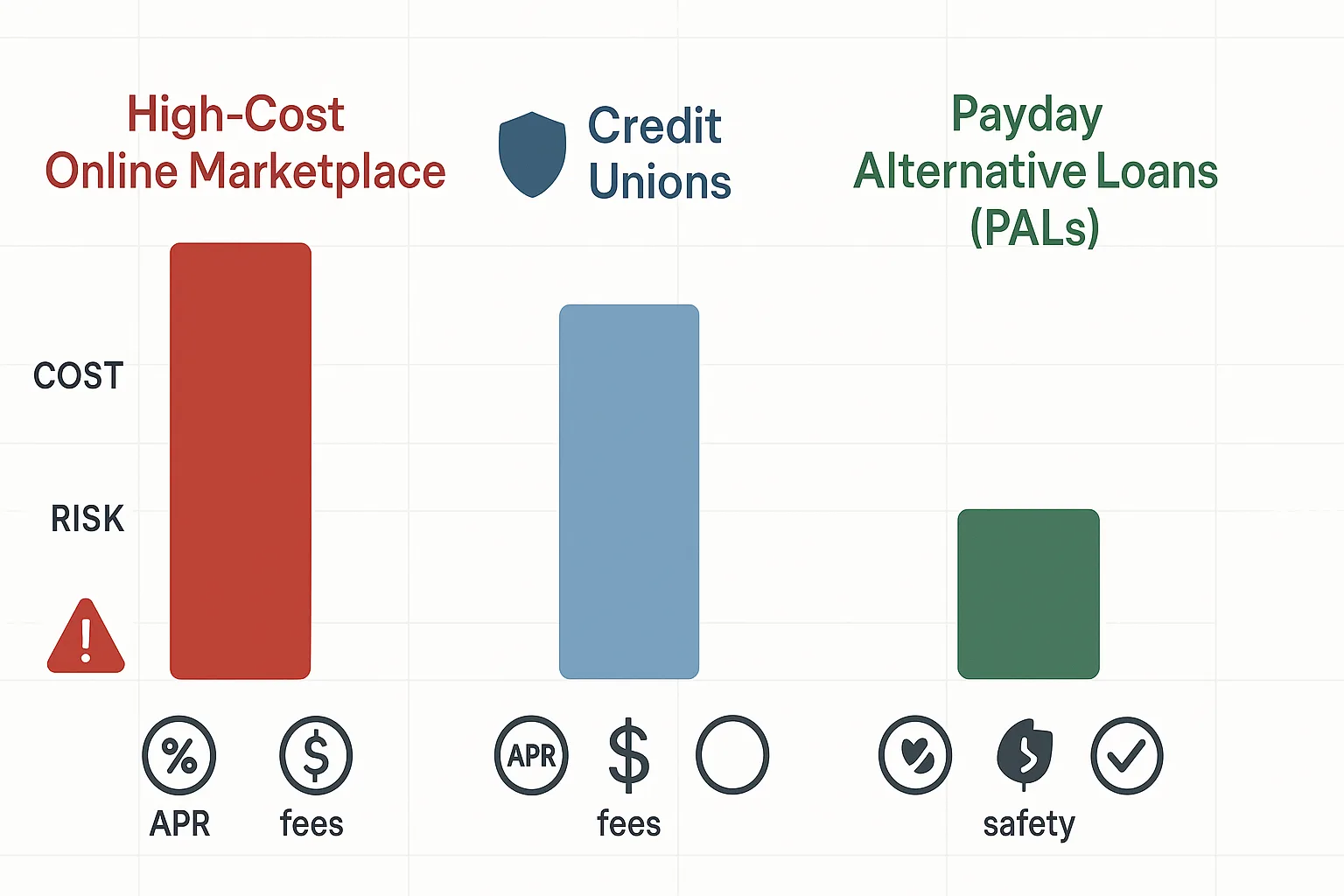
Before you accept a high-cost offer from any online marketplace, compare options that may reduce either the amount you need to borrow or the cost of borrowing it.
Federal Credit Union Alternatives
Some federal credit unions offer Payday Alternative Loans (PALs I or PALs II) under NCUA rules. As of August 2026, the NCUA says PALs may charge up to 28% APR. PALs I are capped at $1,000 with terms up to six months, while PALs II can be up to $2,000 with terms up to 12 months. Availability depends on the federal credit union, and membership rules still apply.
Community Development Financial Institutions (CDFIs)
Certified CDFIs are mission-driven financial institutions recognized by the U.S. Treasury’s CDFI Fund for serving low-income or underserved communities. They can include banks, credit unions, and loan funds. Products and pricing vary by institution, so compare the actual loan terms rather than assuming every CDFI loan is cheaper.
Credit-Builder Options
If your primary goal is to improve your credit rather than cover an urgent bill, the Consumer Financial Protection Bureau lists secured credit cards and credit-builder loans among ways to start or rebuild credit:
- Secured credit cards: You generally provide a deposit and can build payment history by using the account carefully and paying on time.
- Credit-builder loans: These often hold the borrowed amount in a secured account while you make scheduled payments, then release funds according to the lender’s program terms.
If your goal is credit building rather than getting emergency cash, our Brigit app review looks at an app-based credit-builder route in more detail. It is a different job from borrowing for an urgent bill, so treat it as a credit-building option, not a cash-loan substitute.
Emergency Assistance Programs
Before you borrow, check whether a payment plan, local nonprofit, utility-assistance program, food assistance, or another public benefit can reduce the immediate shortfall. Eligibility and availability vary locally, but reducing the amount you need to borrow can be more valuable than finding a faster loan.
How to Protect Yourself When Considering Online Lenders
If you still decide to explore offers through HonestLoans.net or a similar lead marketplace, slow the process down enough to verify the actual provider and the full repayment terms.
Before Submitting Personal Information
- Read the marketplace’s privacy policy and lead-generation disclosure before sharing a Social Security number or bank information.
- Write down the legal name of any provider you are referred to and verify it with the appropriate state financial regulator or attorney general.
- Estimate the payment and total repayment with a loan calculator before you agree to a term.
Before Accepting an Offer
- Compare the disclosed APR, finance charges, payment schedule, and total repayment—not just how quickly money could arrive.
- Read the late-payment, nonpayment, renewal, and collection terms.
- Be wary of a lender that demands money up front to release a promised loan. The Federal Trade Commission identifies advance-fee loan demands as a scam warning sign.
If the Payment Would Strain Essentials
- Compare credit-union, CDFI, payment-plan, and assistance options before adding another high-cost payment.
- Protect food, housing, utilities, transportation, and other essentials when you test whether a payment fits your budget.
- Consider a nonprofit credit counselor if you need help reviewing your budget and debt options.
Before adding another monthly payment, put the rest of the month in front of you. You don’t need a perfect budget — you need to see whether the new payment would compete with essentials, existing debts, or goals.
See Whether Your Month Has Room for Another Payment
Enter your income, spending, up to 8 debts, and up to 8 goals; the SNAPSHOT sheet brings the key numbers together automatically so you can see what is already competing for your money.
Confirm to get the workbook and frugal money tips. Unsubscribe anytime.
Something went wrong. Please check your email address and try again.
Frequently Asked Questions
Should You Use HonestLoans.net? The Bottom Line
Bottom line: HonestLoans.net appears to operate as the lead-generation service its disclosures describe, but that is not the same as a screened lender marketplace or a promise of good terms. It does not guarantee an offer, does not promise to find the best loan, and says it does not validate service-provider licensing.
If you use it, treat it as one research channel after checking lower-cost alternatives. For debt consolidation, start with what credit score you may need for a consolidation loan, then use debt consolidation loan reviews to compare fees, eligibility, and repayment terms—not just advertised rates. If you already have balances to organize, our free debt payoff tracker can help you map the payments you are working with.
References
- HonestLoans.net — Certain Disclosures Regarding Lead Generation. Accessed August 17, 2026.
- HonestLoans.net — Terms of Use. Accessed August 17, 2026.
- HonestLoans.net — Current lender-connection service and FAQ. Accessed August 17, 2026.
- HonestLoans.net — How Honest Loans Works. Accessed August 17, 2026.
- Consumer Financial Protection Bureau — What should I consider if I’m thinking about getting a payday loan online?. Accessed August 12, 2026.
- Consumer Financial Protection Bureau — What is a payday loan?. Accessed August 12, 2026.
- National Credit Union Administration — Permissible Loan Interest Rate Ceiling Extended. July 9, 2026. Accessed August 12, 2026.
- U.S. Treasury CDFI Fund — CDFI Certification. Accessed August 12, 2026.
- Federal Trade Commission — What To Know About Advance-Fee Loans. Accessed August 12, 2026.
- Consumer Financial Protection Bureau — What are some ways to start or rebuild a good credit history?. Accessed August 12, 2026.
This honestloans.net review guide is for general educational purposes only and does not provide financial, legal, or tax advice. Always review current lender disclosures and consult a qualified professional or nonprofit credit counselor before taking on new debt or changing your repayment strategy.

