
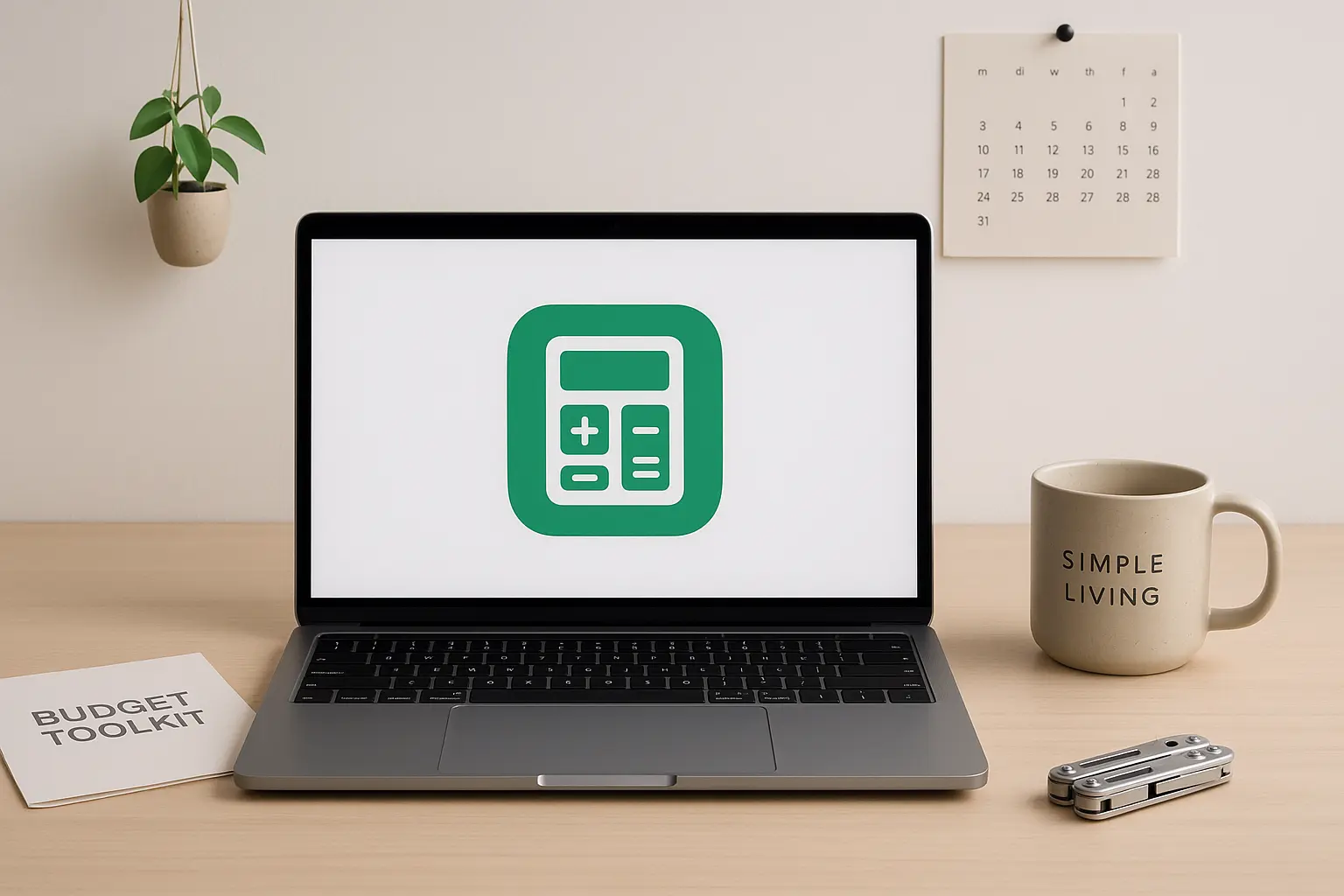
Ever feel like every surface is cluttered but you still can’t find what you need? Sound familiar? Imagine that same space turned into a calm haven with a minimalist tool kit that keeps your money and daily tasks under control. Imagine a freelancer—let’s call her Sarah—who trims her expenses by around 30% using a budgeting app and a single multi-tool in her tiny home. This guide walks through a similar simplified toolkit, including minimalist budgeting tools, to help you live intentionally. Discover how this toolkit empowers you to prioritize joy and simplicity. To zoom out and build the broader habits behind intentional spending, start with our money mindset guide.
Build Your Starter KitThis page contains paid/affiliate links. As an Amazon Associate we earn from qualifying purchases, and we may earn commissions from other partners—at no extra cost to you. Links marked with ‘#ad’ are affiliate links, meaning we may earn a commission at no extra cost to you. Learn more.
Table of Contents
- Key Takeaways
- What Is a Minimalist Toolkit?
- Minimalist Toolkit Builder
- Top 3 Starter Picks
- 15 Essentials (Full Toolkit)
- Tips for Maintaining Your Toolkit
- How This Toolkit Enables Simple Living
- Benefits of a Lean Toolkit
- FAQs
Key Takeaways
- A minimalist toolkit focuses on 15 versatile, high-quality essentials across home, kitchen, personal care, and digital life.
- These essentials cover budgeting, home maintenance, cooking, personal care, and digital tasks.
- Multi-functional tools like budgeting apps or multi-tools save money and space.
- Regularly declutter unused items to maintain simplicity.
- Choose eco-friendly options to reduce environmental impact.
What Is a Minimalist Tool Kit?
A minimalist toolkit is a curated collection of tools designed to meet your needs without clutter. For example, it integrates minimalist budgeting tools like YNAB with physical items like a multi-tool to simplify finances and tasks. Rooted in minimalism’s principles—intentionality, functionality, and quality—this toolkit draws inspiration from Marie Kondo’s philosophy of keeping only what sparks joy or utility. In this guide, I focus on 15 core essentials that cover home, kitchen, personal care, and digital life. For example, one family of four shared that using a minimalist toolkit helped them cut household expenses by roughly 20%, combining a budgeting app with reusable kitchen tools. Your exact numbers will look different, but the core idea—fewer, smarter tools—stays the same. Likewise, a young professional in a 400-square-foot apartment relies on a simple toolkit with a laptop, budgeting app, and compact kitchen tools to stay organized and on budget. As William Morris said, “Have nothing in your house that you do not know to be useful or believe to be beautiful.” To dive deeper into budgeting apps, explore our guide to best minimalist budgeting tools for beginners.
Building your toolkit starts with reflection:
- What do I need for budgeting and daily tasks?
- Which tools serve multiple purposes in my simplified toolkit?
- Are these items durable and long-lasting?
That’s why a lean toolkit works for lots of different lifestyles—from homeowners to digital nomads—and helps you get more done with less stress.
Minimalist Toolkit Builder (Starter Kit Generator)
Pick your lifestyle and priorities below to generate a lean 8–12 item starter kit. The goal isn’t perfection—just a simple “first kit” you can actually use this week.
If you’d rather skip the decision fatigue, these three “buy once” basics are a calm place to begin.
Top 3 starter picks (from the 15 essentials below)
Top 3These are my favorite first buys because they cover quick repairs, everyday cooking, and low-waste personal care—without overfilling your drawers.
Compact Multi-Tool (Pocket-Size)
It’s the kind of tool that makes small problems feel easy—tighten, cut, grip, and move on.
- Best for: Anyone who wants “one tool that shows up often.”
- Format: Mini multi-tool (pliers + tools)
8-Inch Chef’s Knife
A truly good knife makes cooking feel smoother—so meal prep stops feeling like a chore.
- Best for: Simple meals that keep takeout from creeping in.
- Format: Chef’s knife (8-inch)
Safety Razor (Beginner-Friendly)
It’s a small upgrade that quietly adds up—fewer disposables, less clutter, and a routine that feels “set.”
- Best for: Cutting down on disposables without extra effort.
- Format: Safety razor + starter blades
15 essentials for your minimalist tool set
I’ve learned the hard way that a minimalist toolkit is about choosing versatile, high-quality items that save money and keep life uncluttered. Think of it as a minimalist tool set that covers home, kitchen, grooming, and digital basics without overflowing your drawers.
Quick note: This checklist is not ranked—think of it as “the full toolkit.” If you want the best first buys, jump to my Top 3 starter picks above.
- Multi-tool (starter pick): One compact piece for everyday repairs and quick fixes.
- Adjustable wrench: Handles multiple bolt sizes without a full wrench set.
- Screwdriver set with interchangeable bits: Covers most household screws in one case.
- Measuring tape: Essential for DIY projects and furniture layouts.
- Chef’s knife (starter pick): A single, sharp knife for almost all prep tasks.
- Cutting board: Durable surface that protects counters and knives.
- Cast iron skillet: Versatile pan for stovetop and oven cooking.
- Nesting mixing bowls: Multi-purpose bowls that store compactly.
- Safety razor (starter pick): Long-lasting shaving tool that reduces waste.
- Shampoo bar and soap bar: Solid cleansers that eliminate plastic bottles.
- Bamboo toothbrush: Simple, biodegradable upgrade for daily care.
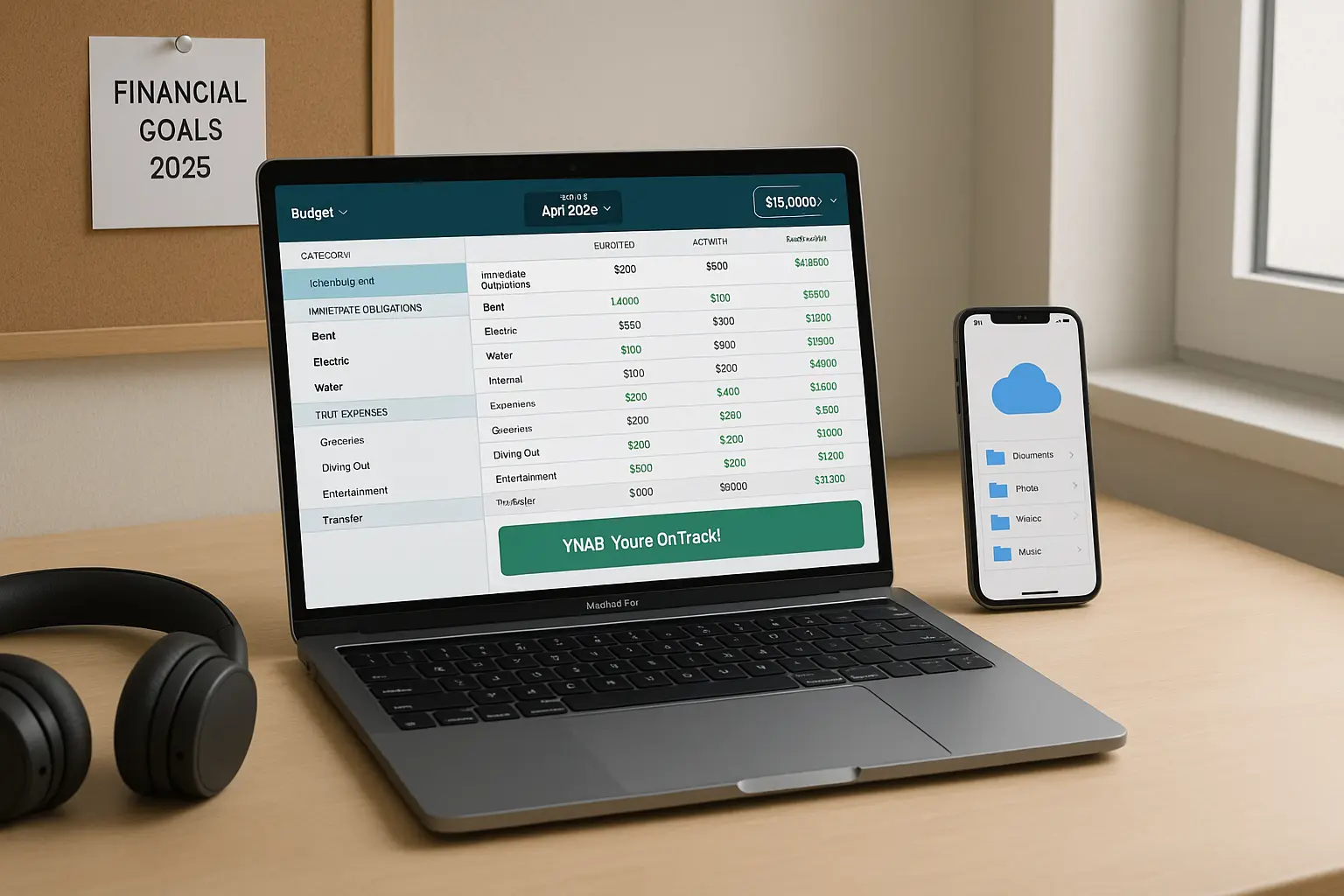
- Budgeting app: Central hub for tracking spending and goals.
- Laptop or tablet: All-in-one device for work, planning, and money management.
- Noise-cancelling headphones: Helps you focus on budgeting and deep work.
- Cloud storage: Keeps important files and receipts organized and paper-free.
Home Maintenance & Repair Tools
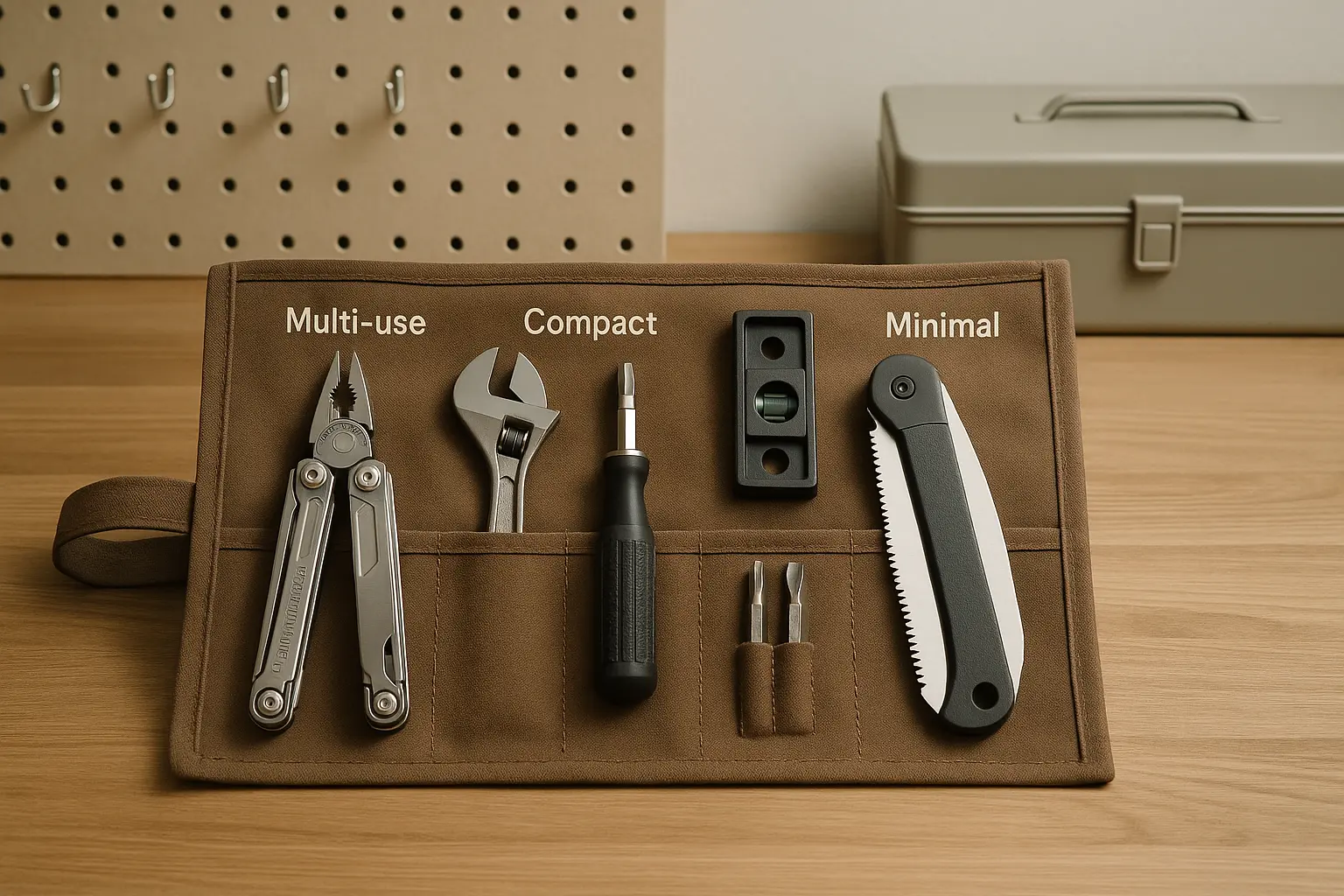
I keep home fixes simple with just a few tools that save me cash. My multi-tool, for example, fixed a wobbly table in minutes, sparing me repair costs, and it works perfectly alongside my budgeting app to stay frugal.
- Multi-Tool: A compact mini multi-tool covers quick fixes. Why it’s minimalist: Compact multi-functionality. Example: Gerber Gear Dime 12-in-1 Mini EDC Multitool.
- Adjustable Wrench: Replaces a full wrench set. Why it’s minimalist: Covers multiple sizes. Example: Channellock Adjustable Wrench.
- Screwdriver Set with Interchangeable Bits: Minimizes space. Why it’s minimalist: Multiple sizes in one case. Example: Wera Kraftform Kompakt Screwdriver Set.
- Measuring Tape: Essential for DIY projects. Why it’s minimalist: Compact and versatile. Example: Stanley PowerLock Measuring Tape.
I stash these in a single drawer, so I can grab what I need without rummaging through a mess.
Kitchen Essentials for Budgeting
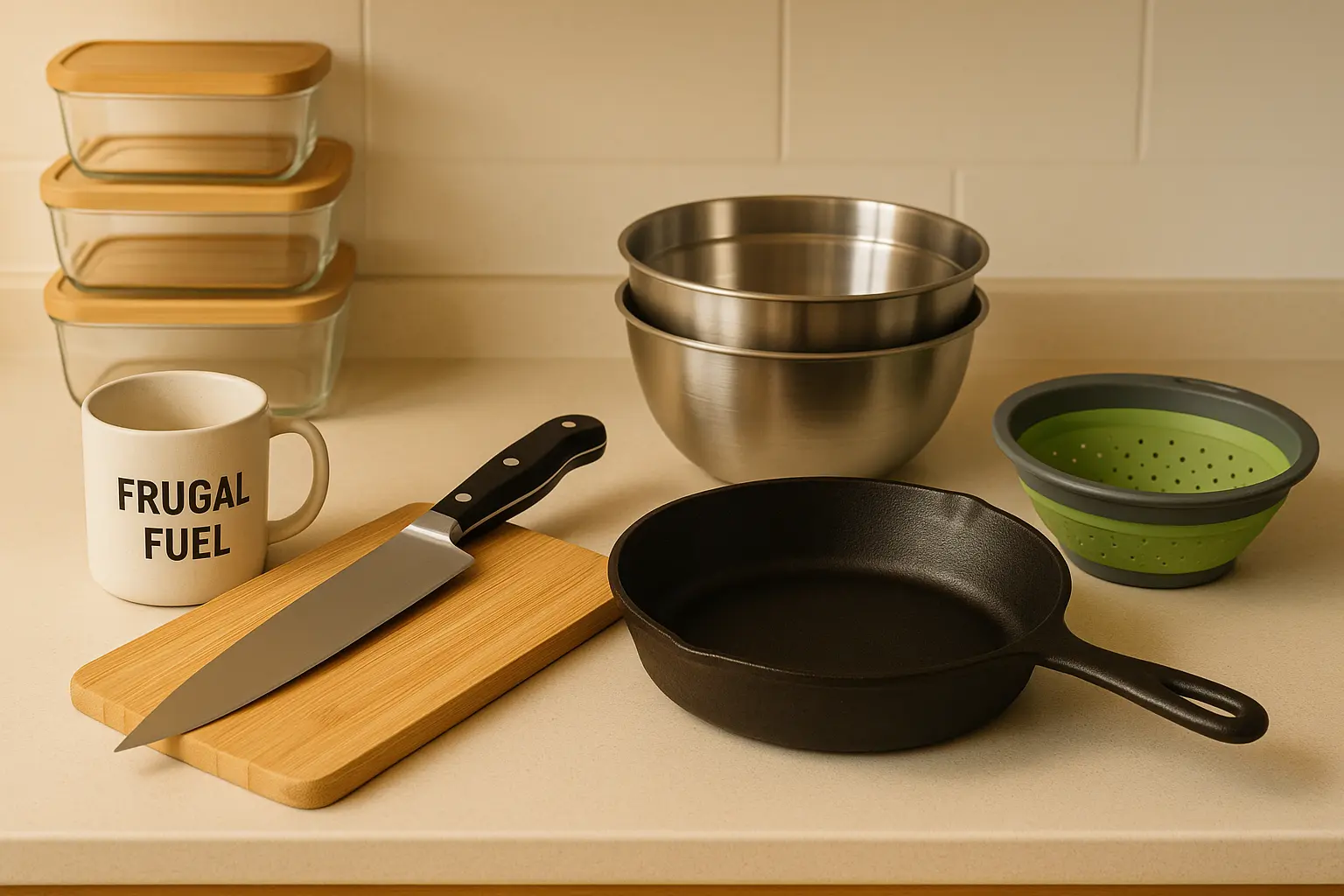
My kitchen setup helps me cook tasty meals on a budget, tying in perfectly with minimalist budgeting tools. My cast iron skillet, for instance, makes hearty dinners that keep takeout at bay. Learn more about saving on meals with our guide to grocery shopping on a budget.
- Chef’s Knife: Handles most cutting tasks. Why it’s minimalist: Eliminates knife block need. Example: Mercer Culinary Millennia 8-Inch Chef’s Knife.
- Cutting Board: Durable and sustainable. Why it’s minimalist: Essential for prep. Example: Bamboo Cutting Board.
- Cast Iron Skillet: Versatile for stovetop and oven. Why it’s minimalist: Multi-functional. Example: Lodge Cast Iron Skillet.
- Multi-Purpose Mixing Bowls: Nesting design saves space. Why it’s minimalist: Multi-use. Example: Stainless Steel Mixing Bowls with Lids.
I meal prep on Sundays with these tools, saving time and money while keeping my kitchen clutter-free.
“Minimalism isn’t deprivation; it’s choosing tools that bring joy and value.”
Personal Care & Grooming Tools
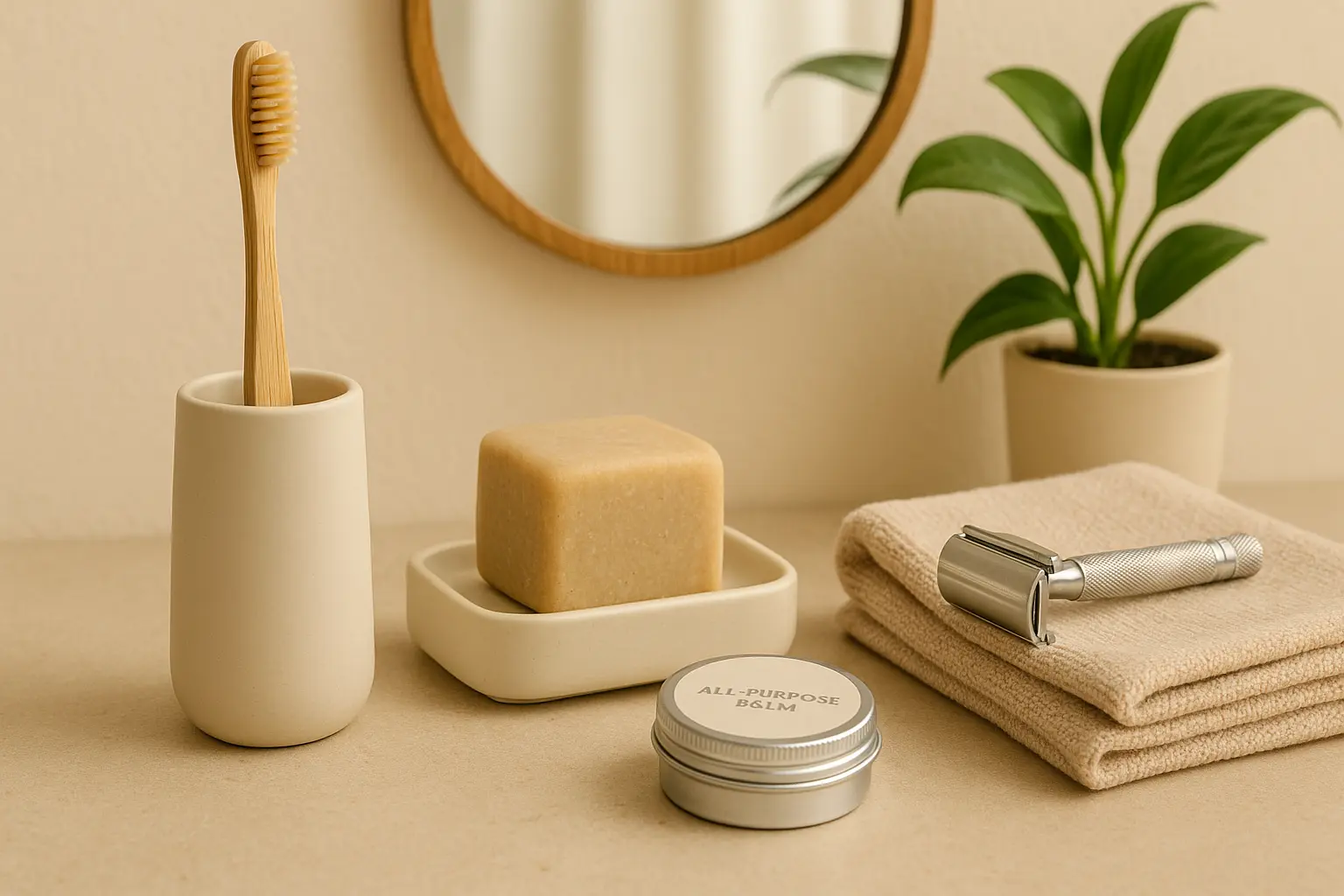
Eco-friendly grooming tools reduce waste and support your minimalist budget. A safety razor cuts costs compared to disposables.
- Safety Razor: Sustainable alternative to disposables. Why it’s minimalist: Long-lasting. Example: WEISHI Butterfly Open Double Edge Safety Razor (long handle).
- Shampoo Bar & Soap Bar: Eliminates plastic bottles. Why it’s minimalist: Travel-friendly. Example: Shampoo Bar.
- Bamboo Toothbrush: Biodegradable. Why it’s minimalist: Eco-friendly. Example: Bamboo Toothbrush.
Rotate grooming products seasonally to keep your toolkit lean, saving space and money.
Digital Minimalist Budgeting Tools
Digital tools can take a lot of mental load off your plate, especially around money and everyday admin. A good budgeting app like YNAB quietly tracks your spending in the background, while cloud storage keeps important documents out of overflowing drawers. For additional free digital tools, see our list of free financial tools every saver should use.
- Budgeting App: Simplifies financial tracking. Why it’s minimalist: Replaces paper budgets. Example: YNAB (Learn more about YNAB’s minimalist approach).
- Laptop or Tablet: Handles work and budgeting. Why it’s minimalist: Multi-purpose device. Example: Apple MacBook Air.
- Noise-Cancelling Headphones: Enhances focus for budgeting tasks. Why it’s minimalist: Boosts productivity. Example: Sony Noise-Cancelling Headphones.
- Cloud Storage: Stores financial documents digitally. Why it’s minimalist: Eliminates physical storage. Example: Google Drive.
- Password Manager: Simplifies online security. Why it’s minimalist: Streamlines access. Example: LastPass.
- Minimalist Calendar App: Organizes financial deadlines. Why it’s minimalist: Reduces clutter. Example: Google Calendar.
Sync your budgeting app with your bank accounts to automate tracking, maximizing efficiency.
Tips for Maintaining Your Toolkit
I’ve found that keeping my minimalist tool kit lean and functional takes a bit of effort, but it’s worth it. If you’re short on time, skim these quick strategies to keep your tools clutter-free and actually working for you:
- Check It Often: I go through my tools every few months to toss out anything I don’t use, keeping only must-haves like my budgeting app and core tools.
- Be Picky: If I haven’t used a tool in ages, I donate or recycle it to keep my space simple and stress-free.
- Buy Quality: I pick sturdy tools that last, like my trusty multi-tool, so I’m not constantly replacing cheap stuff.
- Go Multi-Use: I love tools that do double duty, like a budgeting app or a multi-tool, to cut down on clutter.
- Stay Organized: I use a small toolbox for physical items and digital folders for apps, making everything easy to find.
- Share When You Can: For rare tasks, I borrow tools from neighbors to keep my kit light.
- Track What You Use: I jot down what I actually use to make sure my toolkit stays practical and relevant.
- Sync Budgeting Apps: I sync my budgeting app with my bank accounts for real-time money tracking.
- Clear Digital Clutter: I delete unused apps or files regularly, just like I declutter my physical tools.
- Take Care of Tools: I clean my knives and multi-tool often to make them last.
I set a reminder every three months for a quick “tool audit” to tweak my toolkit, making sure it fits my current needs and budget.
How This Toolkit Enables Simple Living
My minimalist toolkit has been a game-changer for living simply, cutting down on both clutter and money stress. Here’s how it’s worked for me in different parts of life:
- Tiny Home Living: My budgeting app keeps my expenses in check, and a multi-tool handles quick fixes in my small space.
- Capsule Wardrobe: Using minimalist budgeting tools like YNAB stops me from overspending on clothes, keeping my wardrobe curated.
- Digital Nomadism: My laptop with budgeting apps lets me manage money anywhere, perfect for life on the go.
- Smart Spending: Reusable containers and budgeting apps help me avoid wasteful purchases, saving cash for what matters.
- Focus on Experiences: A lean toolkit frees up money for trips and memories, not more stuff.
With my toolkit, I feel lighter and more focused on what really matters—like relationships and personal growth.
Benefits of a Lean Toolkit
Using a minimalist toolkit has made my life easier and happier in so many ways. If you want to blend “less stuff” with stronger saving habits, our frugal living minimalism guide is a helpful next step. Here’s why I love it:
- Less Clutter: My home and finances feel calm and organized with fewer, smarter tools.
- Faster Tasks: I grab my essential tools quickly, saving time for what I love.
- More Savings: High-quality minimalist budgeting tools and multi-use items cut my expenses big time.
- Eco-Friendly Living: Sustainable tools help me reduce waste.
- More Freedom: I focus less on stuff and more on experiences, like weekend getaways.
- Stronger Community: Sharing tools with neighbors saves money and builds friendships through tool libraries.
- Financial Freedom: My toolkit helps me spend wisely, saving up for big dreams like travel or early retirement.
Mental Clarity Through Minimalism
My minimalist toolkit has cleared my mind by cutting out decision overload. For example, using one chef’s knife instead of a cluttered drawer makes cooking feel effortless. Some research suggests that decluttering and more minimalist spaces can help lower stress and support better mental health, and my budgeting app’s clear spending insights definitely make me feel calmer about money. This clarity lets me tackle goals with confidence.
FAQs
Conclusion
Keep it light, useful, and intentional. Start with a few high-impact pieces, test them in daily life, and let everything else go. A thoughtful toolkit saves money, space, and mental energy—freeing you to focus on what matters most.
This content is for informational purposes only and not financial advice. Consult a professional before making financial decisions.

