

If you want to cut monthly expenses, do not start by trying to spend less everywhere. Start with costs that repeat: unused subscriptions, bills you can renegotiate, and everyday spending that no longer earns its place. Then investigate bigger housing and transportation changes only when the numbers and trade-offs work for your situation.
That order gives you quick wins without losing sight of the largest spending categories. U.S. Bureau of Labor Statistics data for 2024 show that housing and transportation accounted for just over half of average household spending [1]. This guide gives you 25 practical places to look plus a one-month plan. Use the calculator below to turn a savings goal into a target for the spending you can realistically change. For a broader framework on how to save money on bills and everyday costs, see our frugal living and savings guide.
Monthly Expense-Cut Target Calculator
Enter what you currently spend in the categories you want to trim, then add a monthly savings goal. The calculator shows how large a cut that goal requires and where to start.
Streaming, memberships, phone add-ons, bank fees and similar recurring charges.
Use only the portion you might actually reduce, such as commuting, parking, insurance, or a housing change you are considering.
Groceries, takeout, household extras, entertainment and other flexible spending.
Use a target you would actually like to redirect to savings, debt payoff, or another priority.
Add your spending and savings goal to build a target.
You only need to enter the categories you want to work on.
Use the calculator above to turn a monthly savings goal into a concrete percentage of the spending you entered. Then use the sections below to test that target against real cuts you can sustain, starting with the category that gives you the most room to work.
This post contains affiliate links. If you buy through our links, we may earn a commission at no extra cost to you. Learn more.
Table of Contents
- Key Takeaways
- Quick Wins to Shrink Your Monthly Bills and Reduce Spending
- Strategic Changes to Reduce Monthly Expenses Long-Term
- Other Ways to Free Up Room in Your Budget
- Smart Spending to Cut Monthly Expenses
- Avoiding False Savings
- A Four-Week Plan to Cut Monthly Expenses
- Strategies for Variable Incomes
- Free Money Reset Workbook
- Frequently Asked Questions
- Sources
- Your Next Step: Pick Three Cuts and Measure Them
Key Takeaways
- Cut the easiest repeat cost first. Remove an unused subscription, fee, or plan upgrade before squeezing essentials.
- Use a three-part shortlist. Pick one easy cancellation, one bill to compare, and one larger housing or transportation cost to investigate.
- Treat big fixed costs as high-impact decisions. Housing and transportation accounted for just over half of average U.S. household spending in 2024 [1], but changes there deserve more comparison than a simple cancellation.
- Verify the result on a real bill or statement. Generic savings estimates matter less than what actually leaves your account next month.
- Keep only cuts that work in real life. A cheaper option is not a win if fees, lost coverage, waste, or inconvenience erase the benefit.
The amount you can free up depends on your starting costs, location, household needs, and how many changes are genuinely available to you. Use the calculator above to set a target, then use that shortlist to decide where to test it.
Quick Wins to Shrink Your Monthly Bills and Reduce Spending
Before you start cutting, review at least one full billing cycle of bank and card statements, and look farther back for annual or irregular charges. Mark recurring bills, flexible spending, and charges you no longer recognize or value. Then choose three changes: one easy cancellation, one bill to compare, and one larger cost to investigate.
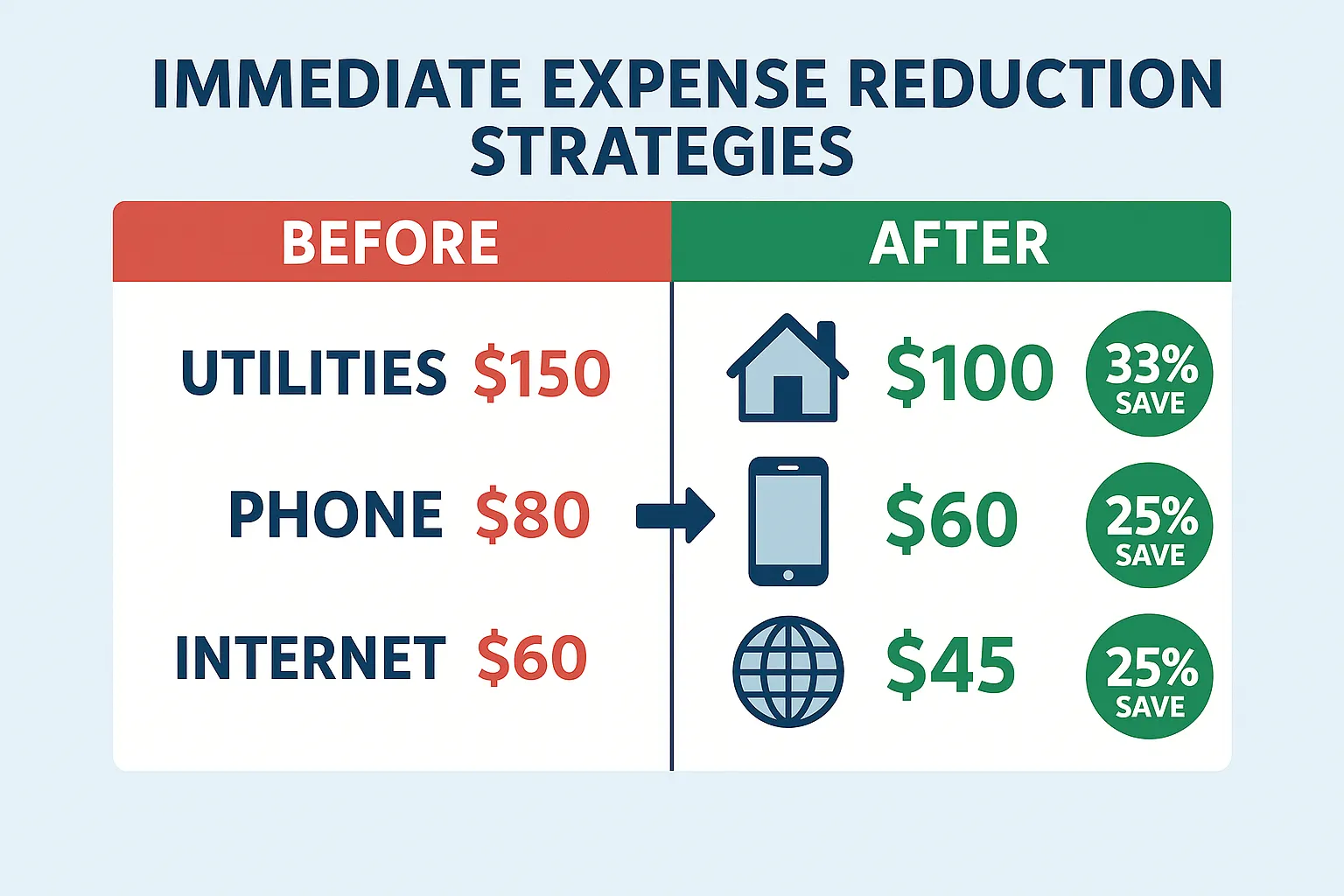
1. Audit Your Subscriptions 💳
Start with the low-hanging fruit. Recurring charges are easy to overlook, especially when they are spread across multiple cards and accounts.
Action steps:
- Check your bank statements for recurring charges.
- Use your bank’s recurring-charge view or a current subscription-management tool such as Rocket Money to identify charges you no longer use.
- Cancel unused services immediately.
2. Negotiate Your Internet and Phone Bills 📱
Compare your current plan with what you actually use, including the total monthly price, equipment fees, speed or data limits, coverage, and any contract or cancellation costs. Then check current options from your provider and realistic competitors before you call.
Script to use: “I’m reviewing my account and comparing current plans. Are there any lower-cost options, loyalty discounts, or plan changes that would reduce my total monthly bill without removing the features I use?”
If you live rurally or use an RV and your internet choices are limited, you can see Home Fi’s wireless internet option before deciding whether switching providers makes sense.
3. Switch to Generic Brands 🛒
Store brands can be worth comparing with name brands for low-risk household and pantry purchases. Start with items such as cleaning supplies, paper goods, and pantry staples, then compare unit price and ingredients or specifications that matter to you.
4. Optimize Your Insurance Deductibles 🛡️
A higher deductible can lower auto or homeowners insurance premiums, but the amount varies by policy and state. Compare quotes at different deductible levels, and choose only an amount you could comfortably pay after a claim [2].
5. Use the 24-Hour Rule ⏰
Before a non-essential purchase that is meaningful for your budget, wait 24 hours. That short pause gives you time to decide whether the purchase still matters after the first impulse passes.
Strategic Changes to Reduce Monthly Expenses Long-Term
The biggest savings often come from housing and transportation. Start by checking whether you’re paying for space or transportation capacity you no longer need — could you downsize, negotiate, share housing, drive less, use transit for some trips, or eventually keep one vehicle instead of two? These changes take more planning than canceling a subscription, but they can change several recurring costs at once.
6. Master Meal Planning 🍽️
Food waste is a meaningful household cost: EPA’s 2025 estimate puts the annual value of uneaten food at about $2,913 for a household of four [3]. Plan weekly menus, shop from a list, and use or freeze what you already have before buying more.
Pro tip: Cook double portions and freeze half for busy weeks.
7. Compare Public Transit with Driving Costs 🚌
If public transit is realistic where you live, compare the cost of a pass or fares with the driving costs the switch would actually change, such as fuel, parking, tolls, or eventually the need for an extra vehicle. You do not have to give up a car entirely for a few transit days to be worth testing.
8. Refinance High-Interest Debt 💰
Some balance-transfer cards offer temporary zero- or low-interest promotional rates, and some consolidation loans may offer lower rates than existing debt. Compare transfer fees, the post-promotion rate, the loan term, and total repayment cost before switching [5].
If you're unsure whether refinancing or balance transfers are right for you, talk with a trusted financial professional or nonprofit credit counselor before making changes.
For a full step-by-step approach to paying off what you owe, see our debt management plan guide.
9. Downsize Your Housing 🏠
Housing averaged 33.4% of U.S. household expenditures in 2024 [1], but that national average is context, not a personal target. If housing is crowding out your other priorities, compare realistic options such as downsizing, sharing housing, renegotiating at renewal, or moving when the total costs support it.
10. Buy in Bulk (Strategically) 📦
Buy in bulk only when the unit price is lower, you have room to store the item, and you are likely to use it before quality drops or it expires. A larger package is not a saving if part of it gets wasted.
11. Implement Energy-Saving Measures ⚡
Start with low-cost energy changes:
- If your system is suitable, set the thermostat back 7°–10°F for about 8 hours a day; the U.S. Department of Energy says this can save as much as 10% a year on heating and cooling [4].
- Switch to LED bulbs.
- Unplug electronics when not in use.
- Use cold water for laundry.
For more detailed ideas, see the U.S. Department of Energy’s current home-upgrades guidance.
12. Reassess Your Gym Membership 🏃♀️
If you use your gym enough to justify the cost, keep it. If not, compare a lower-cost gym, community center, home workouts, or outdoor options before deciding whether to cancel.
Other Ways to Free Up Room in Your Budget
These tactics are more situational than canceling a subscription or comparing a bill. Some improve cash flow rather than reducing a monthly charge directly, so use only the ones that solve a real cost or constraint in your budget.
13. House Hack Your Living Situation 🏡
Renting out a room or other permitted space can offset housing costs, but the workable amount depends on local rents, taxes, insurance, lease or HOA rules, and local requirements.
14. Optimize Your Tax Withholdings 📊
If your federal refund is consistently much larger than you want — or you often owe tax — use the IRS Tax Withholding Estimator before changing Form W-4. Adjusting withholding changes when federal income tax is collected; it does not by itself reduce the tax you ultimately owe. Too little withholding can also leave you with a tax bill or penalty [6].
15. Use Cash-Back Credit Cards Strategically 💳
A rewards card does not reduce a bill by itself. Cash-back rates vary by card and spending category, and rewards only help if interest and fees do not outweigh them. Treat cash back as a small rebate on spending you already planned, not a reason to buy more.
16. Negotiate Medical Bills 🏥
If you cannot pay a medical bill, the CFPB recommends checking for financial assistance, asking whether the amount can be negotiated or paid through an interest-free plan, and being cautious about moving the balance onto a credit card or medical credit card [7].
17. DIY Basic Maintenance 🔧
DIY only the maintenance tasks that are low-risk and within your skills, such as simple cleaning, filter changes, or basic upkeep with clear manufacturer instructions. Use qualified help for electrical, gas, structural, brake, or other work where a mistake could create a safety problem or much larger repair.
18. Use the Library 📚
Libraries offer free books, movies, internet access, and often community programs. Before paying for another entertainment service, check whether your library can replace one or more things you currently pay for.
19. Grow Your Own Food 🌱
Even apartment dwellers may be able to grow herbs or small vegetables. Treat it as a hobby that can replace some produce purchases, not as a guaranteed money-saving project.
20. Optimize Your Banking 🏦
Review the fee schedule on your account and compare alternatives. Depending on the account, you may be able to reduce fees by:
- Choosing an account with no monthly maintenance fee or a waiver you can reliably meet.
- Keeping a required minimum balance only when doing so does not strain your cash flow.
- Using in-network ATMs when out-of-network fees apply.
- Using direct deposit when it unlocks a fee waiver or feature you actually value.
Smart Spending to Cut Monthly Expenses
The last five tactics are mainly about preventing new spending from replacing the savings you just created. Use them as guardrails, not as reasons to shop for a deal.
21. Compare Cost per Use, Not Just Price 👔
A higher price is not automatically a better value. Compare expected life, repairability, warranty, and how often you will use an item. A durable option can be cheaper per use for something you use constantly, while borrowing, renting, or buying a basic version may make more sense for an occasional need.
22. Use Seasonal Shopping Strategies 🛍️
Off-season sales can help when you already know you will need the item. Compare the final price, return policy, storage cost, and whether buying early could leave you with something you never use.
23. Automate Your Savings 🤖
Automation does not cut an expense, but it can keep verified savings from disappearing into other spending. If your cash flow is predictable enough, set up an automatic transfer after payday or after essential bills. Start with an amount that will not trigger overdrafts, then adjust it as your income or expenses change.
24. Use Apps as Support Tools 📱
Use technology for a specific job, not as a reason to shop:
- Rocket Money: Review recurring subscriptions and spending you may want to trim.
- Credit Karma: Review transactions and track spending; Mint’s tracking features moved there.
- GasBuddy: Compare nearby fuel prices before you fill up.
- PayPal Honey: Check for coupon codes on purchases you already planned.
- Rakuten: Earn cash back on eligible purchases you already intended to make.
25. Practice the 30-Day List 📝
Keep a running list of non-essential items you want to buy and revisit each one after 30 days. If it still feels worthwhile and fits your budget, buy it intentionally; if not, remove it from the list without spending.
Avoiding False Savings
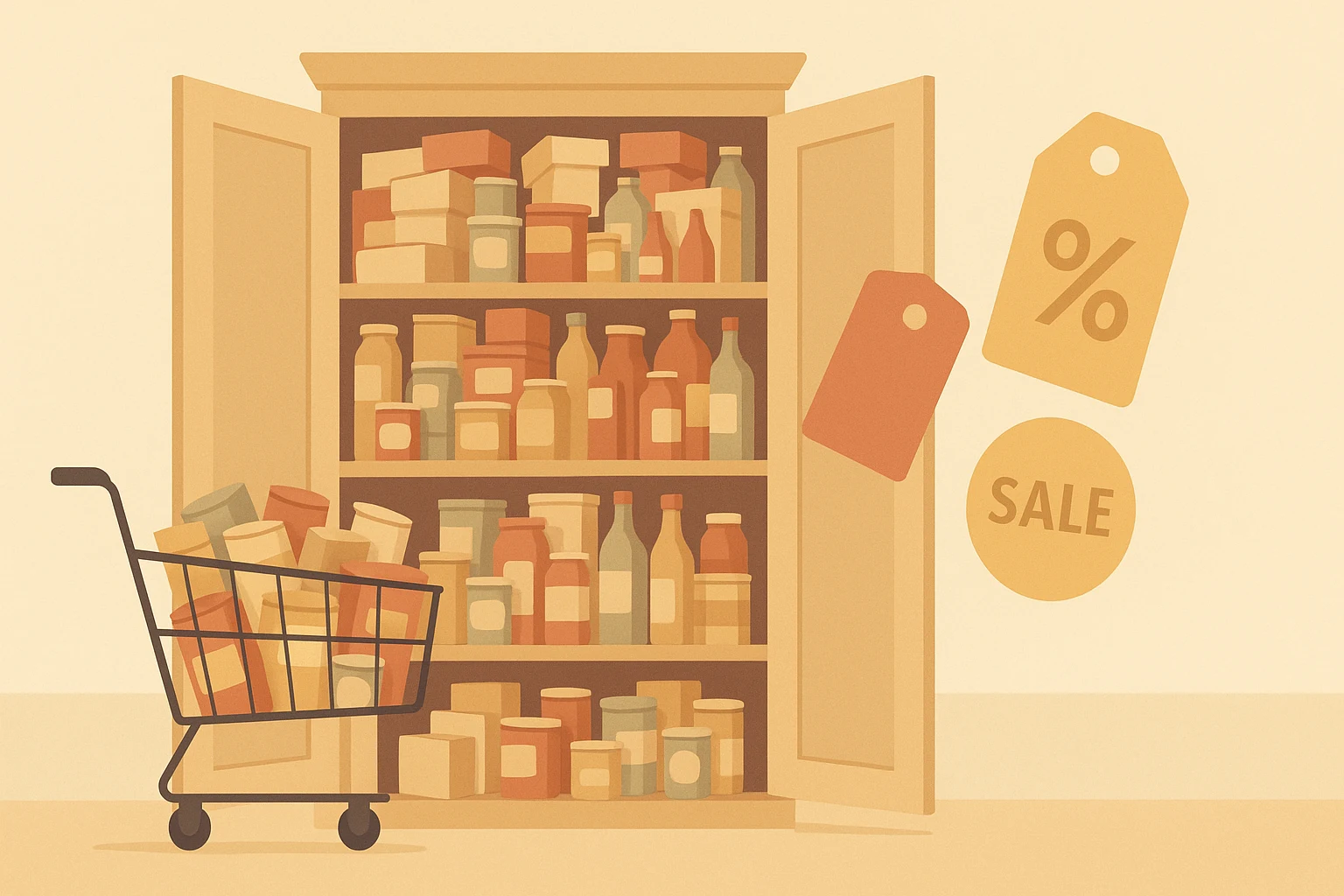
Not all “deals” actually save money. Avoid these common traps:
- Buying items just because they're on sale.
- Choosing cheaper options that break quickly.
- Signing long-term contracts for small monthly savings.
- Extreme couponing that leads to buying unneeded items.
- Raising an insurance deductible beyond what you could comfortably pay after a claim [2].
Remember: The best way to save money is often to not spend it at all.
A Four-Week Plan to Cut Monthly Expenses
Week 1: Find the Leaks
- Review at least one full billing cycle and flag recurring charges, fees, and flexible spending.
- Cancel one service or charge you no longer value.
- Record the spending categories you want to change so you have a baseline for the calculator.
I like doing this first week on paper instead of typing every line into an app — something about writing the numbers by hand makes them harder to quietly ignore.
Clever Fox Budget Planner — gives bills, savings, and everyday spending their own dedicated pages, plus a pocket for receipts.
Skip it if the calculator above already covers what you need.
Week 2: Compare the Bills
- Compare phone, internet, banking, and insurance options on like-for-like terms.
- Use the 50/30/20 budget rule only as a flexible lens if it helps you see where your current plan feels crowded.
- Identify one larger housing or transportation change worth researching without committing to it yet.
Week 3: Make the Changes
- Cancel, downgrade, negotiate, or switch only after checking fees, contracts, coverage, and cancellation terms.
- Put one everyday-spending tactic into practice, such as meal planning or a 24-hour purchase pause.
- If cash flow allows, automate part of the amount you expect to free up rather than spending it by default.
Week 4: Verify What Actually Changed
- Compare the next bill or statement with your baseline and record the actual difference.
- Reverse any change whose fees, inconvenience, or lost value outweigh the savings.
- Choose the next target only after the first round is working.
If you want to turn those verified changes into a monthly plan, compare our free Excel budget spreadsheet templates and choose the layout that makes your new baseline easiest to maintain.
Strategies for Variable Incomes
If your income fluctuates, focus on these flexible strategies:
- Build an emergency-fund target around your essential expenses and how much your income varies.
- Use percentages as a flexible planning tool rather than rigid fixed amounts.
- Look for fixed-cost reductions where feasible, but do not squeeze essential variable costs below what you actually need.
- Create “good month” and “lean month” spending plans.
You can use a percentage framework such as 50/30/20 as a starting structure, but variable income often needs more flexibility than fixed percentages imply. In lean months, prioritize essentials and required payments; in stronger months, rebuild cash buffers and pre-fund irregular costs before expanding optional spending.
Once you’ve found a few cuts that actually stick, put those changes beside your income, spending, debts, and goals before deciding what to do next.
See Income, Spending, Debts, and Goals on One Screen
Confirm to get the workbook and frugal money tips. Unsubscribe anytime.
Something went wrong. Please check your email address and try again.
Frequently Asked Questions
Sources
- U.S. Bureau of Labor Statistics: 2024 household expenditures (published February 12, 2026).
- National Association of Insurance Commissioners consumer guidance on auto-insurance deductibles and homeowners-insurance deductibles.
- U.S. EPA: Estimating the Cost of Food Waste to American Consumers (2025 report; page updated March 18, 2026).
- U.S. Department of Energy: Home Upgrades.
- Consumer Financial Protection Bureau: credit-card debt consolidation guidance.
- Internal Revenue Service: Tax Withholding Estimator.
- Consumer Financial Protection Bureau: medical-bill guidance.
Your Next Step: Pick Three Cuts and Measure Them
Choose one easy recurring cost to cut, one bill to compare, and one larger expense to investigate. Then use the calculator above to set a monthly target for the spending you can realistically change.
On your next statement or bill, record what each change actually saved. Keep the cuts that reduce spending without creating hidden fees, lost coverage, or more hassle than the savings are worth. Put the verified numbers into the budget system you chose so the new baseline does not disappear into next month’s spending. You do not need all 25 ideas; you need the few that keep working month after month.
This cut monthly expenses guide is for general information only and isn’t financial, tax, or legal advice. For persistent money issues or big decisions, consider speaking with a qualified professional.

