
If you’re comparing ETF vs mutual fund for retirement, neither format is automatically better. If two funds offer similar exposure, compare the investment first—holdings, risk, and total costs—then use the format as the tie-breaker. The format mainly changes how you trade, automate purchases, handle minimums, and, in taxable accounts, how capital-gains distributions may affect you.
Those differences matter differently in workplace plans, IRAs, and taxable brokerage accounts. Use the two-question fit checker for a quick starting point, then use the pre-switch checklist before changing funds. If ETF investing is still new to you, start with the broader beginners guide to investing.
This post contains affiliate links. If you buy through our links, we may earn a commission at no extra cost to you. Learn more.
Table of Contents
- ETF vs. Mutual Fund Retirement Fit Checker
- What Are ETFs and Mutual Funds?
- The Differences That Matter for Retirement
- See What This Investing Decision Has to Fit Around
- How to Choose Between an ETF and a Mutual Fund
- Frequently Asked Questions
- Before You Switch Funds
- Bottom Line
Want the fast answer first? Use the checker, then read the comparison below to understand the trade-offs behind the result.
ETF vs. Mutual Fund Retirement Fit Checker
Answer two quick questions about where you invest and how you prefer to manage it. This compares how ETFs and mutual funds are bought and managed—not what the fund owns—and tells you what to verify before choosing.
Answer both questions
Start with the account where you will invest, then choose the setup you would realistically use.
The checker is a starting point, not a recommendation to buy or switch funds. Use the sections below to compare the actual holdings, costs, account rules, and tax treatment before acting.
What Are ETFs and Mutual Funds?
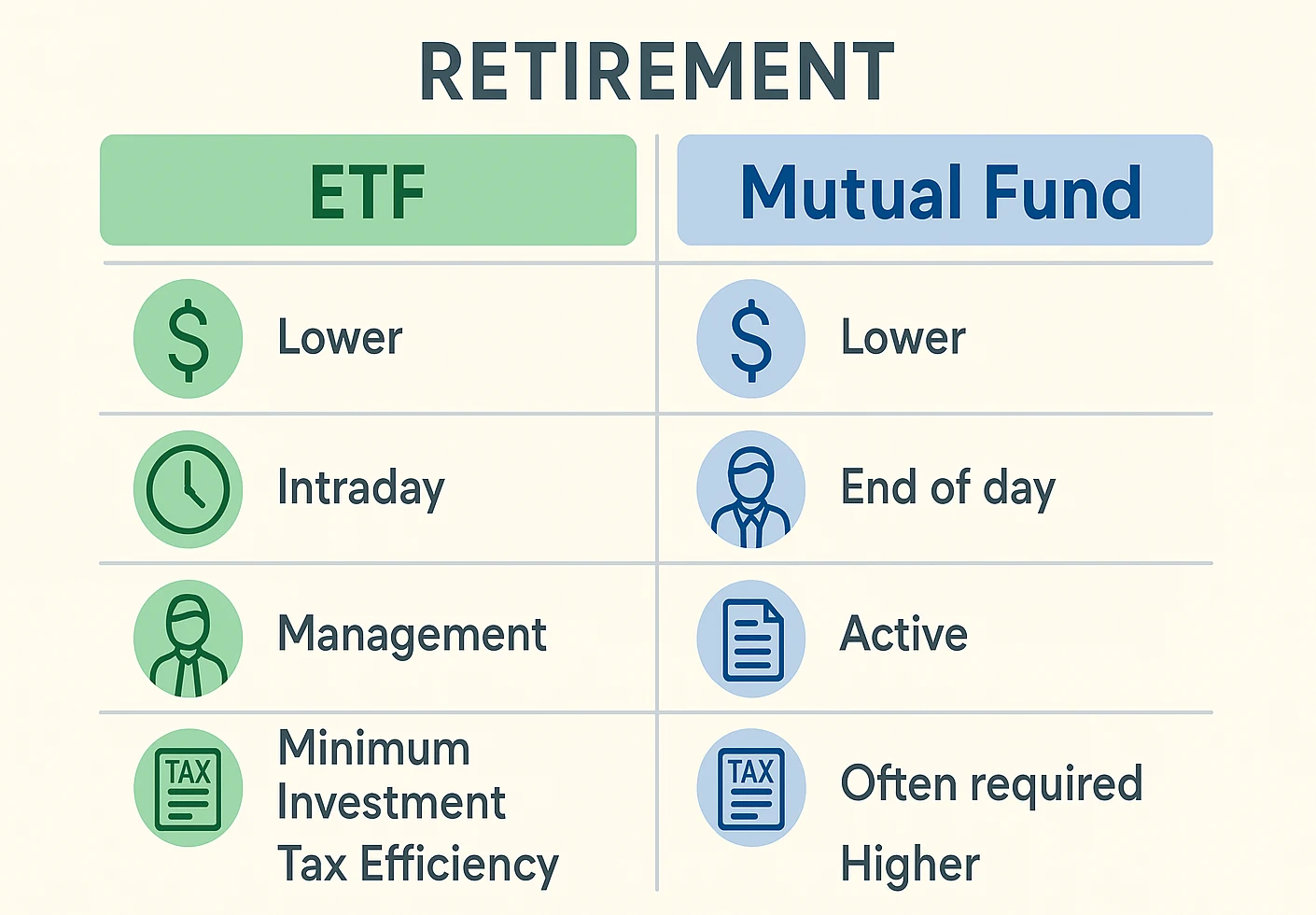
ETFs and mutual funds are both pooled investment funds. Either can track an index or use active management, and either can be broadly diversified or narrowly focused. The biggest structural difference is how investors transact in the fund: ETF shares trade on an exchange throughout the day at market prices, while mutual fund orders execute at net asset value (NAV), typically calculated after the market closes.
That difference changes the investing experience more than the underlying strategy. ETFs can offer intraday prices and order control. Mutual funds trade once per day at NAV. Recurring-investment features depend on the account provider: some brokers or plans support recurring purchases for mutual funds, ETFs, or both. For a current regulator-focused overview, see Investor.gov’s mutual fund and ETF bulletin.
Logistics note: ETF entry cost is generally the price of a share, or a fractional share when the broker offers them. Mutual funds may require a minimum initial investment, although some have no minimum. In either case, check the current prospectus and your account’s rules before you invest.
The ETF vs. Mutual Fund Differences That Matter for Retirement
For retirement investing, focus on the differences that can actually change your decision: what the fund owns, total costs, how you buy and sell it, what your account makes available, and whether taxable distributions matter in that account. The format is useful information, but it should not outrank the investment itself.
Costs: Compare More Than the Expense Ratio
Both ETFs and mutual funds charge expenses, and either format can be inexpensive or costly. Compare the expense ratio plus any sales loads, account fees, brokerage commissions, bid-ask spreads, or other transaction costs that apply to the specific fund and account. Investor.gov notes that fund fees and expenses reduce investment returns, so small recurring cost differences can matter over long holding periods.
For example, imagine investing $300 a month for 30 years with a 7% annual return before fund expenses. Under a simplified calculation, a 0.05% annual expense drag produces an ending value of roughly $362,000, while a 0.80% drag produces about $313,000—around $49,000 less in ending value. That is an illustration, not a forecast, and it isolates one cost difference while holding everything else constant. The point is the fee gap, not the wrapper; either format could be on the lower-cost side of that comparison.
Where Each Format Can Be Convenient
ETFs can suit investors who value intraday prices, limit orders, and the ability to trade during market hours. Mutual funds can suit investors who prefer one end-of-day NAV and a provider that makes recurring dollar investing straightforward. Those are workflow differences, not investment strategies: both formats can hold stock, bond, balanced, passive, or active portfolios.
Trade-offs and Behavior to Watch
ETF investors should understand market prices, bid-ask spreads, and the possibility that shares trade above or below NAV. Intraday access can also tempt some investors to trade more often than their retirement plan requires. Mutual funds remove the intraday decision, but a particular fund may have minimums, sales loads, redemption or account fees, or other costs. Check the actual fund instead of treating either format as automatically cheaper or simpler.
Taxes Depend on the Account
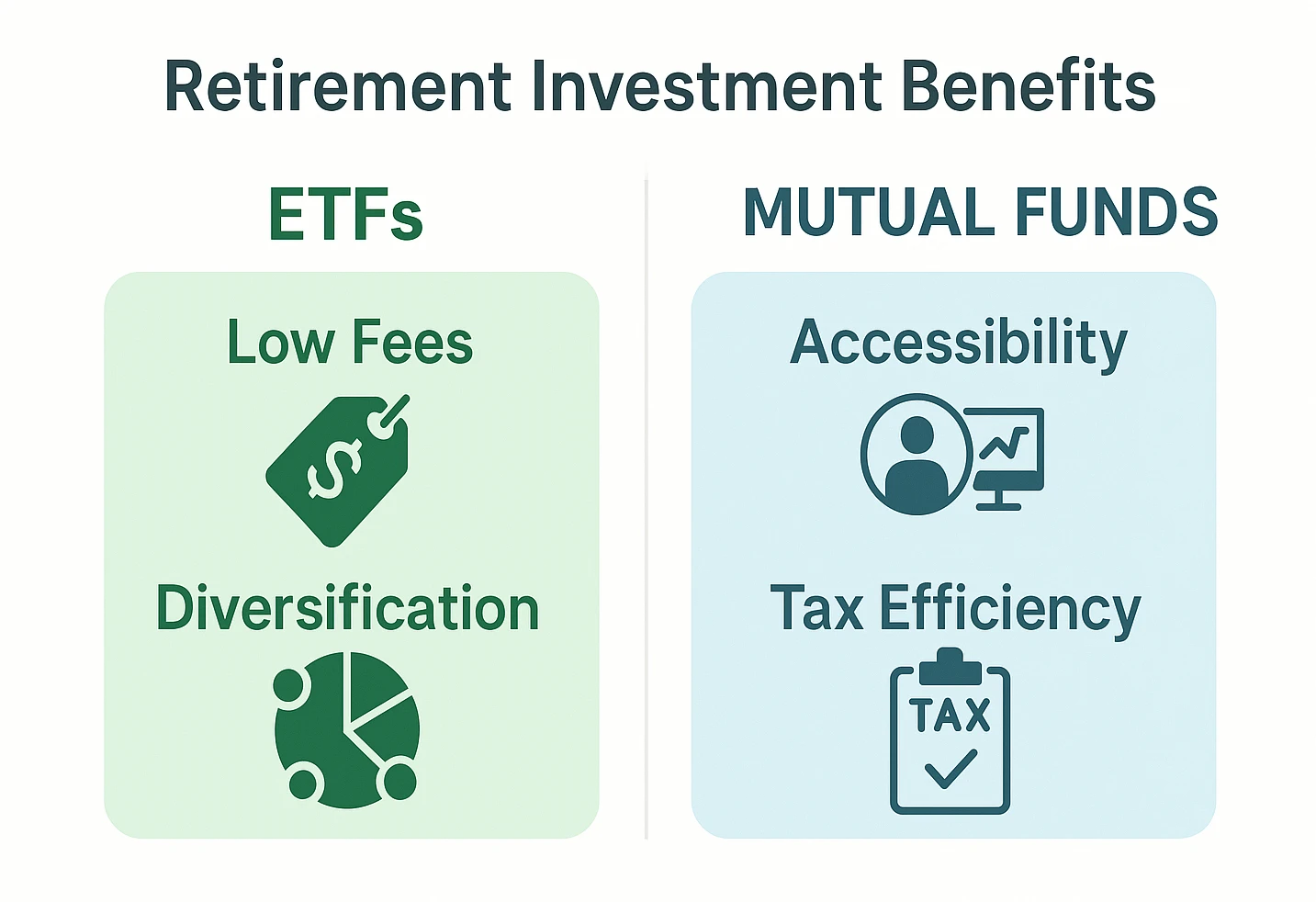
In a tax-advantaged account such as a 401(k) or IRA, the ETF-versus-mutual-fund format does not create a tax difference by itself. In a taxable brokerage account, comparable ETFs often distribute fewer capital gains because many use in-kind transactions, although ETFs can still make taxable distributions and selling either type of fund can create a taxable gain or loss. If taxes are a major part of the decision, the broader question is where you hold each investment; this asset location strategy explains that concept.
Before selling or rebalancing in a taxable account, check your cost basis and potential tax consequences. If the amount is material or the situation is complicated, consider reviewing it with a qualified tax professional.
You now understand the format differences. Before deciding what belongs in the account, make sure the investing decision fits the rest of your money.
See What This Investing Decision Has to Fit Around
Use the SNAPSHOT to see income, spending, up to 8 debts, and up to 8 goals together before you commit more money to investing.
Confirm to get the workbook and frugal money tips. Unsubscribe anytime.
Something went wrong. Please check your email address and try again.
How to Choose Between an ETF and a Mutual Fund for Retirement
Start with the fund itself—its holdings, strategy, risk, and total costs—then use account type and investing workflow as tie-breakers. In a workplace plan, the available menu may settle the question for you. In an IRA or taxable brokerage account, you may have more freedom to compare trading, automation, fees, and taxable distributions.
Quick Decision Framework
- Using a workplace plan? Start with the strongest low-cost diversified option the plan actually offers. Do not force a format the plan does not support.
- Prefer automatic recurring investing? Compare the automation features in your actual account; the provider may support recurring purchases for mutual funds, ETFs, or both.
- Want intraday control? An ETF may fit better, but decide in advance how much trading flexibility your retirement plan actually needs.
- Investing in a taxable account? If two funds are otherwise comparable, an ETF may have an edge in capital-gains distribution efficiency. Your own tax situation still matters.
- Comparing two similar funds? Let holdings, total costs, trading mechanics, and account features decide before the ETF-or-mutual-fund label.
ETF vs. Mutual Fund: Side-by-Side
Use this table as a format comparison, then verify the specific fund’s prospectus and your account rules. FINRA’s ETF vs. mutual fund comparison covers the same core distinctions in more detail.
| Feature | ETF | Mutual Fund |
|---|---|---|
| Trading and pricing | Trades during market hours at market prices | Orders execute at end-of-day NAV |
| Management style | Passive or active | Passive or active |
| Minimum investment | Share price, or a fractional share when available | Varies by fund; some have no minimum |
| Recurring investing | Depends on the broker or plan | Depends on the fund and provider |
| Costs to compare | Expense ratio plus spreads, commissions, premiums or discounts where relevant | Expense ratio plus any loads, transaction or account fees |
| Taxable-account distributions | Comparable ETFs often distribute fewer capital gains | Capital-gains distributions may occur when the fund realizes gains |
| Tax-advantaged account | No format-specific tax advantage | No format-specific tax advantage |
Common Mistakes to Avoid
- Choosing the wrapper before comparing what the funds actually hold.
- Assuming every ETF is passive, cheap, or tax-efficient—or every mutual fund is active and expensive.
- Ignoring transaction costs, sales loads, account fees, or bid-ask spreads that sit outside the headline expense ratio.
- Switching a taxable holding for a small format advantage without checking the tax cost of the sale.
- Using intraday flexibility as a reason to trade more often than your retirement plan requires.
Mini Example: Two Different Investors
Alex is 40 and invests in an IRA. Two broad index funds offer similar exposure and costs, but Alex values limit-order control, so the ETF is a reasonable tie-breaker. Pat is already retired and uses a workplace-plan rollover account whose low-cost mutual fund supports the recurring transactions Pat wants. Neither format is the winner in isolation; the better fit depends on the specific fund, account, and workflow.
If the trade-offs depend on several accounts, taxes, or withdrawal timing, you can talk through the questions with a finance expert before you make a change.
Frequently Asked Questions
Before You Switch Funds
A format change is only worth making when the new fund improves the decision enough to justify the costs and consequences of switching. Before you sell one fund to buy another, run this short check:
- Compare the underlying holdings and strategy, not just the ETF or mutual fund label.
- Check the current expense ratio plus any loads, account fees, commissions, and ETF spreads.
- Confirm that the account supports the recurring purchases, rebalancing process, or order types you want to use.
- In a taxable account, review unrealized gains or losses and the tax effect of selling before you switch.
- Write down the reason for the change so a temporary market move does not become the real decision-maker later.
Bottom Line
Neither wrapper wins by default. In a workplace plan, the menu may decide what is practical; in an IRA, either format can work; in a taxable account, a comparable ETF may have an edge in capital-gains distribution efficiency.
If you are choosing today, compare the fund and account first, then use the format as the tie-breaker. Use the fit checker to test your setup, verify the specific fund before acting, and do not switch solely because one wrapper sounds newer or more “retirement friendly.”
This content is for general educational and informational purposes only and is not personalized financial or tax advice. Everyone’s situation is different, so consider speaking with a qualified financial or tax professional about your specific plan. Investing always involves risk, including the possible loss of principal, and individual results will vary.

