

Barista FIRE is the middle ground between full-time work and fully funded early retirement: investments cover part of your spending, and earned income covers the rest. The math is simple; the decision is not. A lower portfolio target only helps if the work, healthcare, and income assumptions are realistic.
If you searched Barista FIRE Reddit for the real-world version, focus on three questions: how much the portfolio needs to cover, whether the replacement work is actually a better trade, and what happens to benefits. Use the calculator below to test your gap, then follow the article from numbers to job fit to risk. For the broader framework, start with the full financial independence & early retirement guide.
This post contains affiliate links. If you use them, we may earn a commission or referral fee at no extra cost to you. Learn more.
Table of Contents
- Barista FIRE Planning Calculator
- Barista FIRE at a Glance
- What Is Barista FIRE?
- The Trade-Off: A Smaller Portfolio Still Depends on Work
- What Reddit Discussions Reveal About Barista FIRE
- Barista FIRE Formula: From Spending Gap to Target
- Get the 30-Minute Money Reset Before You Downshift
- Barista FIRE vs. Other FIRE Strategies
- Build Your Barista FIRE Transition Plan
- Finding Your Barista FIRE Job
- Challenges of Barista FIRE Plans
- Frequently Asked Questions
- Is Barista FIRE Right for You?
Barista FIRE Planning Calculator
Use rough annual amounts to compare your spending gap with the article’s 25× planning shortcut. The projection below counts your current portfolio plus future contributions only, so it is a planning comparison—not an investment forecast.
Your planning comparison
Annual spending gap$25,000
25× Barista FIRE shortcut$625,000
25× full FIRE shortcut$1,000,000
Contributions-only balance at target age$400,000
Enter your numbers to compare the gap.
This simplified tool does not model investment returns, inflation, taxes, fees, Social Security, pensions, healthcare costs, market sequence, or whether a withdrawal rate will be sustainable for your situation.
Barista FIRE at a Glance
The calculator gives you a shortcut; the real plan depends on whether the income, job, healthcare, and withdrawal assumptions are durable.
- Start with the gap: Estimate annual spending, subtract reliable part-time income, and see what remains for your portfolio to cover.
- Job fit matters: Compare hours, pay, benefits, predictability, and stress instead of assuming any part-time role will feel easy.
- A smaller portfolio may work: Reliable part-time income can reduce the spending gap your investments need to cover.
- Reddit adds reality checks: Barista FIRE discussions repeatedly return to withdrawal mechanics, healthcare, and whether a “simpler” job is actually a better fit.
- Optionality is the goal: The point is more control over how much and where you work, not a specific job title.
What Is Barista FIRE?
Barista FIRE is a semi-retirement approach: investments cover part of your spending, and earned income covers the rest. If annual spending is $40,000 and reliable part-time income covers $10,000, the portfolio needs to support the remaining $30,000 gap. Using the article’s 25× shortcut, that gap points to $750,000 instead of the $1 million shortcut for the full $40,000 of spending.
For planning purposes here, use a simple distinction: Barista FIRE combines earned income with portfolio support after you downshift, while Coast FIRE means earned income covers current spending and retirement assets stay invested for later. Community usage is fuzzy, so define your own plan in dollars rather than relying on the label.
The Trade-Off: A Smaller Portfolio Still Depends on Work
A Lower Portfolio Target Comes with an Income Assumption
Using the common 25× shortcut, $50,000 of annual spending points to a $1.25 million full-FIRE target. If reliable part-time income covers $20,000 of that spending, the remaining $30,000 gap produces a $750,000 Barista FIRE shortcut. That is a planning estimate—not proof that a particular withdrawal rate will be sustainable for your horizon, taxes, portfolio, or market path.
The Work Has to Be Worth the Trade
Part-time work can buy back time only if the schedule, pay, stress, and benefits fit the life you are trying to build. A sustainable FIRE lifestyle is less about the job label than whether the work arrangement improves the trade-off you are making.
Healthcare and Downturn Risk
Part-time income can reduce how much you need to withdraw during a downturn if that income continues. For U.S. readers, Starbucks’ benefits eligibility guidance says mainland part-time partners establish initial benefits eligibility after meeting a defined hours test; ongoing eligibility has a separate hours requirement. Verify the current employer rules before counting benefits in your plan. If a part-time job does not provide job-based coverage, HealthCare.gov explains Marketplace options for part-time workers and notes that savings depend on factors including household income and any job-based coverage offer.
Before you step away from full-time work, review your health insurance options for early retirees so you understand premiums, subsidies, and coverage gaps.
What Reddit Discussions Reveal About Barista FIRE
The label sounds tidy; the real-world decisions are not. The useful disagreements are about how much to withdraw, what kind of work to keep, and whether healthcare or job stress makes the downshift better in practice.
There Is No Single Withdrawal Pattern
A r/baristafire discussion about how the “RE” part works shows people using the label differently: some draw modestly from investments while working, while others try to leave the portfolio alone and let it keep growing. The practical takeaway is to state exactly what your portfolio is expected to cover.
A Lower-Paying Job Is Not Automatically Lower Stress
A discussion about whether “barista” jobs are actually better than corporate work pushes back on the idea that a lower-paying role is automatically easier. Another healthcare-professional discussion explores reducing hours in an existing field instead of starting over in a new one.
Healthcare Still Needs Its Own Plan
A health-insurance discussion illustrates why coverage belongs in the math rather than in the job title. Model the cost and eligibility separately instead of assuming a part-time employer will solve it.

Barista FIRE Formula: From Spending Gap to Target
Start With the Spending Gap
A simple Barista FIRE formula starts with the spending gap—the amount your portfolio would need to cover if part-time income arrives as planned:
- Annual expenses: Estimate costs (for example, $45,000).
- Reliable part-time income: Estimate what you can reasonably count on (for example, $15,000).
- Spending gap: Expenses − income ($45,000 − $15,000 = $30,000).
- 25× planning shortcut: Gap × 25 ($30,000 × 25 = $750,000).
If you want a deeper walkthrough of where that 4% figure comes from, our simple guide to the 4% rule for financial independence explains the history, assumptions, and when you might adjust it.
The 4% rule is a historical guideline, not a guarantee. Stress-test your plan for taxes, fees, horizon, and market swings, and consider speaking with a fiduciary planner.
If the Gap Is Too Large, Change One of Four Levers
The calculator makes the trade-offs visible: lower planned spending, increase reliable part-time income, contribute more before downshifting, or move the target age. Each lever changes the plan in a different way, so test the one you can actually sustain instead of chasing someone else’s savings percentage.
Know What the Shortcut Leaves Out
Keep the investment side of the plan explicit rather than pretending the 25× shortcut is a forecast. Diversification, fees, taxes, account type, contribution timing, and future returns can all change the outcome; the calculator above deliberately leaves investment growth out so you can see the spending-gap math separately.
Once you know the spending gap your portfolio may need to cover, put the rest of the household numbers behind that gap in one place before you downshift.
Get the 30-Minute Money Reset Before You Downshift
Enter income, spending, up to 8 debts, and up to 8 goals; the SNAPSHOT sheet totals everything automatically.
Confirm to get the workbook and frugal money tips. Unsubscribe anytime.
Something went wrong. Please check your email address and try again.
Barista FIRE vs. Other FIRE Strategies
The labels are useful only if they clarify what your portfolio and your paycheck are each expected to do:
| Approach | Portfolio job | Work expectation | Main trade-off |
|---|---|---|---|
| Traditional FIRE | Designed to cover planned spending without earned income. | Paid work is optional once the target is reached. | Higher portfolio target in exchange for less dependence on work. |
| Lean FIRE | Uses the same basic idea with a lower spending target. | Paid work is optional once the lean target is reached. | Lower target, but less room for spending surprises. |
| Fat FIRE | Targets enough invested assets to support higher planned spending. | Paid work is optional once the target is reached. | More lifestyle margin, but a much larger portfolio requirement. |
| Coast FIRE | Already-invested assets are expected to grow toward a later retirement target. | You still earn enough to cover current living costs. | Less pressure to keep saving for retirement, but current expenses still need earned income. |
| Barista FIRE | Investments cover part of spending; earned income covers the gap. | Continued earned income—often part-time, reduced-hours, freelance, seasonal, or contract work. | Potentially lower portfolio target, but continued exposure to job, income, and benefit risk. |
If you’re still deciding where you fit on the spectrum, our Fat FIRE vs. Lean FIRE comparison goes deeper on spending trade-offs, while the Coast FIRE distinction becomes especially important if you want to downshift without drawing from the portfolio yet.
Build Your Barista FIRE Transition Plan
Before leaving full-time work, test the parts of the plan that are hardest to replace. A transition plan is more useful than assuming the first flexible job will solve every problem.
- Map the non-negotiables: Write down annual spending, healthcare needs, debt payments, and any benefits you would lose with your current job.
- Test the income source: Try a small freelance, tutoring, seasonal, or other part-time income stream before depending on it. These frugal side-hustle ideas can help you explore options without treating any one gig as guaranteed income.
- Choose a fallback: Decide what you would change if the job disappears, benefits change, or the market falls soon after you downshift.
Once those pieces are concrete, the portfolio number becomes one part of the decision instead of the entire decision.
Finding Your Barista FIRE Job
“Barista” is a metaphor, not a requirement to change industries. Start with the constraint you are trying to improve—hours, location, stress, benefits, or schedule control—then compare jobs against that constraint.
- Reduced hours in your current field: This may avoid a full career reset when an employer or profession supports part-time work; confirm the actual schedule and benefit rules.
- Freelance or contract work: Useful when schedule or location control matters, but income can be uneven and benefits may be self-funded.
- Retail or service work: Set shifts or employer benefits may fit some plans, but customer-facing stress and scheduling vary by role.
- Teaching, tutoring, pet care, or seasonal work: These can fit readers who want work in defined blocks rather than another full-time career.
Prefer remote, project-based work instead of shifts? Try this:
Compare the actual pay, schedule, workload, and benefit rules before counting a role in your plan.
Challenges of Barista FIRE Plans
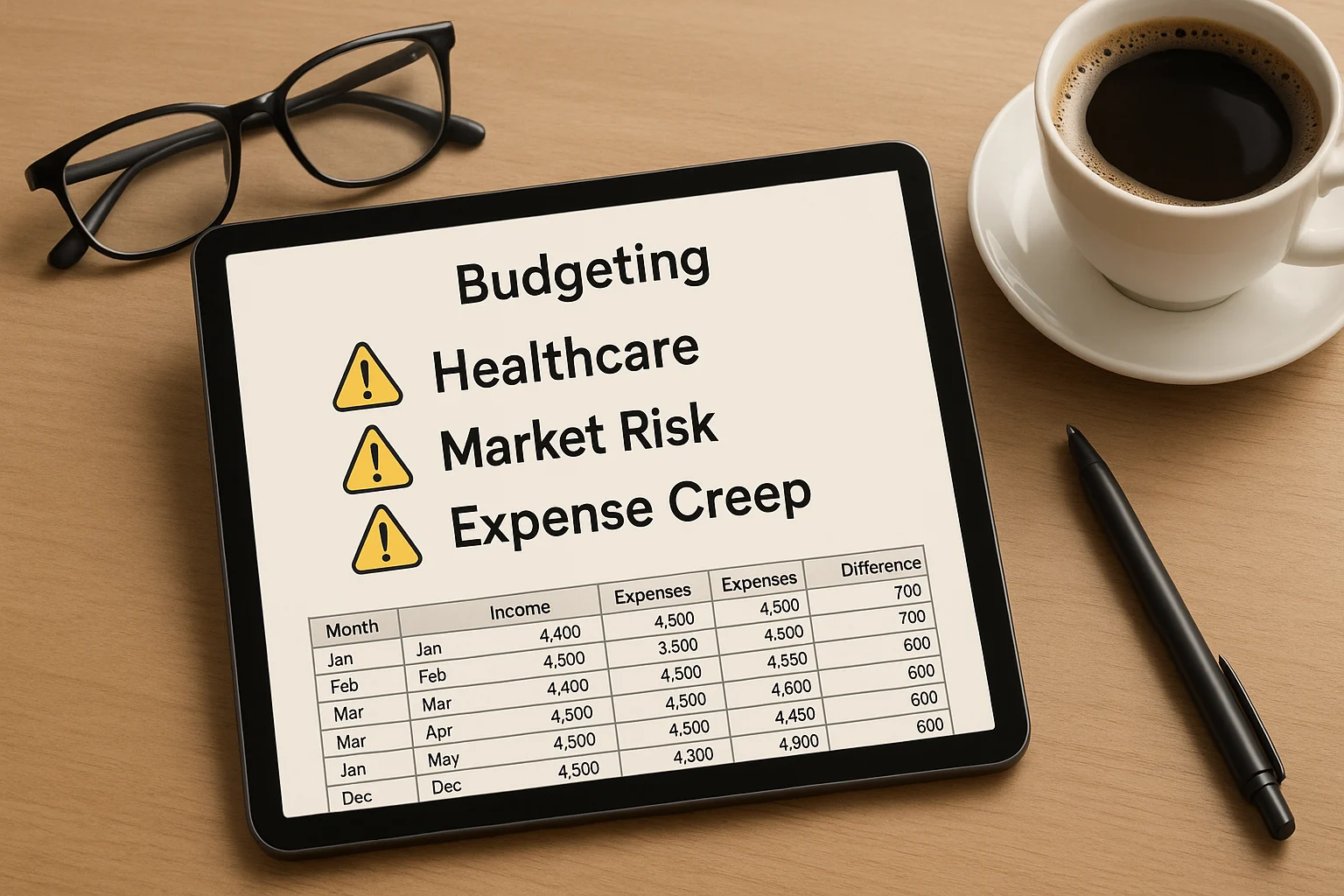
The fragile part of a Barista FIRE plan is usually not the label; it is an assumption that turns out to be less reliable than expected.
- Healthcare: Budget coverage explicitly instead of assuming a part-time employer will provide it.
- Income durability: If part-time earnings stop, know whether you would cut spending, work more, or draw more from the portfolio.
- Market timing: Income can reduce withdrawals during a downturn only while that income remains available.
- Career reversibility: If you might return to higher-paid work later, consider how a long break or career change could affect that option.
- Expense creep: Recheck the plan when housing, healthcare, family, or lifestyle costs materially change.
Frequently Asked Questions
Is Barista FIRE Right for You?
You do not need perfect certainty before you downshift, but you should be able to answer three questions:
- Can the numbers survive a bad year? Know what changes first if part-time income drops, spending rises, or markets fall.
- Have you tested the replacement work and benefits? Confirm the schedule, pay, stress, and healthcare assumptions before depending on them.
- Do you have a fallback? Decide whether you would spend less, work more, delay the move, or return to higher-paid work if the plan misses.
If those answers are workable, Barista FIRE can be a flexible bridge between full-time work and full financial independence. If you want to downshift without relying on portfolio withdrawals yet, you may be closer to Coast FIRE; compare that path with our Coast FIRE number calculator.
This content is for educational purposes only and not financial advice. Past returns don’t guarantee future results; withdrawal rules are historical guidelines. Employer benefits and eligibility rules can change. Consult qualified professionals for personal advice.

