

A 600 FICO score sits in the Fair range. That does not create an automatic approval or denial for a balance transfer card: issuers set their own criteria, and the offer still has to save you money after fees.
If you are searching for a balance transfer credit card 600 credit score option, start with the decision—not a card name. A transfer can help when you are moving existing credit-card debt and can pay it down during the promotional period. If you need new cash, it is the wrong tool. For the broader payoff strategy behind either route, see our Debt Management Plan.
This post contains affiliate links. If you use them, we may earn a commission at no extra cost to you. Learn more.
Table of Contents
- Balance Transfer Fit Checker
- Balance Transfer Cards for Fair Credit: What a 600 Score Means
- How to Tell if a Balance Transfer Is Worth It
- If a Balance Transfer Doesn’t Fit: Choose the Next Move by Need
- Improve Your Next Credit Application
- Put Every Debt and Goal on One Screen
- Balance Transfer and 600-Credit-Score FAQs
- Your Next Step
Not sure whether you are solving an interest-cost problem or a cash problem? Use the checker first; then the sections below show how to evaluate the result.
Balance Transfer Fit Checker
Answer three quick questions. This checker does not predict approval or name a guaranteed card; it tells you whether a balance transfer fits the problem you are trying to solve and what to compare next.
Next step
Answer all 3 questions to see a tailored next step.
Use the result as a comparison starting point, not an approval prediction. Check the issuer or lender’s current terms before applying.
The checker separates three problems that are easy to mix together: lowering interest on existing card debt, getting new cash, and consolidating several debts. Your next step depends on which problem you actually have.
Balance Transfer Cards for Fair Credit: What a 600 Score Means
Possibly—but a 600 score is not a reliable yes/no cutoff. FICO classifies 580–669 as Fair, while card issuers decide approval using their own underwriting criteria. That means a score around 600 can narrow your options without making approval impossible.
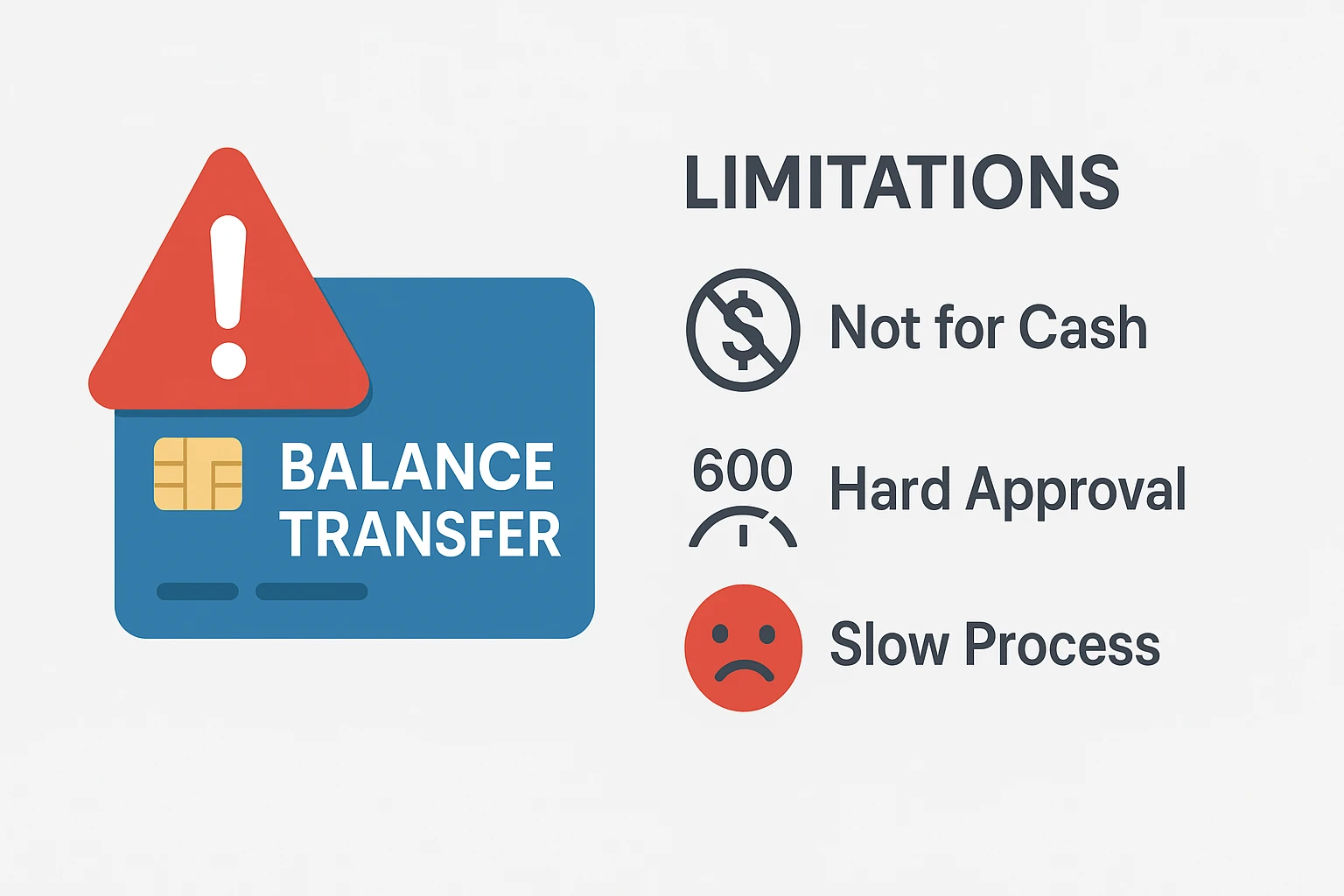
When comparing balance transfer cards for fair credit, the more useful question is whether a particular offer improves your payoff plan. Focus on the transfer fee, promotional period, usable credit limit and payoff payment—not approval alone. A balance transfer makes sense only when all of these are true:
- You are moving existing credit-card debt, not trying to create emergency cash.
- The transfer fee and other costs are lower than the interest you reasonably expect to avoid.
- The new credit limit lets you transfer enough of the balance to matter.
- You can make a realistic payoff plan for the promotional period instead of simply moving the debt and continuing to spend.
If those conditions line up, compare current offers—including our guide to no-fee balance transfer cards. If they do not, skip the application and use the fallback section below.
How to Tell if a Balance Transfer Is Worth It
Start with what a balance transfer actually does
The Consumer Financial Protection Bureau defines a balance transfer as moving an outstanding balance from one credit card to another. The destination card may offer a low or 0% promotional rate for a limited time, and a transfer fee may still apply even when the promotional rate is 0%.
That is why a transfer can be useful for interest reduction but is usually a poor answer to “I need money today.” A credit-card cash advance is a different transaction and can carry its own fee and interest treatment.
Use four checks before you apply
- Transfer fee: Convert the percentage or fixed fee into dollars so you know the up-front cost of moving the debt.
- Promotional period: Divide the transferred balance plus the fee by the number of promotional months to estimate the monthly payment required to finish before the regular rate applies.
- Credit limit: Do not assume a new card will let you move the entire balance. A partial transfer may still help, but it changes the math.
- Purchases: Read how new purchases are treated. CFPB warns that on many cards, carrying a promotional balance can affect whether new purchases receive a grace period.
Example only: If you moved $4,000 with a 3% transfer fee, the fee would be $120. If the promotional period were 15 months, paying off $4,120 evenly would require about $275 per month. Substitute the real fee and promotional period from the offer you are considering.
The calculation does not tell you whether you will be approved. It tells you whether an approved offer would actually solve the debt problem.
Why the score alone cannot choose a card for you
A higher score can improve access to credit, but approval also depends on the issuer and the rest of the application. Avoid treating “600,” “670,” or any other single number as a universal card rule. If an issuer offers a prequalification or eligibility check, read what kind of credit inquiry it uses and remember that prequalification is not the same as final approval.
If a Balance Transfer Doesn’t Fit: Choose the Next Move by Need
If you need new cash, cannot qualify for a useful transfer offer, or cannot pay the transferred balance down fast enough, the answer is not “apply everywhere.” Search results may call the fallback choices quick loans or emergency loans, but the label matters less than the full cost, repayment terms and risk. Match the fallback to the problem before taking on new debt.
For an urgent bill, try the lowest-risk pressure release first
Before adding a new loan, ask the biller or creditor whether a payment plan, due-date change, hardship option, or other accommodation is available. If you already use a bank or credit union, ask what small-dollar options it offers. Federal credit unions may offer NCUA-regulated Payday Alternative Loans (PALs) under specific program rules.
Compare borrowing options by total cost, not speed alone
| Option | Potential appeal | Main risk | What to compare |
|---|---|---|---|
| Personal installment loan | Fixed payment and term | APR and origination fees can be high with Fair credit | APR, fees, monthly payment, total repayment and term |
| Credit-union small-dollar loan / PAL | Structured alternative to payday borrowing for eligible members | Membership and program eligibility | Current credit-union terms, fees, amount and repayment period |
| Cash-advance app | Small short-term advance | Expedite fees, subscriptions or tips can raise the effective cost | All mandatory/optional charges and repayment timing |
| Credit-card cash advance | Uses an existing card if available | Separate fees and interest can make it costly | Cash-advance APR, fee and when interest starts |
| Payday or vehicle-title loan | Fast access for some borrowers | Very high cost; title loans also put the vehicle at risk | APR, fees, rollover/refinance terms and collateral consequences |
If you are consolidating several balances rather than covering a one-off bill, compare the structure of a transfer with a debt consolidation loan for a 600 credit score. The better option is the one with the lower realistic total cost and a payment you can sustain—not whichever application looks fastest.
What lenders may evaluate besides your score
For a loan application, lenders may consider income, existing debt, payment history, recent credit activity, the amount requested and—on a secured loan—the collateral. The mix varies by lender, so treat any single checklist as preparation rather than a promise of approval.
How to compare without rushing into a bad loan
- Gather the identity, income and account information a legitimate application requires.
- Check whether prequalification is available and what kind of credit inquiry it uses.
- Compare APR, fees, payment amount, total repayment, term and funding timing together.
- Borrow only the amount the problem actually requires; a smaller balance is useful only if the payment remains affordable.
Red flags that should stop the application
The Federal Trade Commission warns about lenders that guarantee credit before reviewing an application or demand payment for a promised loan. Also be cautious when a lender hides the APR or fees, pressures you to act immediately, asks for account passwords, or contacts you about a loan you never requested.
Payday and vehicle-title loans deserve extra scrutiny because their cost can be very high and a title loan can put your vehicle at risk. The FTC’s payday and car-title loan guidance explains the trade-offs before you borrow.
Improve Your Next Credit Application
If the balance-transfer offers available to you are weak, improving the underlying credit profile can be more valuable than forcing an application today. You do not need a magic utilization percentage; FICO’s guidance is that lower revolving utilization is generally better, with no special cliff at 30%.
- Pay every account on time. Set reminders or autopay for at least the minimum due.
- Pay down revolving balances when you can. Lower balances can reduce utilization and interest cost at the same time.
- Avoid unnecessary new applications. Apply when the product and terms solve a real problem, not just to “see what happens.”
- Review your credit reports. Use AnnualCreditReport.com and dispute information you believe is inaccurate with the appropriate bureau/furnisher.
- Choose a payoff method you can maintain. Compare the debt snowball vs. avalanche if you need a structure for existing balances.
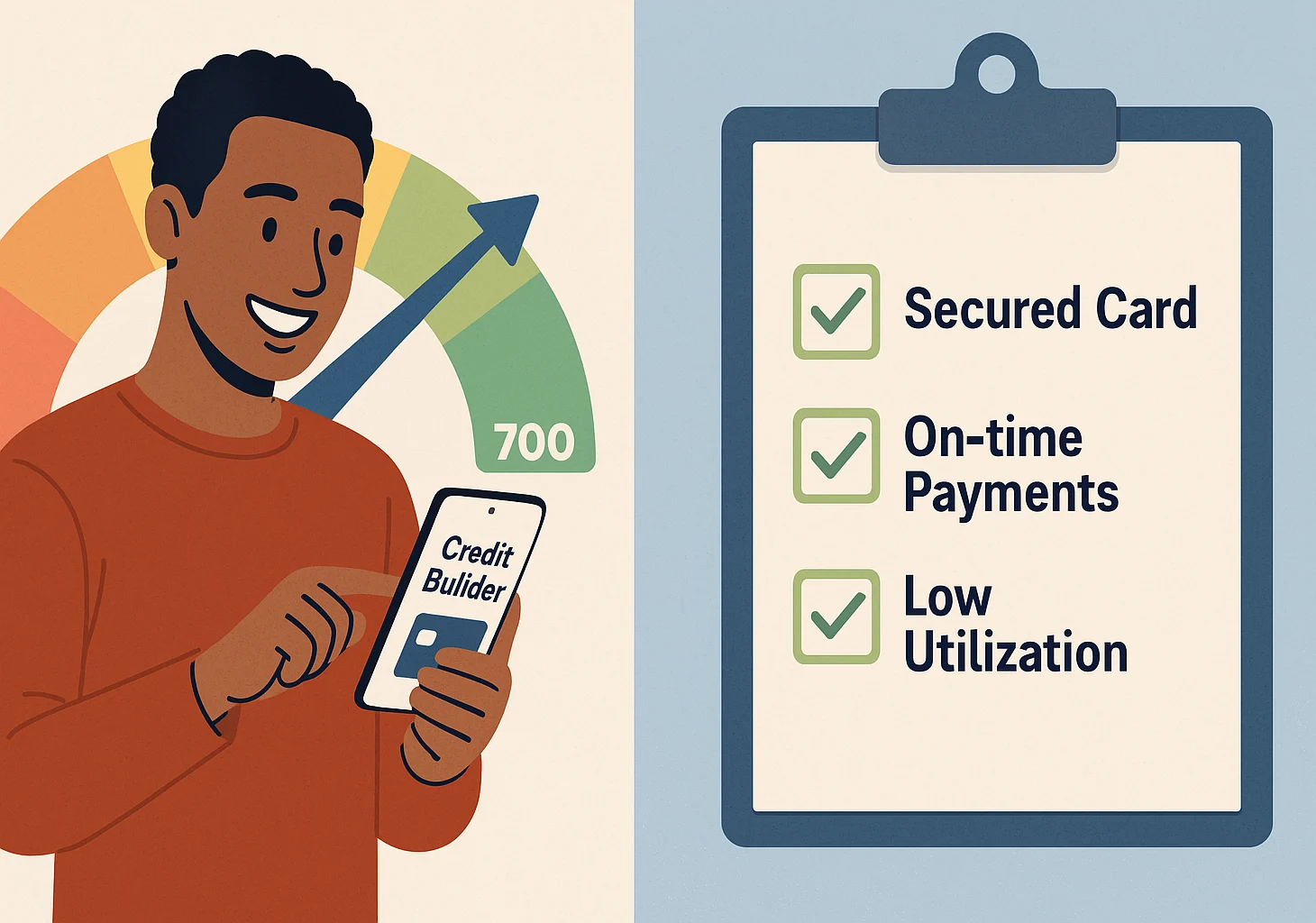
If you’re deciding what to pay down before another application, start by putting your income, spending, debts, and goals in one place.
Put Every Debt and Goal on One Screen
Enter income, spending, up to 8 debts, and up to 8 goals; the SNAPSHOT sheet totals everything automatically.
Confirm to get the workbook and frugal money tips. Unsubscribe anytime.
Something went wrong. Please check your email address and try again.
Balance Transfer and 600-Credit-Score FAQs
These answers keep the score in perspective: it matters, but the offer terms and your payoff plan matter too.
If you have two real options in front of you and the fee, promotional period, loan APR, and monthly payments still leave the better choice unclear, this can be one of those final-step decisions worth running past a finance professional before you apply.
Your Next Step
Start with the problem you are solving. If you are moving existing card debt, compare the transfer fee, promotional period, usable credit limit and payoff payment before you apply. If you need new cash, skip the balance-transfer application and compare the least-cost fallback that actually meets the timing.
If the current offers do not improve your situation, that is a useful answer—not a failure. Pay down balances, protect on-time payments, review your reports and revisit transfer offers when the math is better. Use the Debt Management Plan to turn that next step into a broader payoff plan.
This content is for informational purposes only and not financial advice. Credit-card and loan approval, pricing, limits and program rules vary by issuer, lender, state and applicant. Verify current terms before applying or borrowing.

