

Feeling weighed down by credit issues? Imagine landing a debt consolidation loan with a lower rate and a single, simpler payment. If you’re trying to boost credit, clean up errors, or just get breathing room, you’re in the right place. We’ll keep it simple and actionable—no hype—so you can move toward the average credit score for debt consolidation loan lenders expect. For a broader strategy, see our debt management plan.
Credit Repair Comparison Tool
Tap a company below to see typical pricing and who it’s usually a good fit for.
After selecting a company the details will appear below.
This post contains affiliate links. If you buy through our links, we may earn a commission at no extra cost to you. Learn more.
Table of Contents
- Credit Repair Comparison Tool
- Key Takeaways
- Why Your Credit Score Matters
- What Is Credit Repair?
- When to Consider Credit Repair
- How Credit Repair Companies Operate
- Choosing a Credit Repair Company
- Top Companies to Help You Improve Credit for Consolidation
- DIY Credit Repair vs. Professional Services
- Credit Repair Timeline
- Building Healthy Financial Habits for Credit Score Improvement
- Spotting a Legitimate Credit Repair Company
- Frequently Asked Questions
- Conclusion & Next Steps
Key Takeaways
- Boost your score: Fix report errors to move toward the score lenders want.
- Save on interest: Higher scores usually earn lower consolidation rates.
- Choose carefully: Favor clear pricing, strong reviews, and CROA compliance.
- Be patient: Progress builds over months; pair with good budgeting habits.
- DIY or pro: DIY is free; pros help when cases are complex or time-sensitive.
Why Your Credit Score Matters
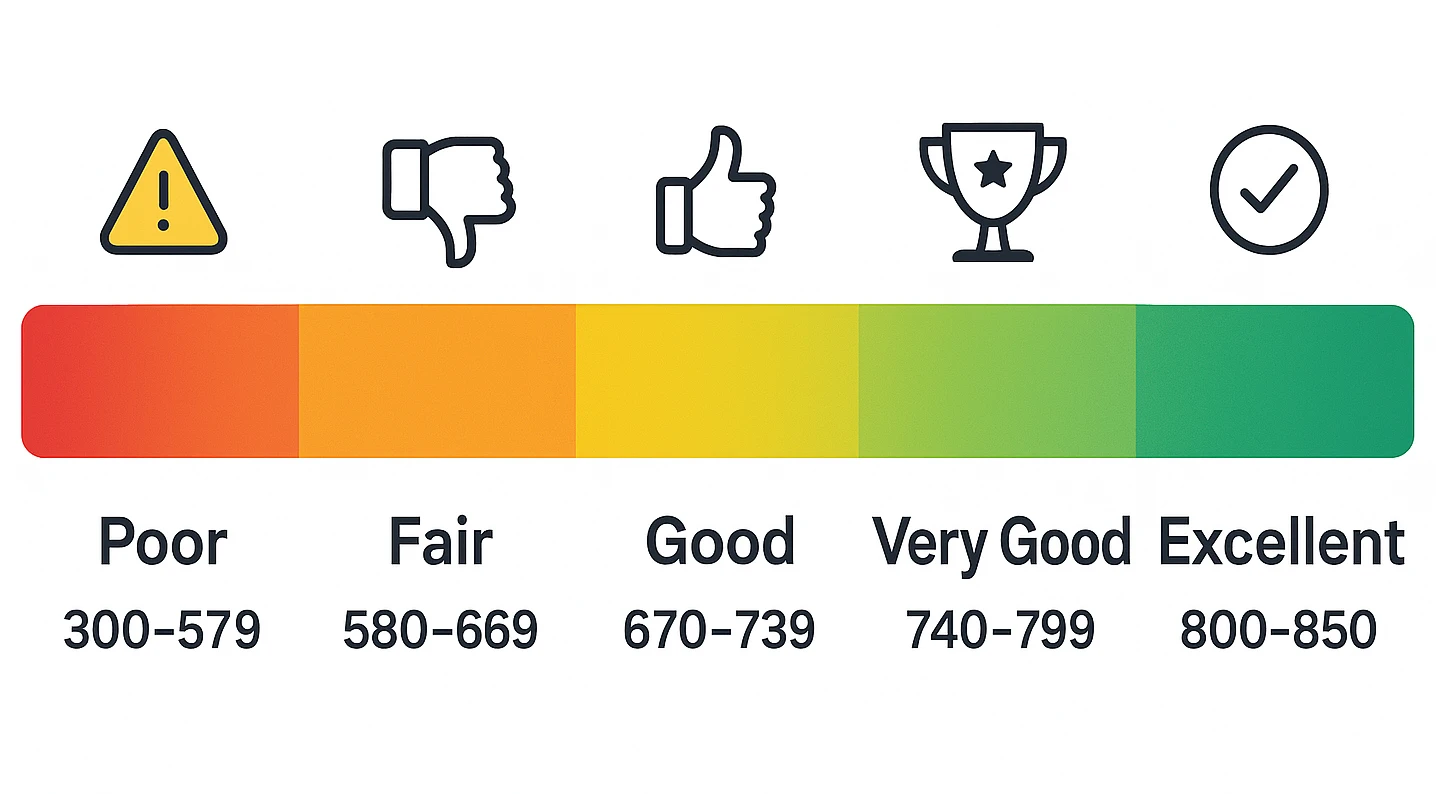
Your credit score, a three-digit number from 300 to 850, reflects your financial reliability. For example, the FICO Score, widely used, impacts loan approvals, rates, and even your ability to meet the score lenders expect for a consolidation loan. So a strong score can save thousands over time, especially when paired with strategies like the debt snowball method.
FICO Score Ranges
- Excellent: 800-850
- Very Good: 740-799
- Good: 670-739
- Fair: 580-669
- Poor: 300-579
When applying for a debt consolidation loan, lenders check your score to gauge risk. These loans combine debts into one payment, often at a lower rate. Therefore, knowing the score lenders look for is key.
Approval Scores Explained
Average approval credit scores for consolidation loans vary by lender and profile:
- Good to Excellent (670+): Secures top rates, as lenders see low risk.
- Fair (580-669): Approval possible, but with higher rates. Compare offers carefully.
- Poor (Below 580): Tough to qualify, often requiring collateral. Credit repair helps.
Also weighed: income stability, debt-to-income, and collateral. Cleaning up errors and building good habits can help you qualify for better consolidation terms.
“Your credit score isn’t just a number; it’s your ticket to savings.”
What Is Credit Repair?
Credit repair involves disputing inaccurate, outdated, or unverifiable items on your Experian, Equifax, and TransUnion reports, like late payments or collections. As a result, your report reflects your true financial history.
What Credit Repair Includes
- Disputing Errors: Challenging mistakes with bureaus and creditors.
- Removing Inaccuracies: Eliminating unverifiable items.
- Education: Guidance on building positive credit habits.
- Legal Compliance: Adhering to the Fair Credit Reporting Act (FCRA).
What Credit Repair Doesn’t Do
- No Instant Fixes: Accurate negatives stay.
- No Illegal Deletions: Legitimate debts remain.
- Not a Substitute: Poor habits undermine results.
- Not Free: Services charge monthly fees.
No service can remove accurate, current negatives from your report. Results and timelines vary by case. Consider checking your reports at AnnualCreditReport.com and talking to a qualified professional if you need guidance.
When to Consider Credit Repair
Wondering if credit repair is right for you? It can be especially helpful when you’re aiming to reach the score you need for a consolidation loan. Here’s when you might want to try it:
- Mistakes on Your Report: If you spot wrong info, like a payment marked late when you paid on time, credit repair can help clear that up.
- Old Issues Holding You Back: Got collections or a bankruptcy weighing down your score? These pros can work to lighten that load.
- Identity Theft Mess: If someone’s opened shady accounts in your name, credit repair teams jump in to dispute those frauds fast.
- Big Purchases on the Horizon: Planning to buy a car or a house? A better score means lower interest rates, saving you serious cash.
- DIY Isn’t Cutting It: Tried fixing your credit yourself but hit a wall? Professionals know the tricks to get past those roadblocks.
How Credit Repair Companies Operate
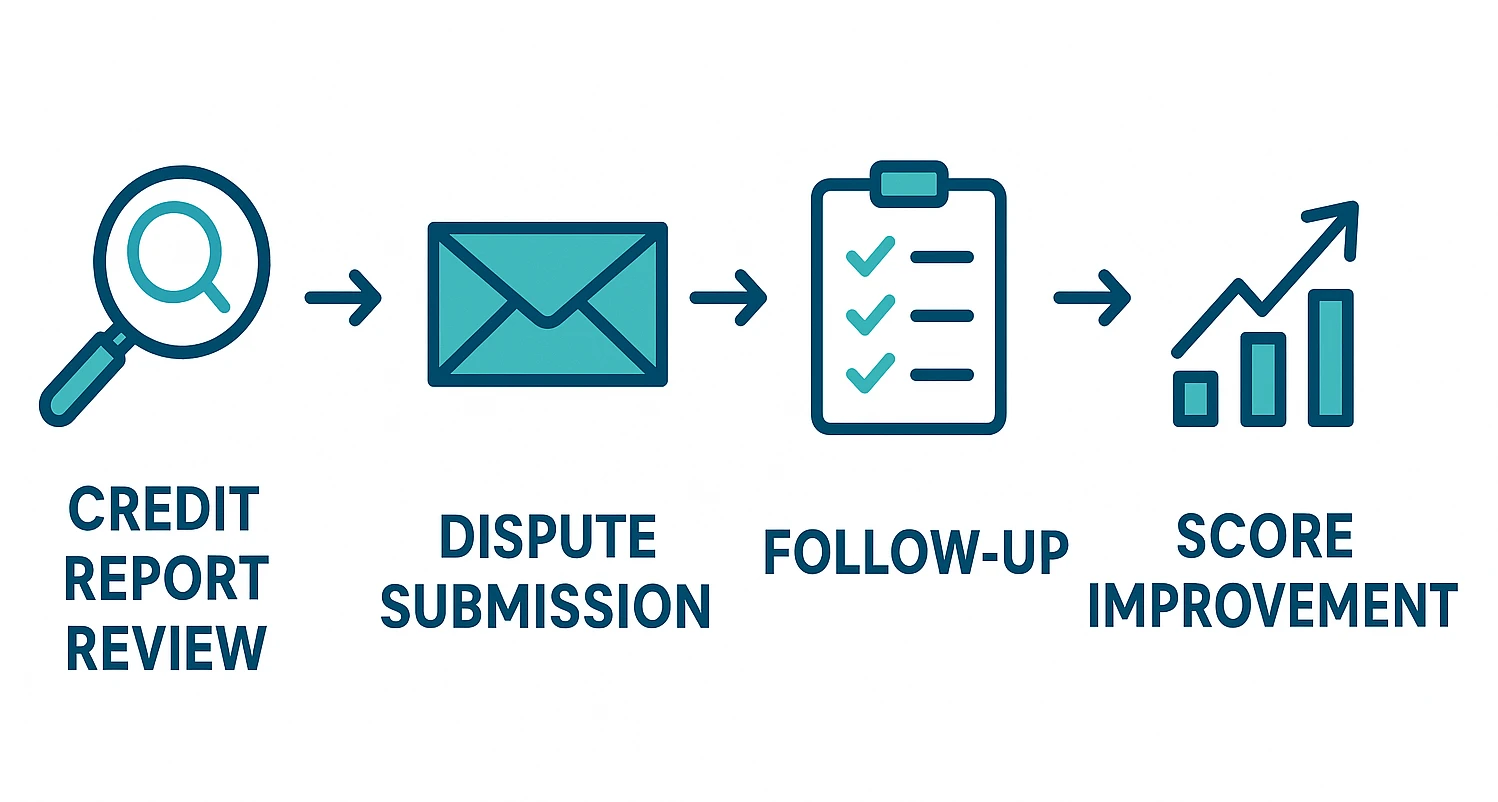
Good credit repair companies follow a clear plan to boost your score, making the process easier for you. Here’s how they typically work:
Step 1: Checking Your Credit Reports
They review your reports from all three bureaus and flag anything that looks off, like a payment marked late when you paid on time.
Step 2: Sending Dispute Letters
Next, they draft focused dispute letters and send them to the bureaus and creditors.
Step 3: Following Up and Pushing Harder
The bureaus typically respond within 30–45 days. If an error isn’t removed, they follow up and ask for proof until the item is verified or corrected.
Step 4: Monitoring and Guidance
Many also watch your credit over time and share tips—like keeping balances low—to help your score steadily improve.
Choosing a Credit Repair Company
Picking the best company is a big deal. Here’s what to zero in on:
- Clear Pricing: No sneaky fees, just upfront costs.
- Solid Rep: Proven results and happy customer stories.
- Great Reviews: High scores on BBB or Trustpilot.
- Legal Smarts: They play by CROA rules.
- Full Package: Disputes, monitoring, and tips included.
- Good Support: Easy to reach for updates.
Top Companies to Help You Improve Credit for Consolidation
These top picks, based on effectiveness and reviews, can help you get closer to the score lenders expect for a consolidation loan. If your score is around 620, explore debt consolidation loans with a 620 score for additional options.
1. Credit Saint
Credit Saint excels with aggressive disputes and customer satisfaction.
- Pros: A+ BBB rating, multiple plans, 60-day guarantee, personalized dashboard.
- Cons: Higher pricing, initial setup fee.
- Pricing: $79.99-$119.99/month + $99-$195 setup fee.
- Best For: Complex issues like bankruptcies or collections.
2. Sky Blue Credit Repair
Sky Blue offers straightforward pricing and flexibility.
- Pros: Flat $79/month fee, 30-day guarantee, family discounts.
- Cons: No tiered plans, limited identity theft protection.
- Pricing: $79/month + $79 setup fee.
- Best For: Budget-conscious users with common issues.
3. The Credit Pros
The Credit Pros provide holistic services, including coaching.
- Pros: Comprehensive plans, legal team access, mobile app.
- Cons: Higher setup fees, mixed dispute aggressiveness.
- Pricing: $69-$149/month + $119-$149 setup fee.
- Best For: Identity theft or financial wellness needs.
4. Ovation Credit Services
Ovation emphasizes personalized support and education.
- Pros: Tailored strategies, discounts for couples, legal support.
- Cons: No money-back guarantee, basic online tools.
- Pricing: $79-$109/month + $89 setup fee.
- Best For: Personalized service and education.
DIY Credit Repair vs. Professional Services
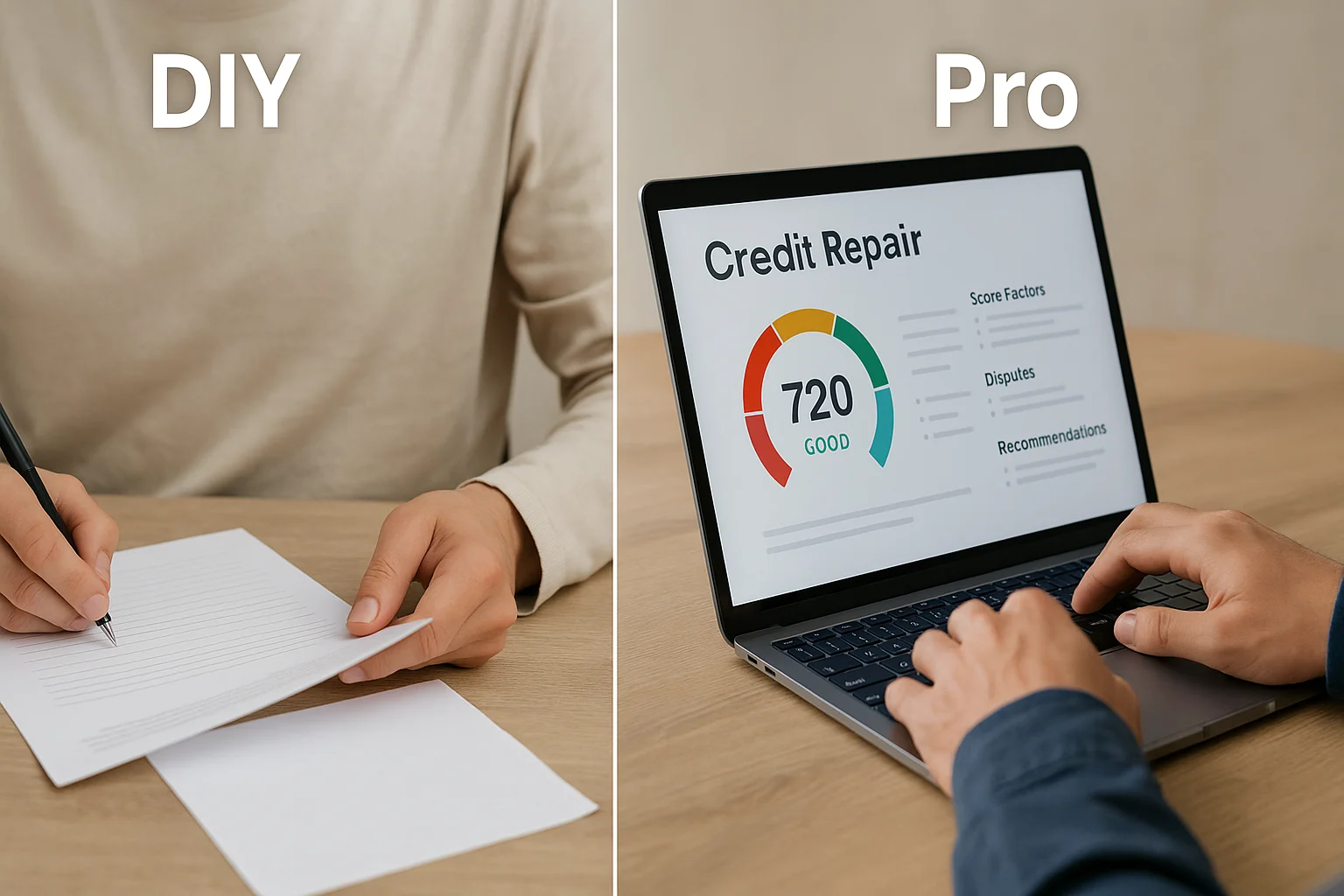
Can you fix your credit yourself? Yes—the FCRA allows free disputes. Choosing between DIY and pros depends on your needs, especially if you’re trying to meet the score lenders look for.
DIY Credit Repair
Pros:
- Free: Only costs time and postage.
- Empowering: Learn about your credit report.
- Control: Manage every step.
Cons:
- Time-Intensive: Research and follow-ups take effort.
- Complex: Disputes can be confusing.
- Limited Expertise: You may miss legal strategies.
Tip: Request free reports from AnnualCreditReport.com and send dispute letters to bureaus. Pair this with frugal financial tools to track progress.
To stay organized, try our free debt payoff tracker.
Professional Credit Repair for Credit Score Improvement
Pros:
- Expertise: Knowledge of FCRA and dispute tactics.
- Time-Saving: Handles paperwork and follow-ups.
- Better Results: Often excels in complex cases.
Cons:
- Cost: Monthly and setup fees apply.
- No Guarantees: Results aren’t assured.
Best for: Complex issues or qualifying for better consolidation terms.
Credit Repair Timeline
Credit repair takes time. While results vary, cleaning up errors and building positive habits generally requires patience.
- Initial Analysis: 1-2 weeks to review reports.
- Dispute Response: 30-45 days per round.
- Meaningful Progress: Often several months, depending on case complexity.
- Complex Cases: Identity theft and multiple disputes can take longer.
Building Healthy Financial Habits for Credit Score Improvement
Credit repair clears errors, but lasting success needs good habits. Regularly checking your reports for mistakes can keep your score aligned with what lenders expect. Try these along with frugal living tips to save more. For a routine you can keep, see Budgeting Habits That Stick.
- Pay On Time: Payment history makes up about 35% of your FICO® Score.
- Low Utilization: Keep balances below 30%.
- Keep Old Accounts: Maintain positive history.
- Limit New Credit: Avoid frequent applications.
- Check Reports: Review annually for errors.
Spotting a Legitimate Credit Repair Company
Scams exist, so verify legitimacy:
- No Upfront Fees: CROA prohibits charges before services.
- No Guarantees: Avoid promises of specific results.
- Clear Contracts: Ensure detailed terms.
- BBB Rating: Check for A+ ratings.
Frequently Asked Questions
Conclusion: Average Credit Score for Debt Consolidation Loan
Improving your credit score is a powerful step toward getting a better consolidation offer. By working with a trusted company—or going DIY—and sticking to smart habits, you’ll move closer to the terms you want. Ready to start? ✨

This content is for informational purposes only and not financial advice. Consult a qualified professional before making financial decisions.

