

If you’ve ever opened your brokerage app, seen a sea of red, and felt an urge to pull back, you know how quickly stress can influence the next decision. Abundance mindset habits aren’t a substitute for a financial plan; they’re small, repeatable behaviors that help you slow down, look for evidence, and choose the next useful action when the numbers wobble. If you want the broader foundation behind all of this, start with our money mindset guide.
Here, abundance does not mean pretending money is unlimited or expecting positive thoughts to create a better balance. It means acknowledging the constraints that are real, then looking for useful options you can test without abandoning the plan. The seven habits below turn that idea into something practical.
This post contains affiliate links. If you purchase through them, we may earn a commission at no extra cost to you. As an Amazon Associate, I earn from qualifying purchases. Links marked with ‘#ad’ are Amazon affiliate links. Learn more.
Table of Contents
- Find Your Best-Fit Abundance Mindset Habits
- What an Abundance Mindset Means for FIRE
- Habit 1: Daily Gratitude Anchored to Financial Progress
- Habit 2: Weekly Opportunity Scanning and Small Bets
- Habit 3: Identity-Based Money Affirmations With Action Triggers
- Habit 4: Strategic Network Outreach
- Habit 5: Run a Comparison Reset
- Habit 6: Evidence Logging to Counter Scarcity Narratives
- Habit 7: Learning Reviews That Transform Setbacks Into Progress
- Make the Habits Stick
- Put Your Money Numbers on One Screen
- Frequently Asked Questions
- Your Next 7 Days
The seven habits below can reinforce one another, but you do not need to start with all seven. Use this quick matcher to identify the friction that is most worth addressing first.
Find Your Best-Fit Abundance Mindset Habits
Choose the sticking point that feels most familiar. You’ll get two habits to start with, in order, plus direct links to each section.
Your match is a starting point, not a diagnosis. Use the linked habit sections for the first steps, then come back to the full system as you build consistency.
What an Abundance Mindset Means for FIRE
For this guide, abundance is a decision habit, not a prediction about what the market or your income will do. A scarcity mindset can sound like, “Something feels uncertain, so I need to act now.” An abundance response asks, “What actually changed, what options do I have, and what is the smallest useful move?”
That distinction matters because a real constraint is still real. A job loss, higher essential costs, growing debt, or a plan that no longer fits needs a numbers-first response—not positive thinking. These habits are most useful when the facts are stable but stress is making your options look smaller than they are.
Do this today: write one “not enough” thought, then separate it into two lines: fact I need to deal with and story I may be adding.
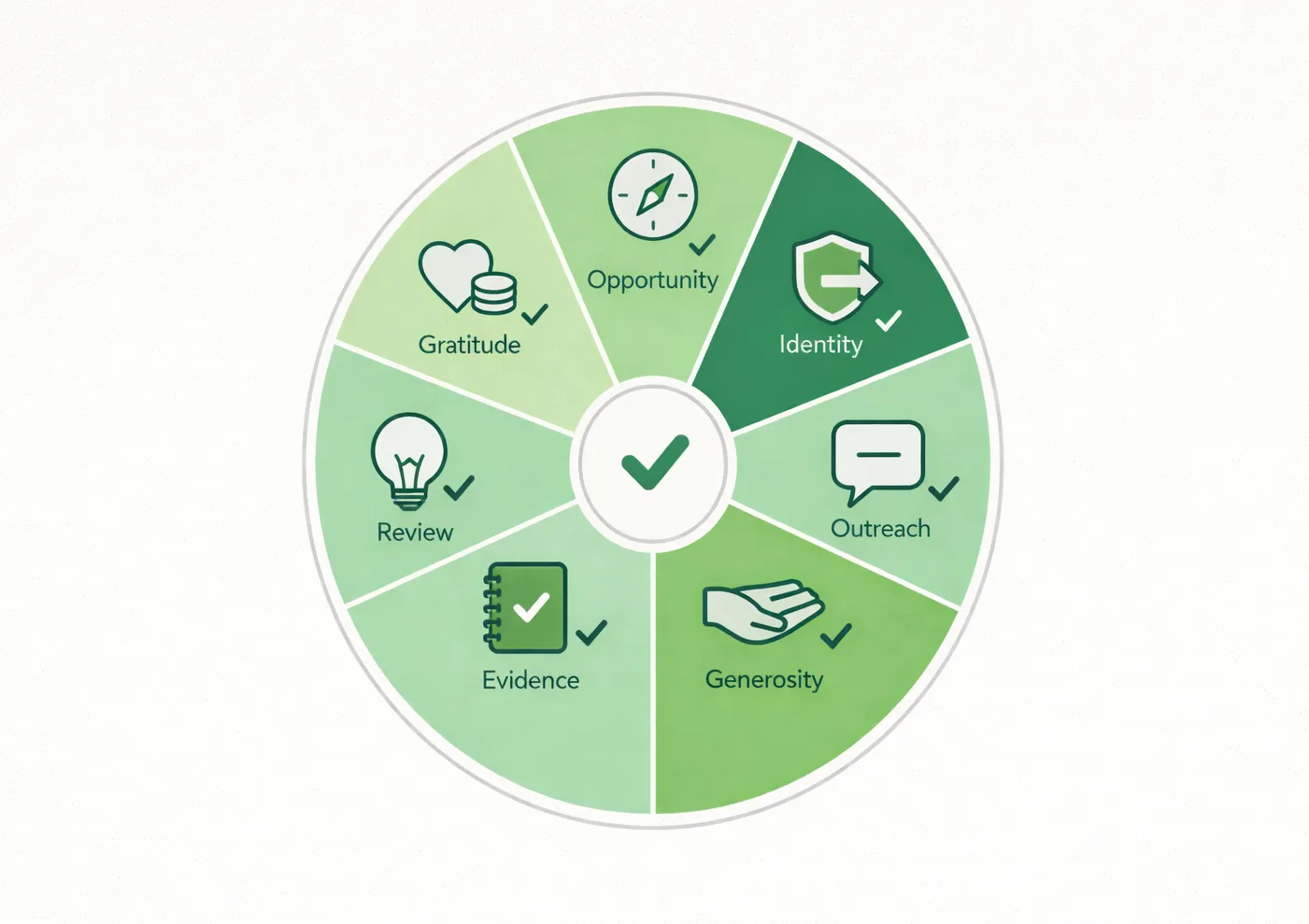
Habit 1: Daily Gratitude Anchored to Financial Progress
The practice: Each morning, write three specific money wins from the last day or week. Keep them small and real—“I stayed consistent” counts.
If you’ve ever opened your banking app and felt your stomach drop, this is a reset. It pushes you to look for concrete evidence of what is still working instead of letting one stressful number define the whole picture.
- “I’m grateful I made the contribution I planned.”
- “I appreciate that I cooked at home and protected this week’s spending plan.”
- “I’m thankful I checked the numbers instead of reacting to a headline.”
Do this today: write your three wins before you check your apps.
Useful if a blank page is why this habit keeps slipping: The Five Minute Journal is an undated guided journal with daily gratitude and self-growth prompts, so you do not have to invent the routine from scratch.
Skip it if: you already use a notebook or notes app consistently—the habit matters more than the format.
Habit 2: Weekly Opportunity Scanning and Small Bets
Scarcity says “your income is fixed.” Abundance says “let’s test.” Set a weekly 30-minute “Opportunity Hour” to scan for ideas and place one small bet.
If you want a menu of ideas you can actually try, start with these side hustles for frugal living and pick one small experiment for the week.
- Industry trends: What skill is rising in your field?
- Side hustle: What problem could you solve for someone?
- Network: Who could you help or learn from this week?
- Skill gap: What’s one tiny upgrade that increases your value?
If the hard part is finding a real market to inspect—not inventing more ideas—you can browse freelance projects on Upwork and note one project type that matches a skill you can already offer. If freelancing is not a path you want to test, skip it and use the side-hustle list above instead.
Gotcha: If your “small bet” risks rent money, it’s not small. Keep experiments tiny and reversible.
Example scenario: A teacher notices parents struggling with math homework and tests two evenings of tutoring. If it clicks, it becomes repeatable; if it doesn’t, you still learn fast. Do this today: schedule your first Opportunity Hour.
Habit 3: Identity-Based Money Affirmations With Action Triggers
Money affirmations are most useful when they’re connected to action. The formula here is simple: identity + evidence + next step.
Instead of: “I am wealthy.”
Try: “I’m someone who builds wealth consistently. Evidence: I follow my plan. Next step: review my written plan on Sunday.”
- “I’m someone who follows a written investing plan. Evidence: I checked the plan before making changes. Next: review it on Sunday.”
- “I create value and get paid for it. Evidence: I shipped one small project. Next: outreach to one lead.”
Do this today: write one identity line and set the next step as a 10-minute calendar block.
Habit 4: Strategic Network Outreach
Networking feels gross when it’s “what can I get?” It gets easier when it’s “what can I give?” One thoughtful message a week can create more chances to learn, collaborate, or spot opportunities over a long FIRE timeline.

Weekly outreach system: offer something useful (a resource, an intro, a quick insight), then keep it short. This is deliberate relationship-building, not scorekeeping; Habit 5 handles a different problem—what to do when someone else’s progress makes your own plan feel suddenly inadequate.
Templates:
Industry connection: “I saw your post about [topic]. I found [resource] that might help your [goal]. Want it?”
Collaboration: “I’m working on [project]. I think there’s overlap with your work—open to a 15-minute chat?”
Do this today: send one message that offers help, not a pitch.
Habit 5: Run a Comparison Reset Before You Copy Someone Else’s Plan
Comparison turns abundance into a race. A friend’s raise, a bigger house, or someone else’s FIRE date can make a perfectly workable plan feel suddenly inadequate—even when none of your numbers changed.
Use a three-question reset before you react:
- What triggered me? Name the salary, purchase, milestone, or lifestyle signal.
- What fact about my own plan changed? If the answer is “nothing,” do not treat the feeling like new financial data.
- What can I borrow without copying? Take one useful lesson—maybe a skill, negotiation tactic, or savings system—and leave the rest.
Example: A coworker gets a big raise. Instead of upgrading your spending or chasing a random side hustle, ask what skill or move created leverage, then decide whether that lesson belongs in your own plan. Do this today: turn one comparison trigger into one useful question.
If what you’re tempted to copy is someone else’s budgeting setup, compare minimalist budgeting tools and choose the simplest system that fits how you actually track money.
Habit 6: Evidence Logging to Counter Scarcity Narratives
When the market drops, it is easy to start telling yourself scary stories. Evidence logging gives you a factual counterweight—especially when you feel wobbly.
- Financial: savings rate, consistent contributions, debt paid down
- Skills: course finished, new tool learned, project shipped
- Network: helpful conversations, intros made, follow-ups completed
- Resilience: setback handled, plan adjusted, momentum restored
| Timing | Category | Specific Evidence | Scarcity Story It Counters |
|---|---|---|---|
| Week 1 | Financial | Followed my written contribution plan during volatility | “I can’t handle downturns” |
| Week 2 | Skills | Finished a beginner automation tutorial | “I’m not capable of learning this” |
| Week 3 | Network | One coffee chat turned into a useful intro | “I don’t know the right people” |
Do this today: start a note called “Evidence Log” and add one bullet under any category.
Useful if your evidence log keeps disappearing into scattered notes: the Clever Fox Weekly Planner Undated combines weekly and monthly planning, goal-setting pages, and habit tracking in one A5 planner, so the log can live beside the priorities you already review.
Skip it if: a phone note or spreadsheet is already easy for you to maintain. A paper planner should reduce friction, not create another system to manage.
Habit 7: Learning Reviews That Transform Setbacks Into Progress
Setbacks happen. The habit is turning them into data instead of identity.
- Name it: What happened (one paragraph, no blame).
- Sort it: What was in your control vs. outside your control.
- Extract: What will you do differently next time (one rule).
- Act: Pick one change to test this month.
Example scenario: You chase a side-hustle trend, spend more time or money than planned, and regret it later. Your “next time” rule might be a 72-hour pause before a big commitment, plus a pre-set limit on what you’re willing to test. Do this today: write your one “next time” rule in a single sentence.
Make the Habits Stick
The seven habits only help if they survive an ordinary week. Keep the implementation simple: measure one behavior, attach it to a cue you already have, and troubleshoot the friction before adding more. If you’d rather test individual practices before turning one into a routine, try these abundance mindset exercises.
Measure the Behavior, Not the Mood
If you’re the kind of person who refreshes your spreadsheet when you’re anxious, measuring can either calm you down—or fuel the spiral. Track a few inputs you control and one output that tells you whether the system is moving.
And when you want a quick sanity-check on retirement math, this 4% rule guide can help you revisit the assumptions behind the plan instead of reacting to a feeling.
- Inputs: weekly Opportunity Hour done, outreach sent, evidence log updated
- Outputs: savings-rate trend, side-income trend, consistency with your written plan
Reality check: when the numbers actually changed—income fell, essential costs rose, debt grew, or your plan no longer fits—that is not a mindset problem. Revisit the numbers first. For a consequential decision, consider qualified professional advice.
Do this today: choose one input to track for the next seven days.
Stack One Habit at a Time
Trying to start all seven habits at once can backfire. Attach one habit to a cue you already have—your first coffee, the end of a workday, or your weekly money check-in. Add a second only when the first is easy enough to repeat; if friction rises, shrink the routine again.
Do this today: choose one cue and one habit. Treat the next seven days as an experiment, not a test of willpower.
Troubleshoot the Friction
“I don’t have time.” Shrink the habit until it fits a real gap in your day.
“This feels unrealistic.” Keep it evidence-based: an affirmation should end in a next step you can actually take.
“I don’t see results.” Track leading indicators long enough to see a pattern before judging the outcome.
“Volatility is too intense.” If your financial facts changed, revisit the plan. If only the headline changed, use the evidence log before making a reactive move.
Do this today: pick the friction you hit most and make the routine smaller, clearer, or easier to cue.
If the friction turns out to be in the numbers—not just the story around them—take one snapshot of income, spending, debts, and goals before you decide what needs attention.
Put Your Money Numbers on One Screen
Enter income and spending alongside up to 8 debts and 8 goals; the SNAPSHOT sheet totals everything automatically.
Confirm to get the workbook and frugal money tips. Unsubscribe anytime.
Something went wrong. Please check your email address and try again.
Frequently Asked Questions
Your Next 7 Days
You do not need to install all seven habits at once. Pick the one that addresses the friction you feel most often, attach it to a cue you already have, and run it as a seven-day experiment. At the end, ask one question: did this make my next move more deliberate? If yes, keep it; if not, shrink it or switch habits.
If you are unsure where to begin, use the matcher near the top and follow its first linked habit. The goal is not to feel abundant all the time; it is to have a useful response ready when scarcity thinking shows up.
This guide is for general education, not personal financial or mental-health advice. Your situation and results can vary. If money stress feels overwhelming—or you’re making big decisions—consider talking with a qualified financial professional or a licensed therapist.

