

Can grocery shopping on a budget for two really land near $80 a week? Sometimes—but not everywhere, and not every week. The useful part of this plan is the system: check what you already have, plan meals that share ingredients, build one list, compare unit prices, and decide what leftovers become before you shop.
Use $80 as a stretch test, not a benchmark. Price the sample week at your own store and change the number when your diet, location, pantry, or schedule demands it.
If you want to connect the grocery number with the rest of your spending, see our guide to living frugally and saving money.
This post contains affiliate links. If you buy through our links, we may earn a commission at no extra cost to you. As an Amazon Associate, I earn from qualifying purchases. Learn more.
Table of Contents
- Find Your Best Grocery-Saving Move
- Set and Track Your Weekly Grocery Budget for Two
- How to Meal Plan for Grocery Shopping on a Budget for Two
- Sample Weekly Meal Plan for Two on a Budget
- Smart Strategies to Save on Groceries for Two
- Budget-Friendly Ingredients for Two
- Cooking Strategies to Save Money
- Grocery-Saving Experiments to Test Against Your Receipts
- Frequently Asked Questions
- Your Next Shop: Run a One-Week Test
Find Your Best Grocery-Saving Move
Answer three quick questions to choose the grocery habit to work on first.
Use your result as the first priority; the sections below show how to put that habit into a workable two-person grocery routine.
Set and Track Your Weekly Grocery Budget for Two
Start with your own household instead of a national target. Take your last four ordinary grocery-only totals, separate unusual stock-up trips or nonfood purchases that would distort a normal week, then average the remaining weeks. That gives you a baseline you can actually compare against.
Use three numbers each week: your baseline (what a normal week has been costing), your target (what you plan to spend after one realistic change), and your actual (what the receipt says). The gap tells you whether to adjust the plan, the target, or both.
National data is useful context, not a personal target: BLS reported average food-at-home spending of $6,224 per consumer unit in 2024, while food-at-home prices were 2.7% higher over the 12 months ending July 2026. A consumer unit is not the same thing as your specific two-adult household, so your receipts remain the better starting point.
Pick one lever for the next shop—meal planning, food waste, or a few store-brand swaps—then compare the result with your baseline. If you want to track groceries alongside the rest of your budget, use our free budget spreadsheet template.
How to Meal Plan for Grocery Shopping on a Budget for Two
Meal planning gives your list a job, can reduce random purchases, and makes it easier to use what you already have. If you’re new, start with three days, then expand to a full week as you get comfortable.
Inventory and Brainstorming
First, take stock of your pantry, fridge, and freezer to avoid duplicates. Browse cookbooks or budget-focused blogs for meal ideas you both enjoy, and map meals to your schedule—quick dishes for busy nights, bigger recipes for weekends. Involve your partner so the plan fits both tastes.
For two people, split the job: one person checks inventory and sales while the other sketches a few dinners, then both review the final list for duplicates, must-use perishables, and acceptable substitutions. Swap roles whenever you want—the useful part is making ownership explicit so you do not end up with two separate shopping systems.
Creating Your Weekly Meal Plan
Assign meals to each day and repeat favorites to save time. Plan for leftovers to become lunches or new dishes (e.g., roasted chicken → tacos). Leave one night flexible for leftovers or a pantry meal; if you plan to eat out, keep that cost separate from this grocery example. Use a simple template (digital or paper) to stay organized. Apps like AnyList can also sync shared lists between partners.
Build a Weekly Grocery List for Two
A budget grocery list for two works best when it starts with the meals. Build the list from those meals first, then group it by store section so it is faster to shop. Combine repeated ingredients, check what you already have, and agree on acceptable substitutions before you go. Check sales flyers and cashback offers only for items already on the list, so a promotion does not become a reason to buy food you had not planned to use.
Sample Weekly Meal Plan for Two on a Budget
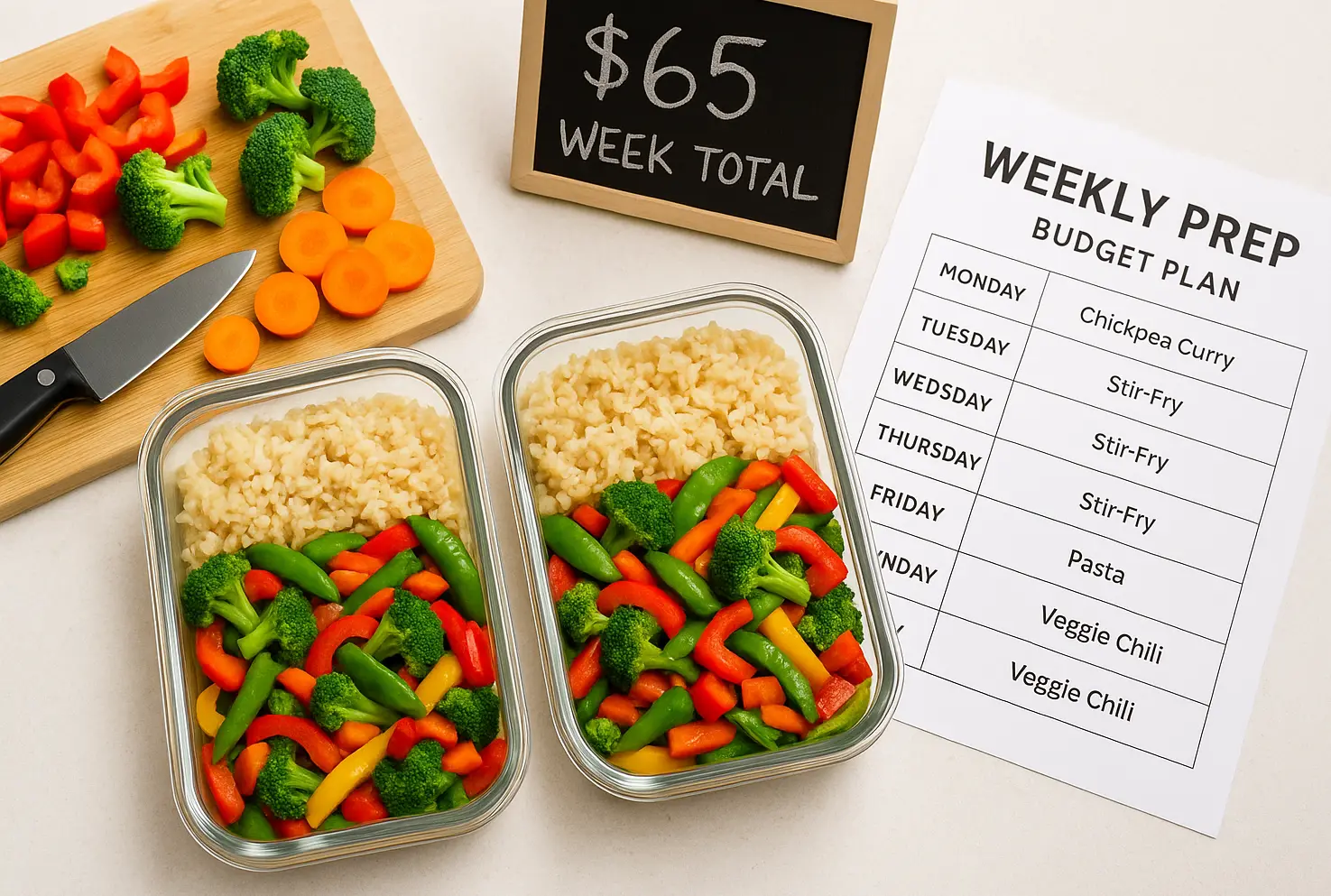
| Day | Meal | Ingredients | Notes | Illustrative Cost Range (2 servings) |
|---|---|---|---|---|
| Monday | Lentil Soup | Lentils, carrots, celery, onion, vegetable broth, diced tomatoes, spices | Use leftover vegetables from the previous week. | $4–$6 |
| Tuesday | Chicken Stir-Fry | Chicken breast, frozen vegetables (broccoli, carrots, peppers), rice, soy sauce | Cook extra rice so Wednesday’s dinner is faster. | $8–$12 |
| Wednesday | Egg Fried Rice | Eggs, rice, frozen peas, carrots, soy sauce | A quick way to use leftover rice and vegetables. | $4–$6 |
| Thursday | Black Bean Tacos | Black beans, tortillas, salsa, shredded cheese, lettuce, sour cream | Canned beans keep prep quick; compare them with dried beans based on time and local price. | $5–$8 |
| Friday | Pasta with Marinara | Pasta, marinara sauce, ground beef (optional), parmesan cheese | Use store-brand pasta and sauce. | $5–$9 |
| Saturday | Homemade Pizza | Pizza dough, marinara sauce, mozzarella cheese, toppings of your choice | Homemade dough can help when flour and yeast are already pantry staples. | $6–$10 |
| Sunday | Roasted Chicken and Veggies | Whole chicken, potatoes, carrots, onions, olive oil, spices | Use leftovers for sandwiches or salads. | $10–$14 |
How to use these example costs: the meal-row ranges are illustrative planning targets for two dinner servings, assuming store brands, sales, and some pantry staples. They are not a current national price survey; reprice the ingredients with your store’s unit prices before shopping.
$80 is a stretch target, not a benchmark. It works only when your local prices, pantry inventory, diet, and sale timing cooperate.
Putting it together: the seven dinner rows add up to about $42–$65. If breakfasts, lunches, and staples land around $25–$35 in your local cart, this example spans roughly $67–$100 for the week. An $80 checkout can fit inside that example, but it should not be treated as a typical U.S. grocery budget for two.
Turn the Sample Week Into One Shopping List
Do not shop the table row by row. First choose the recipes and quantities that fit two people, then combine repeated ingredients, subtract what is already in your pantry, and add the breakfasts, lunches, snacks, and drinks you actually plan to use. Those additions are why your finished local total can land above or below the illustrative range. Price the finished list locally before you decide whether $80 is realistic for your week.
- Combine overlapping ingredients such as rice, onions, carrots, sauces, and frozen vegetables.
- Buy the quantity your recipes call for rather than one package per meal.
- Mark which leftovers become lunches so you do not buy a second lunch plan by accident.
- Keep one flexible pantry meal for the night when plans change.
Adjust the Sample for Special Diets
For vegetarian or gluten-free households, keep the same planning method but change the ingredient set. Start with naturally suitable staples you already know work for your diet, then price specialty substitutes separately because they can shift the total quickly.
You’ve just turned the sample plan into a grocery number you can actually use. Now put that number beside everything else competing for your money.
See Your Whole Month on One Screen
Enter your income, spending, debts, and goals; the SNAPSHOT sheet pulls the key numbers together automatically so you can see what has room to change.
Confirm to get the workbook and frugal money tips. Unsubscribe anytime.
Something went wrong. Please check your email address and try again.
Smart Strategies to Save on Groceries for Two
Once the meal plan and list are set, the next job is deciding which swaps and promotions are actually worth using. Compare the cart you planned—not every deal the store puts in front of you.
Choose Store Brands
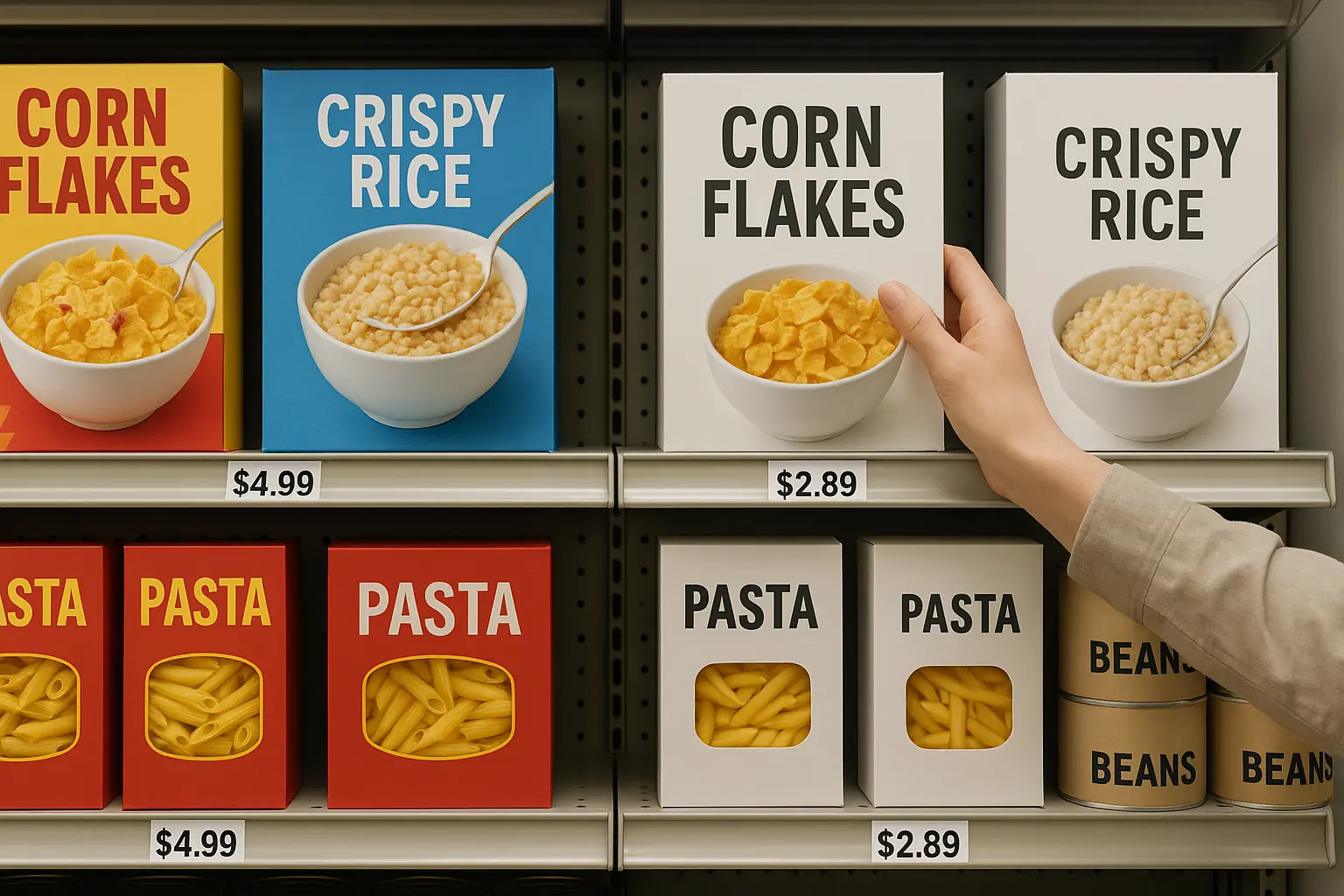
Store brands can cost less than name brands at the same package size, but compare unit price, ingredients, and package size before assuming the swap saves money. Keep the swap only if you both like it.
Bulk Buying Wisely
Bulk buys shine for shelf-stable staples (rice, beans, oats) if you’ll use them in time and have storage. Check unit prices and consider splitting bulk items with a friend to avoid waste.
Use Digital Coupons and Loyalty Programs
Load digital coupons and loyalty offers only for items already on your list. Stacking rules vary by store and promotion, so check the offer terms instead of assuming two discounts will combine.
Shop Seasonally and Compare Across the Store
Seasonal produce can be a good value, but the perimeter is not a budgeting rule. Rice, oats, beans, canned tomatoes, frozen vegetables, and other useful staples often live in the middle aisles. Use your list and the unit price—not the aisle—to decide what earns space in the cart. To make those savings stick, build simple budgeting habits.
Before you check out: Watch for shrinkflation, end-cap “deals” that are not on your list, jumbo packages with worse unit prices, and drinks or convenience items that quietly turn a planned shop into an impulse shop.
Budget-Friendly Ingredients for Two
Flexible staples make it easier to build several meals from the same cart and use ingredients before they are forgotten.
Legumes and Eggs
Beans, lentils, and peas work across soups, tacos, bowls, and salads. Dried beans and lentils can cost less per serving when you use the full package; canned options trade some potential savings for speed. Eggs can cover breakfasts, bowls, and frittatas when they fit your diet and local prices.
Rice, Grains, and Root Vegetables
Rice, oats, and pasta can stretch across breakfasts, bowls, sides, and quick dinners. Potatoes, carrots, and onions are versatile in roasts, stews, soups, and sheet-pan meals; compare local unit prices before treating any staple as automatically cheap.
Frozen Fruits and Vegetables
Frozen fruits and vegetables are easy to keep on hand and can reduce waste when fresh produce would spoil before you use it. A bag of berries works for smoothies, and frozen spinach can go straight into pasta or soup.

Cooking Strategies to Save Money
The easiest savings to keep are often the ones that make planned food easier to use before it goes to waste.
Batch Cooking and Freezing
When you have time, cook a bigger batch than you need and portion it out. Freezing soups, stews, or casseroles in labeled containers gives you “future you” dinners on nights you don’t feel like cooking.
The money-saving part of batch cooking is actually eating what you saved for later. Label and date what you freeze; if your current containers already seal and stack well, keep them.
Rubbermaid Brilliance 10-Piece Food Storage Set — clear, stackable containers with locking lids for leftovers and freezer portions.
Worth considering if leaking lids or a cluttered freezer keep turning batch-cooked leftovers into forgotten food; skip it if what you have already works.
Repurpose Leftovers
Turn roasted chicken into tacos or salads; add extra vegetables to stir-fries or frittatas for quick, budget-friendly meals.
One-Pot Meals for Simplicity
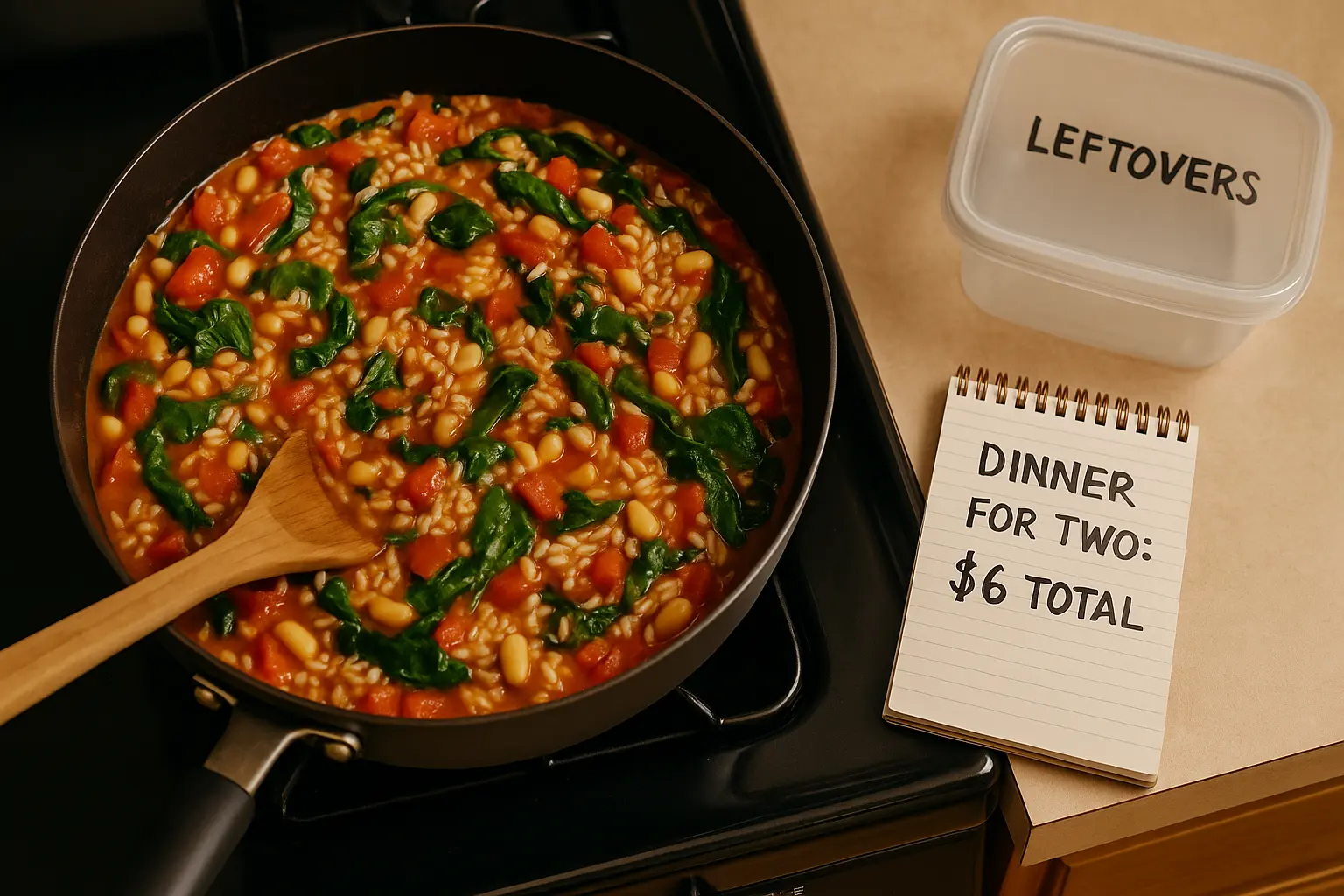
One-pot meals simplify cleanup and make it easy to reuse overlapping ingredients. Try a veggie-rice casserole or a pasta skillet with canned tomatoes and beans.
Grocery-Saving Experiments to Test Against Your Receipts
Store-by-store savings vary, so test these ideas against your own receipts:
- Build a few meals around sale items you were already willing to eat.
- Use frozen vegetables when fresh produce tends to go unused.
- Compare international markets for staples such as rice and spices instead of assuming one store type is always cheaper.
- Buy imperfect produce only when it is actually marked down and you can use it soon.
- Check the markdown shelf or manager-special area if your store uses one; timing and selection vary.
Cheap grocery shopping Reddit: what real shoppers recommend
For more community-sourced ideas, see our cheap grocery shopping Reddit roundup, then test any tactic against your own stores, schedule, and receipts.
Frequently Asked Questions
Your Next Shop: Run a One-Week Test
Choose one habit from the optimizer, set your baseline from recent receipts, and build one list around meals that share ingredients. Price the sample plan at your store before treating $80 as your target; if your local total is higher, keep the system and change the number.
After the shop, write down three things: what you spent, what you had to buy unexpectedly, and what food went unused. Change one thing for the following week. The goal is not someone else’s grocery number—it is a repeatable two-person system you can explain and improve.

