

Frugal living is not about cutting everything you enjoy. It is about spending less on the things you value least so you can keep more money for what matters. These 18 frugal living tips focus on repeatable changes to food, bills, subscriptions, shopping, energy, transportation, and everyday habits—not extreme deprivation.
If you are not sure where to start, use the four-question assessment after the table of contents. It will point you to one practical starting area based on four common spending habits. For the broader system behind these habits, see our guide to living frugally and saving money.
Table of Contents
- Find a Frugal Starting Point
- 1. Build a Budget You’ll Actually Use
- 2. Plan Meals and Cook at Home
- 3. Review and Negotiate Bills
- 4. Trim Subscriptions
- Put Income, Spending, Debts, and Goals on One Screen
- 5. Compare Cable and Streaming Costs
- 6. Reduce Energy Costs
- 7. Cut Transportation Costs
- 8. Review Your Biggest Housing and Car Costs
- 9. Shop With a Plan
- 10. DIY and Repair
- 11. Enjoy Free Entertainment
- 12. Automate Savings
- 13. Plan for Emergencies
- 14. Build a Frugal Mindset That Lasts
- 15. Borrow, Share, or Rent Before Buying
- 16. Use Free Financial Education
- 17. Use Technology to Reduce Repeat Work
- 18. Use Rewards Without Overspending
Find a Frugal Starting Point
Answer four quick questions about common spending habits. You’ll get one practical place to start, plus a direct jump to the matching tips below.
Answer all 4 questions to get one starting point.
1. Build a Budget You’ll Actually Use
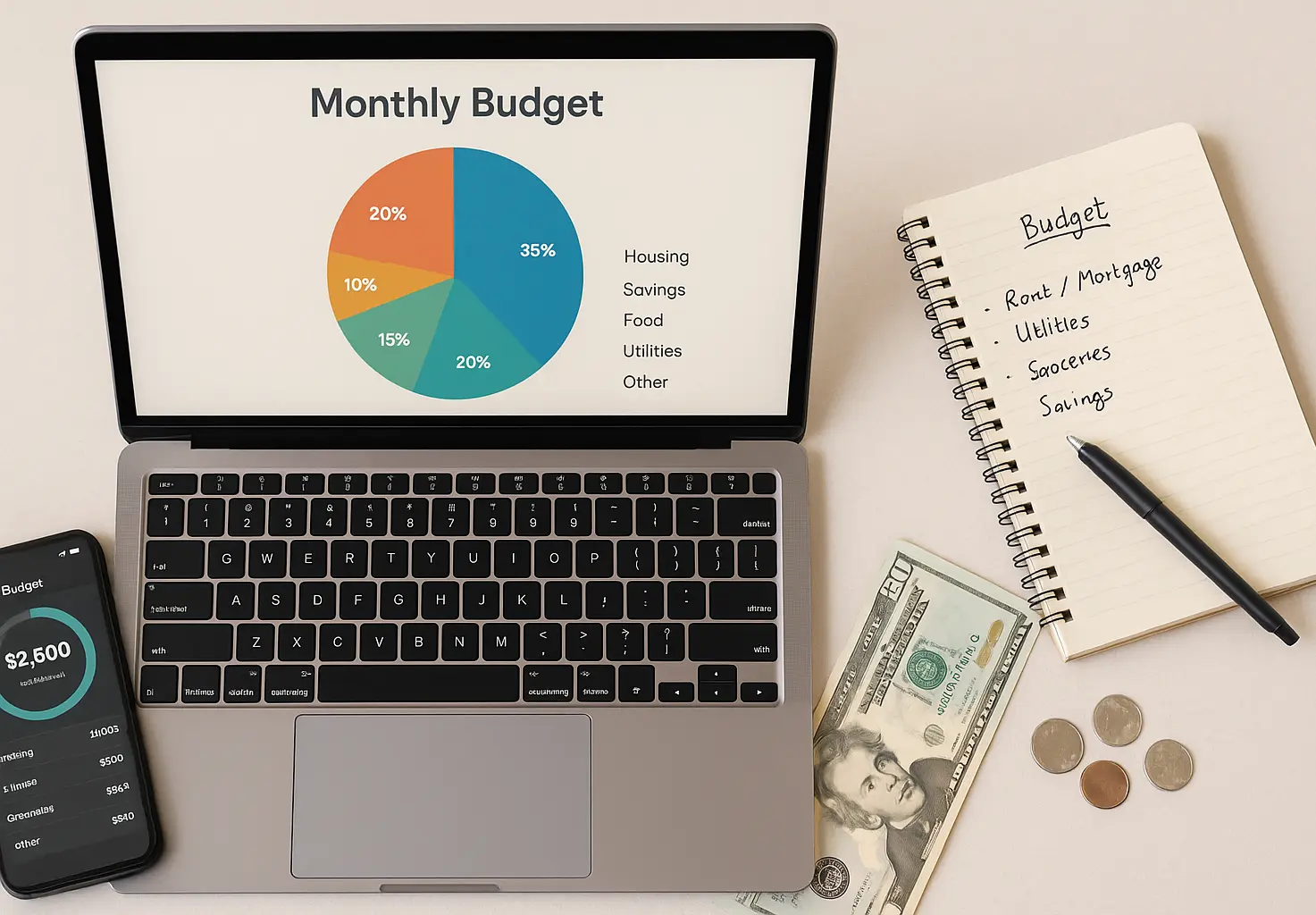
Budgeting gives the rest of these habits a job: it shows where money is going and which changes are worth your effort. For routines that make a plan easier to maintain, see our guide to smart budgeting habits.
- Track your expenses — Use a budgeting app or simple spreadsheet to spot patterns such as frequent takeout or forgotten recurring charges.
- Find spending leaks — Look for small, repeated purchases you would be comfortable trimming, then redirect that money toward a goal.
- Create a realistic budget — Cover essentials, savings, and some flexible spending. If you want a starting framework, use our zero-based budget template.
- Review it regularly — Check the plan weekly at first, then adjust the cadence once the habit feels stable.
Not sure which spreadsheet style fits you? Compare five free Excel budget templates before choosing a setup.
2. Plan Meals and Cook at Home
Cooking more meals at home can make food spending easier to plan. Keep a few low-effort meals available for busy days, and use our grocery shopping on a budget plan for a more detailed food-budget routine.
- Plan meals before shopping — Build a short weekly plan around what you already have, then make a list for the gaps.
- Compare store brands for staples — When the ingredients, quality, and size meet your needs, a generic or store-brand option can lower the cost without changing the meal.
- Batch-cook useful basics — Prepare larger portions of foods you will actually reheat, and freeze extras before they become waste.
- Pack lunch when it fits your routine — Reusing dinner leftovers can reduce both prep time and food waste.
- Repurpose leftovers — Turn cooked proteins, grains, and vegetables into soups, bowls, wraps, or next-day lunches.

3. Review and Negotiate Bills
Recurring bills deserve regular review, even when you are not planning to switch providers. Start with the biggest repeat charges and compare like-for-like coverage or service.
- Ask about a lower-cost plan — Contact service providers and check whether a lower-cost plan or current promotion fits the service level you actually need.
- Review insurance annually — Check whether your coverage still fits your situation and compare equivalent coverage before switching; the NAIC recommends an annual policy review.
- Question difficult medical bills — If a bill is hard to pay, CFPB guidance suggests asking about financial assistance, negotiating the amount, or requesting an interest-free repayment plan before turning to high-interest credit.
4. Trim Subscriptions
Subscriptions are easy to ignore because each charge may look small on its own. Review them together so you can see the total recurring cost.
- List every recurring service — Check bank and card statements so annual or infrequent renewals are not missed.
- Keep, cancel, or rotate — Keep services you use, cancel the ones you do not, and rotate entertainment subscriptions when that works better than maintaining all of them.
Once you’ve cleaned up recurring charges, put the rest of your money picture beside them before deciding what to change next.
Put Income, Spending, Debts, and Goals on One Screen
The five-sheet workbook includes a SNAPSHOT that totals everything automatically and space for up to 8 debts and 8 goals.
Confirm to get the workbook and frugal money tips. Unsubscribe anytime.
Something went wrong. Please check your email address and try again.
5. Compare Cable and Streaming Costs
Cable TV can be expensive, but streaming is not automatically cheaper once several subscriptions stack up. Compare the total monthly cost of the services you actually use with your current cable bill, and check each provider’s current household-sharing terms.
- Compare the whole bundle — Count every streaming subscription you would keep at the same time, not just the cheapest individual plan.
- Follow household-sharing rules — Use household or extra-member options only where the provider’s current terms allow them.
- Rotate subscriptions — When practical, keep one or two paid services at a time instead of paying year-round for everything.
- Use free options — Check library streaming benefits and reputable ad-supported services before adding another subscription.
6. Reduce Energy Costs
Lowering energy use can help your budget and the planet. ENERGY STAR says LED bulbs can use up to 90% less energy than standard bulbs. Its current smart-thermostat guidance estimates average savings of about 8% on heating and cooling bills, or roughly $50 per year, with results varying by climate, comfort preferences, occupancy, and equipment.
- Switch to LED lighting — Replace high-use incandescent bulbs first so the change affects the fixtures you use most.
- Cut standby power — Use power strips or unplug devices that draw power while sitting idle when doing so is practical.
- Adjust heating and cooling — Use efficient temperature settings and schedules that fit your household rather than heating or cooling an empty home.
- Use less hot water — Shorter showers and lower hot-water use can reduce both water and energy consumption.

7. Cut Transportation Costs
Transportation costs are easier to change when you compare the full trip cost rather than fuel alone.
- Walk or bike when practical — Short trips can be good candidates when the route, weather, and safety conditions make sense.
- Compare transit with driving — Include parking, fuel, tolls, and pass costs instead of assuming either option always wins.
- Carpool for repeat trips — Sharing fuel and parking can make regular commutes or events cheaper.
- Plan travel separately — For trips rather than everyday commuting, use our frugal travel hacks to compare a different set of costs.
8. Review Your Biggest Housing and Car Costs
Housing and transportation can dominate a budget, so compare those large recurring costs before focusing only on small purchases. Downsizing, refinancing, or changing vehicles can have a big effect, but each is a major decision with one-time costs and trade-offs.
- Compare the full move before downsizing — Include rent or mortgage, taxes, insurance, utilities, moving costs, and how the location affects transportation.
- Refinance only when the math works — Compare the new rate, fees, break-even period, and how long you expect to keep the loan.
- Compare total car cost — Fuel economy matters, but so do insurance, maintenance, financing, registration, and depreciation.
9. Shop With a Plan
If impulse buys are a challenge, add structure before you shop. A short delay and a comparison step can prevent “good deal” logic from turning into extra spending.
- Use a list — Decide what you need before browsing, especially for groceries, household goods, and online marketplaces.
- Pause before non-essential purchases — Give unplanned wants a cooling-off period before checkout so urgency has time to fade.
- Compare unit prices and total cost — A sale price is not automatically the cheapest option once size, shipping, fees, or quality differ.
- Compare secondhand before buying new — For clothing, furniture, tools, and other durable items, compare condition, expected use, and total cost with a new item.
- Use coupons only for planned purchases — A discount does not save money when it persuades you to buy something you would otherwise skip.

10. DIY and Repair
Before replacing something, check whether a simple repair or repurpose would solve the problem for less.
- Learn low-risk repairs — Sewing, patching, basic maintenance, and simple fixes can extend the life of things you already own.
- Repurpose useful materials — Old shirts can become cleaning rags; jars and boxes can become storage before you buy organizers.
- Know when not to DIY — Use reputable instructions for low-risk projects, and call a qualified professional for electrical, gas, structural, or other safety-critical work.
11. Enjoy Free Entertainment
You do not need a paid activity every time you want something to do. Build a short list of free or low-cost options you actually enjoy so they are easy to choose.
- Use parks and public spaces — Walks, picnics, playgrounds, and community spaces can replace paid outings.
- Check local calendars — Libraries, museums, schools, and community groups often list free days, talks, concerts, or events.
- Use library resources — Borrow books, movies, games, or digital media instead of buying everything individually.
12. Automate Savings
Automation can turn a good intention into a repeatable habit, especially when the transfer happens before the money blends into everyday spending.
- Set up automatic transfers — Schedule a realistic amount soon after payday and adjust it when income or expenses change.
- Check for an employer match — If your workplace retirement plan offers one, review the plan rules and the contribution needed to receive it; the IRS explains how matching contributions work.
- Use round-up features deliberately — Some banking and investing tools can move small amounts into savings or investments automatically. Check fees, account terms, and where the money goes before relying on the feature.
13. Plan for Emergencies
Emergency planning is less about hitting one universal number and more about creating a buffer for the surprises most likely to disrupt your budget.
- Build a dedicated cash reserve — The CFPB recommends setting a goal based on your own situation; even a small amount set aside for unplanned expenses can help, then you can build from there.
- Review important insurance — Make sure the policies you carry still fit your current situation and understand the deductibles, exclusions, and limits that would matter during a large loss.
14. Build a Frugal Mindset That Lasts
If you’re wondering how to live a frugal lifestyle, start by deciding what you want your money to protect or make possible. Frugality is easier to sustain when the trade-off has a purpose.
- Separate needs from wants — Fund essentials first, then decide which optional spending is worth keeping.
- Notice what already works — Reusing, repairing, borrowing, and enjoying low-cost routines can reduce the urge to solve every problem by buying something.
- Choose simplicity where it helps — Fewer recurring commitments and fewer low-value purchases can make a budget easier to manage.
15. Borrow, Share, or Rent Before Buying
Borrowing, sharing, or renting can be useful when you need access to something without needing to own it full-time.
- Borrow before buying for one-off jobs — Tool libraries, neighbors, or community groups can be practical for occasional-use items.
- Rent out underused assets cautiously — Before listing a room, vehicle, or other property, check insurance, lease or lender terms, platform rules, taxes, and local requirements that apply to you.
16. Use Free Financial Education
Before paying for a course or system, check whether reputable free material already answers the question you have.
- Start with trustworthy guides — Government, nonprofit, and well-sourced finance education can help with budgeting, credit, saving, and consumer rights.
- Use free courses selectively — Choose a course for a specific gap you want to fix rather than collecting more material than you will use.
17. Use Technology to Reduce Repeat Work
Use technology to reduce repeat work, not to create another subscription you have to manage. Start with these free financial tools.
- Use a budgeting tool you will actually check — A simple app or spreadsheet can help categorize spending, plan ahead, and keep goals visible.
- Set useful alerts — Price alerts, bill reminders, and account notifications can reduce missed due dates and make planned purchases easier to time.
18. Use Rewards Without Overspending
Rewards are useful only when they do not change what you buy or leave you carrying costly interest. If you use a rewards card, aim to pay the statement balance in full and on time each month.
- Choose rewards around spending you already do — Compare annual fees, earning categories, redemption rules, and the card’s interest terms before applying.
- Use free loyalty programs selectively — Join programs you will actually use rather than letting a discount pull you into extra purchases.
- Stack cash-back only on planned purchases — Treat rewards as a small rebate, not a reason to spend more.
Frequently Asked Questions
Choose One Change to Start This Week
Make the first change specific. Use the four-question assessment or scan the action phrases above, then choose one move you can repeat this week: cancel one unused subscription, plan two home meals, compare one recurring bill, or schedule one automatic transfer.
Once that habit feels normal, add the next one. The goal is not to spend the least possible amount; it is to make useful savings easier to repeat without rethinking your whole life every month.
This article provides general educational information, not individualized financial advice. Costs, insurance terms, credit-card terms, taxes, and savings opportunities vary, so verify current terms before changing financial products or making major housing, insurance, borrowing, or investment decisions.

